


New England is determined to shift toward a greener electric grid, but the region’s plan to slash its current reliance on natural gas (and backup fuel oil — and sometimes coal) by ramping up offshore wind and solar (and backup batteries) has hit a seemingly immovable object. President Trump, a staunch opponent of offshore wind, on Day 1 of his second administration ordered a halt to new leases and permits and directed his Interior Secretary to review existing permits. As we’ll discuss in today’s RBN blog, those moves have left New England power planners scratching their heads, and may even resurrect the possibility of expanding natural gas pipeline capacity into the region.

New England’s energy path the past few decades has been as twisty-turny as a gravel road through the Green Mountains of deepest, darkest Vermont. First the rallying cry was “No nukes!” — from the early 1990s through the late 2010s, six of the region’s eight nuclear plants were shut down. Then it was “No fossil fuels!” Sign-wielding protesters in the proudly progressive region blocked most — but not all — energy-industry efforts to enable more natural gas to be piped in from the nearby Marcellus Shale to fuel new gas-fired power plants (and allow older, dirtier coal- and oil-fired units to be retired). “More renewables!” has been a long-standing call to action too. Scores of new solar farms and a handful of wind farms (almost all of them onshore) have been developed, and plans made for a slew of large, offshore wind farms that many thought would make New England a sort of “Denmark-in-the-States.”
New England’s energy reality today is an electric grid that functions very well most of the time, primarily dependent on a mix of gas-fired power, nukes, solar, wind and hydroelectricity (some within the region and some imported from Quebec), solar and onshore wind — plus a heavy dose of energy efficiency that reflects the region’s deeply ingrained frugality. But for at least a few days each winter — and sometimes a couple of weeks — grid operators at ISO New England (ISO-NE) are on tenterhooks when the temperatures turn frigid, the snow piles up, the winds howl and most of the natural gas flowing into the region is used for space heating, leaving many gas-fired power plants with only a fraction of the gas they would need to run flat-out. That’s led to the now-widespread stockpiling of backup fuel oil (at dual-fuel plants) or LNG (at gas-only plants) that operators can turn to when pipeline gas is in short supply.
No fewer than six questions need to be answered:
- How has New England’s power-generation mix evolved over the past 25 years?
- What is the region’s generation mix today?
- What goals have the states set for decarbonizing the power sector?
- What is the plan for meeting those goals?
- How will President Trump’s adamant stance against offshore wind — and for fossil fuels and deregulation — impact that plan?
- How will grid operators maintain system reliability under this new reality?
We’ll cut to the chase on each of these. As shown in Figure 1 below, gas-fired plants (light-blue slices) generated 25% of New England’s power needs in 2000 and just over half (51%) in 2024 as a slew of coal-fired (dark-blue slices) and oil-fired (gray slices) generation was either retired or relegated to emergency-only use. Also, several nuclear plants — including Vermont Yankee (in 2013) and Pilgrim (in Massachusetts, in 2019) — were permanently removed from service, leaving only Millstone (in Connecticut) and Seabrook (in New Hampshire) running, and trimming nuclear’s contribution to regional generation (orange slices) to 23%.
New England’s Power Generation Mix, 2000 vs. 2024
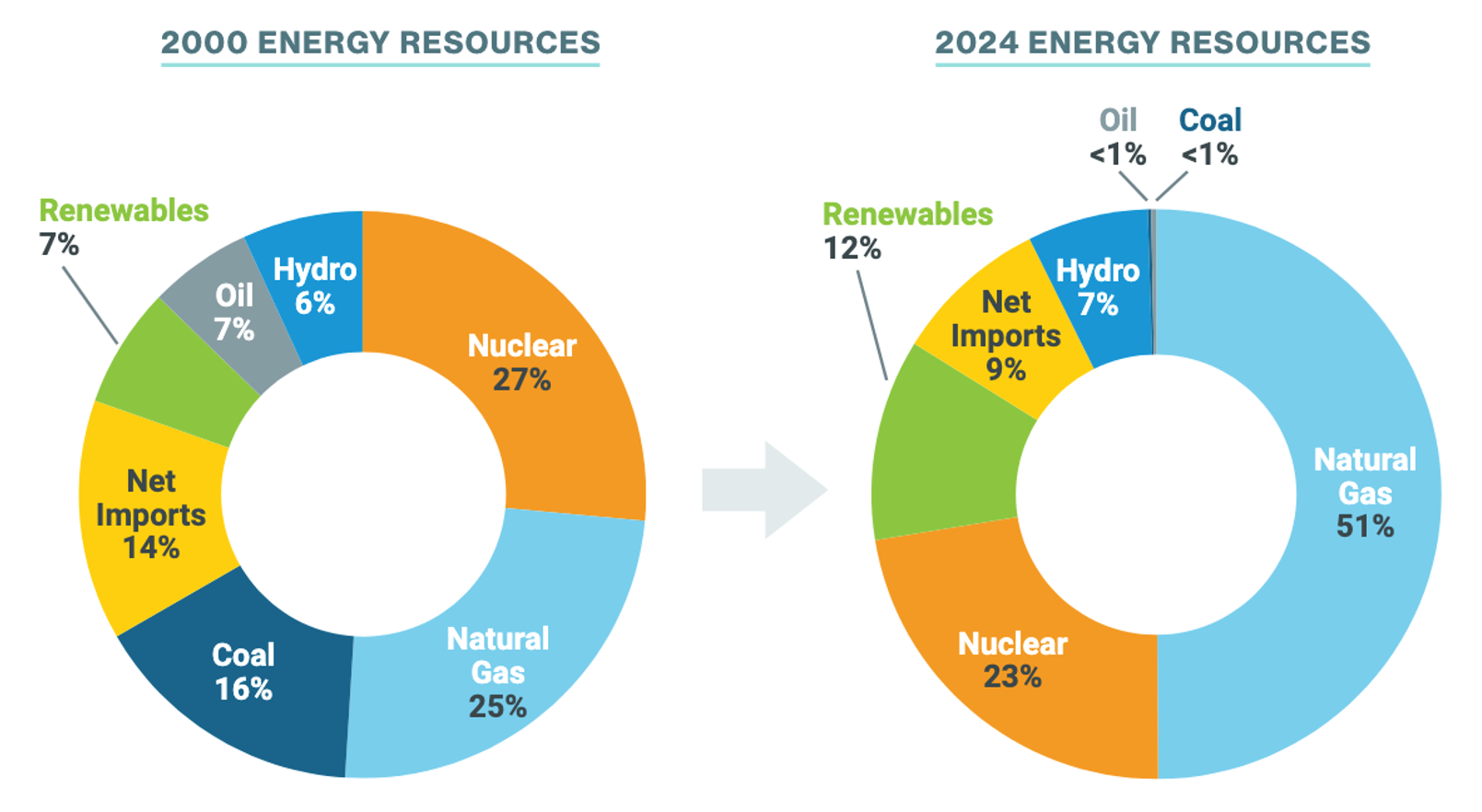
Figure 1. New England’s Power Generation Mix, 2000 vs. 2024. Source: ISO New England
About the song
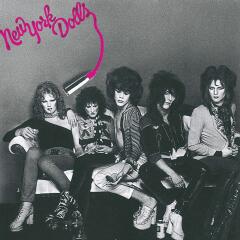
“Personality Crisis” was written by David Johansen and Johnny Thunders and appears as the first song on side one of The New York Dolls’ eponymous debut album. The song is a paean to outsiders, weirdos and artists trying to make it in New York City, a subject The Dolls were very familiar with. Released as a double A-side single with “Trash” on the flip side in August 1973, the single failed to make the charts. Personnel on the record were: David Johansen (lead vocals), Sylvain Sylvain (rhythm guitar, piano, backing vocals), Johnny Thunders (lead guitar, backing vocals), Arthur “Killer” Kane (bass), Jerry Nolan (drums), and Dave O'Grady (makeup).
The album, New York Dolls, was recorded in April 1973 at The Record Plant in New York City and produced by Todd Rundgren. The LP featured tunes written by the band and a cover of Bo Diddley’s “Pills.” Revved up by the energy of the band’s fondness for Brill Building pop and ’50s rock and roll, The Dolls made an album that became the precursor for the punk rock movement in the mid-’70s and a cult favorite. Released in July 1973, the album peaked at #116 on the Billboard 200 Albums chart. Two singles were released from the LP.
The New York Dolls were an American rock and roll band formed in New York City in 1971. They made a huge impact on the underground rock scene in the early 1970s, attracting a cult following of hardcore fans that dressed in similar flamboyant androgynous fashions as the band. They never achieved much commercial success, but the fact that their two studio albums have never gone out of print says a lot about the staying power of the group. The Dolls released two studio albums with the original lineup and three studio albums with the reformed band with original members Johansen and Sylvain. Several live albums, compilations and bootlegs of the band have been issued over the years. None of the group’s original members are still living. Singer David Johansen was the last man standing and passed away in February 2025. Drummer Billy Murcia died in 1972, guitarist Johnny Thunders in 1991, drummer Jerry Nolan in 1992, bassist Arthur “Killer” Kane in 2004, and guitarist Sylvain Sylvain in 2021.
We at RBN are saddened by the recent passing of David Johansen. In addition to his work with The New York Dolls, he had a successful solo career as a singer and actor. He released four studio albums, two live albums, and 10 singles under his own name. He released four studio albums as Buster Poindexter, and two studio albums as David Johansen and the Harry Smiths. He appeared in several television shows and seven motion pictures, most notably playing the Ghost of Christmas Past in Scrooged, the 1988 film starring Bill Murray. Our condolences to all of David Johanson's fans, friends and family on his death. He was 75.




Comments
Thank you for this timely analysis. The combination of high costs and opposition from President Trump implies there will not be a significant expansion of offshore wind. So-called renewables would never be able to compensate for fossil energy retirements anyway. In a quarter of a century, despite the investment of billions of dollars, the renewables fraction rose from a mere 7% to only 12% of electricity generation. Natural gas delivery constraints are likely to persist into the future. The most logical choice would be to repower existing generation sites such as Mystic with new pollution-free nuclear power plants. Will this option be discussed in the follow-on article?
In reply to Humans are Warm-Blooded Animals That Don't Chill Well by Gene Nelson, Ph.D.
Yes, nuclear — specifically the small modular type — will be mentioned in Part 2, though it's unlikely that New England, with its high degree of public involvement in all things energy, will be a pioneer on that front.
That's good news. However, a far more cost-effrective solution to keeping humans warm in New England would be an AP-1000 (or two) in place of the 1,413 MW Mystic natural gas (or oil) fired power plant which closed on May 31, 2024.