The price of northeastern Alberta’s key crude oil benchmark, Western Canadian Select (WCS), has been dropping like a rock. Last week, the heavy, sour blend of crude fell to a $45/bbl discount against U.S. benchmark West Texas Intermediate (WTI) — the biggest differential in at least 10 years. With an unplanned summertime outage at a Syncrude upgrader now over, Alberta production rising and pipeline takeaway capacity static — at least for now — the value of Canada’s crude may have even bleaker days ahead, despite a recent global rally in oil prices. Today, we explain why Western Canada’s oil producers are facing the prospect of mile-wide spreads for months to come.
Pipeline capacity constraints out of prolific oil-producing regions have played an oversized role in North American crude pricing this year. Not only are takeaway constraints an issue in Alberta, but they’ve also wreaked havoc in the Permian Basin in West Texas. Those two regions, West Texas and Alberta have a few things in common — weather not included — and the lament of limited crude pipeline space to match growing output is one of them. Without enough capacity to remove oil from the producing market, the value of the commodity suffers as supplies pile up. (This blog will focus on Western Canada, but if you want to get your Permian fix on this issue, dive into the All Dressed Up With Nowhere to Go series.)

Crude Oil Permian provides detailed analysis of the fundamental drivers impacting the Permian Basin crude oil market including weekly data, analysis and market intelligence updates of: Permian crude oil supply and demand, pipeline outflows and capacity, prices, and infrastructure updates.
The Western Canadian Sedimentary Basin (WCSB) has more than 4 MMb/d of crude pipeline takeaway capacity, but it’s simply not enough to match production in the region, which is seen rising to 5 MMb/d by 2025. (See our "The Shape I'm In" Drill Down Report for more on current and projected production.) The pipelines in the area actually operate at a lower level than that nameplate capacity, so space is quite limited. This same problem afflicts Permian producers, too, but there’s hope on the horizon: pipeline permitting approvals are easier to get in Texas, and producers there are looking forward to the completion of a multitude of projects aimed at relieving constraints and assuaging the current price discount.
That’s not the case in Western Canada, where the spotlight on pipeline companies burns brighter and environmental backlash is much stronger. The years-long (going on a decade-long) battle over TransCanada’s Keystone XL project is the quintessential example. Now the Trans Mountain Expansion (TMX) Project is under fire, too. As we said in You Ain’t Seen Nothing Yet, a late-August decision by Canada’s Federal Court of Appeal to overturn the government’s approval of the project will continue to delay the start-up of that pipe, to 2021 or 2022. That roadblock inhibits 590 Mb/d of new incremental pipeline space that could’ve helped Alberta oil sands barrels reach demand markets in the Pacific Rim. That’s not to say that there’s not at least some help on the way, but even those projects that are likely to move forward won’t be completed before 2020.
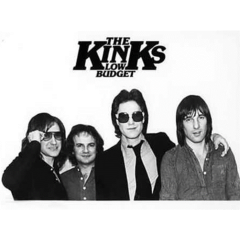
About the song
"Low Budget" was written by Ray Davies and appears on The Kink's 17th studio album of the same name. The single appeared as the first cut on side two of the released album, and went to #41 in the U.S. The album charted at #11 on the Billboard Top 200 Albums, the highest-charting Kinks LP to date. Personnel on the record were: Ray Davies (lead vocals, guitar, keyboards and producer), Dave Davies (lead guitar and backing vocals), Mick Avory (drums), and Jim Rodford (bass and backing vocals). It was recorded at The Kinks’ Konk Studio in London, and the Power Station and Blue Rock Studios in New York City between January and June of 1979. The Low Budget LP marked a new direction for The Kinks by addressing modern issues such as unemployment, inflation, and the energy crisis. It also continued the direction of a harder rock sound for the band, which helped ticket sales in filling big arenas in the late 1970s.
The Kinks are an English rock band formed in London in 1964 by brothers Ray and Dave Davies. Pete Quaife on bass and Mick Avory on drums completed the original lineup. Their first big hit was "You Really Got Me," the distorted guitar-fueled raver written and sung by Ray Davies that went to #1 in the UK and #7 in the U.S. The Kinks have done 24 studio albums, four live albums, and have released 14 UK and U.S. Top 10 singles. In addition to the Davies brothers, The Kinks have had 10 additional members come and go in the band's history. Although inactive for years, rumors are currently floating about that the Davies brothers may be putting the band together again. Stay tuned!