Today, U.S. propane is a $75 billion-a-year business involving a maze of natural gas processing plants and salt caverns connected to pipelines, fractionators, rail facilities, truck racks, retail tanks and export docks. But like many vital energy industries, the propane business began with a handful of scientists and entrepreneurs who experimented with something they didn’t really understand. Over decades of development, propane has powered Olympic kitchens, lifted hot-air balloons across the English Channel, and helped turn a quiet “mount” of southeastern Texas into the center of the global NGL universe. Along the way, propane attracted larger-than-life personalities and true “born to be wild” characters who pushed the business forward in unique ways. In today’s RBN blog, we’ll discuss the history of U.S. propane.

Visualize the infrastructure behind U.S. NGL movement.
The U.S. NGLs Map provides a comprehensive view of the transport, processing, and export networks moving NGLs across the U.S.
We’ve spent a lot of time discussing how the propane industry works today, who does what, how molecules move, and why it matters for prices and reliability. In Part 1 of our recent series on the propane market, we walked through propane’s journey from wellhead to burner tip and looked at the major demand segments — industrial, petrochemical, commercial, residential and agricultural — and the roles that processing plants, refineries, wholesalers and retailers play along the way. We showed how propane produced at fractionators and refineries often makes its first stop in vast underground salt-cavern storage, then moves through a complex web of pipelines, railcars, and transport trucks before reaching an end user. In Part 2, we detailed the role of wholesalers, the companies that sell propane to retailers by aggregating supplies, operating logistics networks, trading physical volumes, and other supply functions. In Part 3, we outlined retailers’ roles and functions in the market. (For a more in-depth dive into the fascinating propane industry, check out our Propane Master Class Encore, now available online.)
But none of this would be possible without the early discoveries of propane, dating back to the 1800s, when scientists, mostly chemists, were experimenting with a hydrocarbon gas they barely understood. Those experiments — and the messy trial-and-error that followed — laid the groundwork for the systems we might take for granted. Today, we’ll highlight the discoveries and adventures that shaped propane’s story and help explain why it plays the role it does in the world.
From Lab Curiosity to Household Fuel
Propane’s story starts in 1857 with French chemist Marcellin Berthelot (Mar-su-len Ber-te-lu; far-left photo in Figure 1 below), who helped put modern organic chemistry on the map. He synthesized many compounds and propane was one of them, but he never figured out what to do with it. There was no way to liquefy or compress it yet, making it more of a lab curiosity than a viable energy solution.
Fast forward to 1864, and English chemist Edmund Ronalds (next photo) took the next step. He discovered propane was present in crude oil, along with other NGLs. He was better able to understand it and could even describe its properties and how it came from crude and gas. But he still didn’t know exactly what to do with it.
About the song
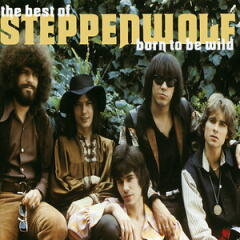
“Born to Be Wild” was written by Mars Bonfire and appears as the fifth song on Steppenwolf’s eponymous debut album. A point of interest is Mars Bonfire is the brother of Steppenwolf drummer Jerry Edmonton. Both brothers were in the original version of Steppenwolf when they were in Canada and called The Sparrow. Bruce Palmer, later of Buffalo Springfield, was also in this version. Bonfire and Edmonton's original surnames were McCrohan. The song has the first usage of the term “heavy metal” in its lyrics. Ironically, Bonfire initially wrote the song as a ballad. After it was featured (along with “The Pusher”) in the 1969 film Easy Rider, with Dennis Hopper and Peter Fonda riding Harleys from Los Angeles to New Orleans, it became the anthem of motorcycle organizations around the world. The first biker anthem was actually released in July 1966. “Blue’s Theme,” from the film Wild Angels, was a fuzzed-out guitar instrumental featuring Davey Allen and the Arrows. The stars of the film were Peter Fonda and Nancy Sinatra. “Born to Be Wild” was released as a single in June 1968 and went to #2 on the Billboard Hot 100 Singles chart and has been certified Gold by the Recording Industry Association of America (RIAA). Personnel on the record were: John Kay (vocals, rhythm guitar), Michael Monarch (lead guitar), Goldy McJohn (organ), Rushton Moreve (bass) and Jerry Edmonton (drums).
The album, Steppenwolf, was recorded in the fall of 1967 at American Recording in Studio City, CA, and produced by Gabriel Meckler. It was Meckler who suggested the name Steppenwolf to the band, after recently reading the novel by Hermann Hesse. The album cover would feature a Henry Diltz photo of the band, presented in silver foil. Released in January 1968, the album went to #6 on the Billboard 200 Albums chart and has been certified Gold by the RIAA. Three singles were released from the LP.
Steppenwolf was a Canadian-American rock band formed in Los Angeles in 1967. John Kay, Goldy McJohn, and Jerry Edmonton were in the Canadian band, The Sparrow, and recruited Los Angeles musicians Monarch and Moreve after relocating to Hollywood. Rehearsing in a garage on Fountain Avenue in West Hollywood, the band soon made a name for themselves playing clubs and signed with Dunhill Records in the Fall of 1967. They released 13 studio albums, five live albums, nine compilation albums, and 21 singles. Over 36 members passed through the band since its formation, with John Kay being the only original member in many iterations of the group. Kay announced he retired the name Steppenwolf in October 2018. Rushton Moreve died in Los Angeles in July 1981 at 32. Jerry Edmonton died in Santa Barbara, CA, in November 1993 at 47. Goldy McJohn died in Burlen, WA, in August 2017 at 72. Michael Monarch lives in Hollywood and was the guitarist for Detective. He occasionally plays shows. John Kay lives in Nashville and still performs occasionally.
"About the Song" -- written by Mickey McMahan , RBN Director of Musicology