The retail propane market delivers about 9 billion gallons to U.S. consumers each year, with its heart anchored in the “mom-and-pop” retailers serving rural and small-town communities. These small, owner-operated businesses — the backbone of the market — know their customers, regions and their challenges, which is a key reason the propane industry is thriving and has avoided the sweeping consolidation seen in so many other sectors of the small-business economy. In today’s RBN blog, we’ll examine why the small-business model has been so durable and effective in retail propane, and why the industry has seen relatively little large-scale consolidation.

Visualize the infrastructure behind U.S. NGL movement.
The U.S. NGLs Map provides a comprehensive view of the transport, processing, and export networks moving NGLs across the U.S.
In the past few weeks, the retail propane market has navigated a challenging stretch and emerged remarkably well. Winter Storm Fern hit parts of the country with some of the toughest conditions in recent memory, as bitter cold drove high demand and snow and ice made transportation very difficult. Plus, there were freeze-offs and refinery issues cutting into supply. We can’t publish a propane blog so soon after the storm without acknowledging the industry’s strong performance under pressure. The industry deserves kudos for a job well done, but it’s not quite spring yet. There is still some winter left.
We’ve written a lot about the propane industry and its structure in recent months. In Part 1 of our propane series, we outlined the journey of propane from wellhead to burner tip and discussed the various segments of the domestic market, including industrial, petrochemical, commercial, residential and agricultural demand. The wholesale-to-retail value chain starts at processing plants and refineries (left column of Figure 1 below), where propane is extracted and often placed into underground storage. In Part 2, we detailed the role of wholesalers (middle column), the companies that sell propane to retailers by aggregating supplies, operating logistics networks, trading physical volumes, and other supply functions. Wholesalers help move propane through pipelines and railcars to retailers (right column), which range in size from small, owner-run operations serving a local market to companies with fleets of railcars and dozens of supply points. In Part 3, we outlined retailers’ roles and functions in the market.
Today, we take a deeper look at propane retailers and why even smaller and midsized operations have been able to thrive without the large-scale consolidation seen in many other markets. (All these topics and more are discussed in detail in our Propane Master Class Encore, which is now available online. Much more on what’s included in the class below.)
About the song
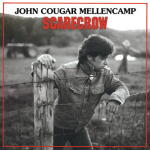
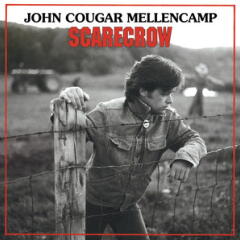
“Small Town” was written by John Mellencamp and appears as the third song on side one of his eighth studio album, Scarecrow. The autobiographical song about growing up in Seymour and Bloomington, IN, struck a chord with many people, including music critics who proclaimed Mellencamp to be a new voice of the heartland. Of note is that a mere two-hour drive from Seymour is the small town of Lafayette, where Guns N’ Roses’ Axl Rose and Izzy Stradlin left to pursue their adventures in the jungle. Released as a single in November 1985, it went to #6 on the Billboard Hot 100 Singles chart. Personnel on the record were: John Mellencamp (vocals, guitar, harmonica), Larry Crane, Mike Wanchic (guitars, backing vocals), Toby Myers (bass), John Casella (keyboards) and Kenny Aronoff (drums, percussion, backing vocals).
Scarecrow was recorded in early 1985 at Belmont Mall Studio in Belmont, IN, and produced by John Mellencamp and Don Gehman. Released in June 1985, the album went to #2 on the Billboard 200 Albums chart and has been certified 5X Platinum by the Recording Industry Association of America. Five singles were released from the LP.
John Mellencamp, previously known as Johnny Cougar, John Cougar, and John Cougar Mellencamp, is an American singer and songwriter. He started his professional career in 1975, after signing with Tony DeFries and MainMan Management (David Bowie’s management company). DeFries suggested the name Johnny Cougar and released his debut album, Chestnut Street Incident, in October 1976. He has released 24 studio albums, two live albums, five compilation albums, and 21 singles. He has sold over 60 million records worldwide. He has won a Grammy Award, a Woody Guthrie Prize, and is a member of the Rock and Roll Hall of Fame and the Songwriters Hall of Fame. He is heavily involved with the #1 NCAA Indiana Hoosiers, and their football practice facility is named the John Mellencamp Pavilion. Mellencamp played at their championship celebration rally in Bloomington in January. He continues to record and tour, and will begin a greatest hits tour in the U.S. in July.
"About the Song" -- written by Mickey McMahan , RBN Director of Musicology