


The run-up in U.S. production of natural gas liquids over the past 10 years spurred the development of a whole lot of infrastructure. More pipelines to transport mixed NGLs from production areas to NGL storage and fractionation hubs, especially Mont Belvieu, TX. More fractionators to split y-grade into ethane, propane, and other “purity” products. And, specifically for ethane — the lightest, quirkiest, and most plentiful NGL — a number of ethane-only steam crackers were built along the Gulf Coast to take advantage of the new supply abundance, as were ethane-only pipelines, export terminals, and a whole new class of cryogenic ships — Very Large Ethane Carriers, or VLECs — to move the product to markets in Europe and Asia. Today, we begin a new series on the unique nature of overseas ethane exports, including why most incremental export volumes are tied to long-term supply deals with a handful of global ethylene plants designed — or reconfigured — to “crack” ethane.

The Crude Oil Billboard keeps readers at the forefront of the U.S. crude oil market by offering access to data and information moments after its release. Say goodbye to PDF reports that come out after the market has already moved on.
Given the market dislocations of the past few months, it’s easy to forget how far the U.S. has come on the energy independence front. Since 2011, U.S. production of crude oil and natural gas has soared, even after factoring in COVID-related cutbacks. And with oil and “wet” (high-Btu-content) gas come large volumes of NGLs. As shown in Figure 1, gas processing plants currently are separating out nearly 5.1 MMb/d of mixed NGLs from the raw gas emerging from U.S. wells, including almost 3.1 MMb/d of heavier, “C3+” NGLs (with three or more carbon atoms per molecule) like propane, normal butane, isobutane, and natural gasoline (green layer) and about 2.0 MMb/d of ethane (blue layer); another 1.1 MMb/d of ethane is being “rejected” into the natural gas stream at processing plants (yellow layer) and sold (at the price of gas) for its Btu value (see Turnin’ Natgas into Gold). (Back in 2011, U.S. NGL production from gas processing plants averaged only 2.2 MMb/d; any ethane that could be recovered was.)

About the song
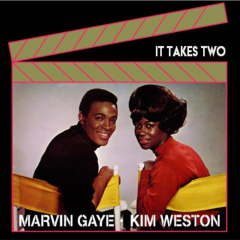
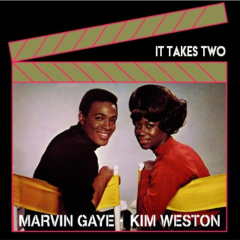
"It Takes Two" was written by William Stevenson and Sylvia Moy, and appears as the first song on side one of Marvin Gaye and Kim Weston's duet album, Take Two. Produced by co-writer William Stevenson, who was Kim Weston's husband at the time, it was released as a single in December 1966. The song went to #4 on the Billboard Soul Singles Chart, and #14 on the Billboard Hot 100 Singles chart. Personnel on the record were: Marvin Gaye (vocals), Kim Weston (vocals), The Funk Brothers (instrumentation), and The Detroit Symphony Orchestra (orchestration). The song was also released as a duet single with Rod Stewart and Tina Turner, off of Stewart's 1990 Vagabond Heart album. Pepsi used this version in a nationwide television ad campaign in 1990. Hip hop artists Rob Base and DJ E-Z Rock had a hit record with a different song by the same name in 1988. Written by Robert Ginyard (Rob Base), Rob Base and DJ E-Z Rock's "It Takes Two" went to #3 on the Billboard Dance Club Songs, and #36 on the Billboard Hot 100 Singles charts. The single was certified Platinum by the Recording Industry Association of America.
Take Two, the Motown duet album by Marvin Gaye and Kim Weston, was recorded at Hitsville USA in Detroit in 1964-66, with Harvey Fuqua and William Stevenson producing. The LP was released in August 1966. Weston left Motown shortly after the release of the album, over a dispute about royalties from the company.
Marvin Gaye was an American soul singer, songwriter, and record producer. He released 25 studio albums, four live albums, 24 compilation albums, one soundtrack album, and 83 singles. He is a member of the Rock and Roll Hall of Fame, Songwriters Hall of Fame, Rhythm and Blues Hall of Fame, and has a Grammy Lifetime Achievement Award. Gaye died in 1984 at the age of 44. Kim Weston is an American soul singer. She has released nine studio albums, four compilation albums, and 10 singles. She is a member of the Rhythm and Blues Hall of Fame. Weston is retired and lives in Detroit.




Comments
Great blog today. A minor point. In the paragraph after Figure 3, the blog states that the ethane on Mariner West and Utopia go to the Nova cracker at Sarnia. I believe that some of it also goes to the cracker at Sarnia owned by Imperial Oil, XOM's Canadian affiliate. Imperial's website states: "Chemical plant: The Sarnia chemical plant has access to feedstocks ranging from light gases to heavy liquids, including ethane from abundant supplies of North American shale energy." There are no other sources of ethane supply for Imperial Sarnia other than these pipes and I am pretty sure that one of the pipes indicated in their announcements or regulatory filings that Imperial Sarnia was a customer, though I didn't hold on to copies of those.
Thanks again.