Taken together, the ethane-related infrastructure projects developed in the U.S. over the past several years serve as a reliable feedstock-delivery network for a number of steam crackers in Europe, Asia, and Latin America. NGL pipelines transport y-grade to fractionation hubs, fractionators split the mixed NGLs into ethane and other “purity” products, ethane pipelines move the feedstock to export terminals fitted with the special storage and loading facilities that ethane requires, and a class of cryogenic ships — Very Large Ethane Carriers, or VLECs — sails ethane to mostly long-term customers in distant lands. The end results of all this development are virtual ethane pipelines between, say, the Marcellus/Utica and Scotland, or the Permian and India. Today, we continue our series on ethane exports with a look at the two existing export terminals, the ethane volumes they have been handling, and where all that ethane has been headed.
As we said in Part 1, U.S. fractionators are now churning out record volumes of ethane, with the Energy Information Administration (EIA) last week reporting the highest production volume ever: 2.2 MMb/d for July 2020. We estimate that around a million additional barrels per day on average this year has been “rejected” into the natural gas stream at processing plants and sold (at the price of gas) for its Btu value (see Turnin’ Natgas into Gold). Most important to the export focus of this series, about 280 Mb/d, or 14% of total U.S. ethane production, has been sent to other countries so far in 2020. More than one-third of that 280 Mb/d is being piped to Canadian steam-cracker customers on either the Vantage, Mariner West, or Utopia pipelines. The rest is being loaded on VLECs or smaller ethane tankers and sent to crackers in a number of other countries, with the vast majority going to these seven: India, the UK, Norway, China, Mexico, Sweden, and Brazil. These export numbers represent a big change from just a few years ago. Ethane exports from the U.S. only started in 2014, when the Vantage and Mariner West pipelines to Canada came online. And it wasn’t until March 2016 when the first ethane was loaded onto ships for export, first from the Marcus Hook marine terminal near Philadelphia, and then from Morgan’s Point Ethane Export Terminal in the Houston area, which didn’t occur until September 2016 — barely four years ago. Before those terminals opened for business, nary a drop of ethane had ever moved via ship to ethylene crackers.
Today, we discuss the Marcus Hook and Morgan’s Point export facilities, which so far account for all U.S. ethane exports by ship.

Crude Oil Permian provides detailed analysis of the fundamental drivers impacting the Permian Basin crude oil market including weekly data, analysis and market intelligence updates of: Permian crude oil supply and demand, pipeline outflows and capacity, prices, and infrastructure updates.
About the song
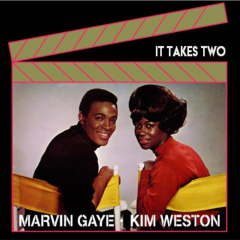
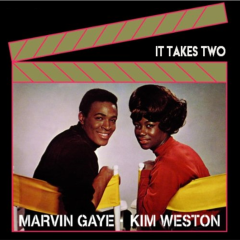
"It Takes Two" was written by William Stevenson and Sylvia Moy, and appears as the first song on side one of Marvin Gaye and Kim Weston's duet album, Take Two. Produced by co-writer William Stevenson, who was Kim Weston's husband at the time, it was released as a single in December 1966. The song went to #4 on the Billboard Soul Singles Chart, and #14 on the Billboard Hot 100 Singles chart. Personnel on the record were: Marvin Gaye (vocals), Kim Weston (vocals), The Funk Brothers (instrumentation), and The Detroit Symphony Orchestra (orchestration). The song was also released as a duet single with Rod Stewart and Tina Turner, off of Stewart's 1990 Vagabond Heart album. Pepsi used this version in a nationwide television ad campaign in 1990. Hip hop artists Rob Base and DJ E-Z Rock had a hit record with a different song by the same name in 1988. Written by Robert Ginyard (Rob Base), Rob Base and DJ E-Z Rock's "It Takes Two" went to #3 on the Billboard Dance Club Songs, and #36 on the Billboard Hot 100 Singles charts. The single was certified Platinum by the Recording Industry Association of America.
Take Two, the Motown duet album by Marvin Gaye and Kim Weston, was recorded at Hitsville USA in Detroit in 1964-66, with Harvey Fuqua and William Stevenson producing. The LP was released in August 1966. Weston left Motown shortly after the release of the album, over a dispute about royalties from the company.
Marvin Gaye was an American soul singer, songwriter, and record producer. He released 25 studio albums, four live albums, 24 compilation albums, one soundtrack album, and 83 singles. He is a member of the Rock and Roll Hall of Fame, Songwriters Hall of Fame, Rhythm and Blues Hall of Fame, and has a Grammy Lifetime Achievement Award. Gaye died in 1984 at the age of 44. Kim Weston is an American soul singer. She has released nine studio albums, four compilation albums, and 10 singles. She is a member of the Rhythm and Blues Hall of Fame. Weston is retired and lives in Detroit.