The global reaction to Russia’s invasion of Ukraine was swift, with calls of condemnation and plans quickly surfacing for the U.S. and other countries to stop their purchases of Russian crude oil and natural gas immediately, or at least as soon as practical. The strategy has been to make the situation as politically and financially painful as possible for Russia, which has not been shy about using its energy supplies as a weapon, before or after the invasion. But those plans haven’t worked as well as hoped, and some impacts are bringing back memories of the 1973 oil embargo which, though driven by a far different series of events, may provide insight into the current situation. In today’s RBN blog, we look at the many parallels to today, including weaponized oil, regional supply shortages, price spikes and well-intentioned (if sometimes ill-conceived) government responses.
Russia’s invasion of Ukraine has been horrifying on many levels. It has displaced millions of Ukrainians, led to thousands of civilian deaths, and reduced large swaths of the country to rubble. The economic repercussions have also been profound, rattling global financial markets at a time of increasing inflation, sparking new concerns about supplies of everything from oil and natural gas to basic food items like corn and wheat, and driving energy prices — which had already been rising — even higher.

The impact on the global oil market — and the resulting increase in gasoline prices — has been a major story in recent months and a significant thorn in the side of President Biden. WTI crude oil zipped past $100/bbl shortly after Russia’s invasion and traded as high as $123.70/bbl on March 8. Although WTI has now dropped below $100/bbl, pushed lower by concerns about rising inflation and a slowing economy, its settlement price has averaged $107.47/bbl since February 24, the date of Russia’s invasion. (The average settlement was $80.92/bbl in the three months before the invasion.) It’s been a similar story for gasoline and diesel prices. The U.S. average for standard-grade gasoline stood at $4.605/gal on July 14, according to AAA, up nearly 50% from the $3.147/gal it was a year ago, as consumer demand was just beginning to rebound from the pandemic. Diesel prices have been even stronger, averaging $5.592/gal on July 14, up more than 70% from the $3.264/gal average a year earlier. And while prices have tapered somewhat recently — average gasoline prices have fallen by about 30 cents over the last month — we still see a high potential for continued price volatility in such a tight global market.
About the song
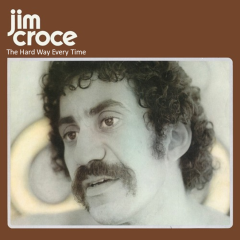
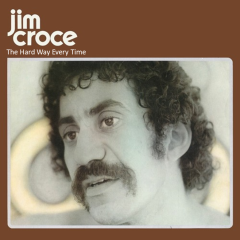
“The Hard Way Every Time” was written by Jim Croce and appears as the 11th song on Jim Croce’s fifth and final studio album, I Got a Name. Personnel on the record were: Jim Croce (lead, backing vocals, rhythm acoustic guitar), Maury Muehleisen (lead acoustic guitar, backing vocals), Michael Kamen (ARP Synthesizer, oboe), Terence P. Minogue (strings, backing vocals), Tommy West (bass, piano, backing vocals), and Steve Gadd (drums).
I Got a Name was recorded at The Hit Factory in New York City in 1973 and produced by Terry Cashman and Tommy West. The album was released posthumously in December 1973, as Croce and his guitarist, Maury Muehleisen, tragically died in a plane crash in September 1973 after leaving their concert in Natchitoches, LA. The album went to #2 on the Billboard 200 Albums chart and has been certified Gold by the Recording Industry Association of America. Three singles were released from the LP, including the title song, “I Got a Name,” which was released the day after the plane crash. The song was first heard in the motion picture The Last American Hero, released in July 1973. It has been covered by many artists, including Jerry Reed, Helen Reddy, Lena Horne, and Sammy Kershaw.
Jim Croce was an American folk-rock singer, songwriter and musician. Croce grew up in the Philadelphia area and started playing in bands there in his teens. He released his first album, Facets, on his own independent label in 1966, selling all 500 albums pressed. He met his future wife, Ingrid, around this time. The two played together as a folk duo for a time in the late sixties until the early seventies. In 1969, Capitol Records released an album of theirs entitled Jim & Ingrid Croce. After focusing more on his songwriting skills and writing songs about the common working man, Croce secured a record deal with ABC Records in 1972. He released five studio albums, three live albums, 21 compilation albums and 12 singles. His wife Ingrid continued to record and perform after his death until vocal cord problems forced her to retire from the music business in 1984. Their son, A.J. Croce, still records and performs.