Energy Transfer Partners’ 3.25-Bcf/d Rover Pipeline recently began service on its next phase — Phase 1B — opening up additional natural gas receipt points for its Mainline A and increasing westbound gas flows from the Marcellus/Utica. The project will help relieve takeaway constraints for growing gas supply in the Marcellus/Utica region, while also increasing gas-on-gas competition for supply basins targeting the Ontario and Gulf Coast markets. This latest launch brings the project closer to achieving full completion, which is expected by the end of March 2018, but volumes on Rover are already changing regional flow and pricing dynamics. Today, we provide an update on Rover’s progress.
As we wrote in Against All Odds, initial service on the first portions of the Rover Pipeline began flowing this past September, with just two of six planned laterals online and partial capacity available on just one of its two mainlines (Mainline A). But even with just the first phase of its system operational, Rover quickly began to make its mark on the gas market. Within days of launching initial service, producers filled the pipeline to capacity, which at that time was 700 MMcf/d. New compression was added in early October 2017, boosting capacity to 1.2 Bcf/d, and flows again jumped, this time to more than 1.0 Bcf/d for a period. The additional takeaway capacity helped eastern Ohio gas production volumes reach new highs last fall, and as we discussed in Toe Bone Connected to the Foot Bone, regional gas flows started to shift in response to this new supply route pushing more Marcellus/Utica gas toward the Midwest, where it could then turn south toward the Gulf Coast.

The NATGAS Appalachia weekly report provides the data and insights to monitor the northeast natural gas market’s twists and turns and identify the risks and opportunities along the way, including tracking supply-demand trends, outbound capacity and their impact on takeaway pipeline utilization, and regional prices.
Now, with the start of Phase 1B in mid-December 2017, Rover has brought on additional compression and three new supply laterals, as well as the related receipt and delivery stations. The new facilities boosted Mainline A capacity to 1.7 Bcf/d, and pipeline flows have again shifted. Below, we’ll revisit the latest Rover gas flow data — courtesy of our friends at Genscape — to assess the effects of the incremental capacity. Before we get to current flows, however, it’s worth reviewing the full scope of the project and looking in more detail at the pieces that are operational to date.
By the end of March 2018, the Rover Pipeline project will include 713 miles of pipeline across three states, bridging the Northeast and Midwest regions and more than doubling westbound takeaway capacity from the Marcellus/Utica producing region. The map in Figure 1 depicts the various components of the project, including:
About the song
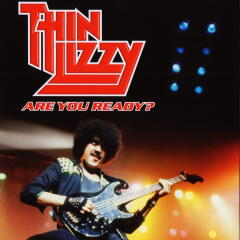
"Are You Ready" is a tune by Thin Lizzy, written by Philip Lynott, Brian Downey, Brian Robertson, and Scott Gorham. It appears on their 1978 album Live and Dangerous, a two-record set of live performances by the band. The song also was the set opener for live shows during the Robertson-Gorham guitar lineup period of Thin Lizzy, which ran from 1974 – 1977.
Thin Lizzy was formed in 1969 in Dublin, Ireland, by vocalist/bassist/songwriter Philip Lynott and former high school pal, drummer Brian Downey. They added guitarist Eric Bell for the first incarnation of the band. After Bell's departure in 1974, they drafted Scottish guitarist Brian Robertson, and Californian Scott Gorham to fill guitar duties for the band. This combination of the band, with its twin guitar harmonies propelled by Les Paul guitars through Marshall amplifiers, helped to create a new sound for European hard rock that saw its greatest success for Lizzy in their #12 hit in the American charts in 1976 with "Boys Are Back In Town."