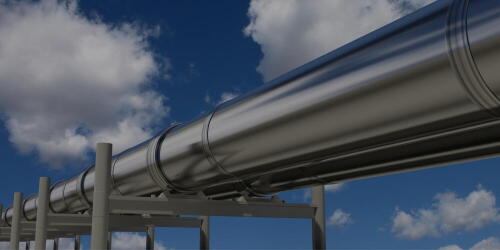
In another key milestone for Northeast pipeline takeaway capacity expansions, Energy Transfer Partners’ beleaguered Rover Pipeline project began partial service on its Phase 1A portion on gas day September 1. The 3.25-Bcf/d project, which is due for completion in early 2018, is expected to provide relief for constrained Northeast producers while exacerbating oversupply conditions and gas-on-gas competition in the Dawn, Ontario, storage and demand market area and surrounding region. Within days of initial start-up, flows on Rover ramped up to 700 MMcf/d, and both Ohio and overall Northeast production already have posted record highs since then as a result. Today, we take a look at the project, including initial flows and the expected timing of full completion.
It’s been a long, tumultuous road for ETP’s Rover Pipeline project so far. From its inception, the project was competing head-to-head for shipper commitments and investment dollars against the DTE Energy Co./Enbridge 1.5-Bcf/d NEXUS Gas Transmission project which would begin in the same general gas-supply area (eastern Ohio) and serve the same general markets (southeastern Michigan and Ontario). Then, in late 2016/early 2017, ETP found itself racing against the clock to secure its final certificate of approval and finish clearing trees along the project route before some endangered bats — yes, bats — came to roost (see Bat Out of Hell). The developer managed to beat the clock on that, with the Federal Energy Regulatory Commission (FERC) issuing the certificate in early February 2017, just one day before the departure of Commissioner Norman Bay broke the quorum needed to get that final approval. With the certificate in hand, Rover construction proceeded at break-neck speed, and for a while the project seemed unshakable — that is, until disaster struck in May 2017 in the form of a two-million gallon spill of fluid containing diesel in a protected wetland area near the Tuscarawas River in Stark County, OH, which prompted FERC to issue an order halting any new Rover-related drilling activity pending a third-party review.
The Canadian NATGAS Billboard is a weekly, early morning email and report that’s designed to keep physical and financial participants informed of the various fundamental components that make up the complex Canadian natural gas market. This service saves readers time and confusion by compiling all the most critical data points into one clear and concise report.
At the time, the project was targeting a July start for the initial service, and the spill left Rover scrambling to address the concerns and correct any issues in order to get the go-ahead to complete the necessary work. Separately, by late July, the project was also working to address a water permit issue in West Virginia. In spite of these eleventh-hour setbacks and delays, however, by late-August, ETP had managed to complete a portion of Phase 1 of Rover construction — called Phase 1A — and on August 31 FERC granted permission to begin flowing gas on that segment. Since then, we’ve started seeing those first flows. We’ll take a closer at what’s happened so far with this first phase in a bit. First, to put it into perspective, however, we start with the description of what the full project will look like once completed.
Even without the regulatory snafus, Rover was no small undertaking, involving about 711 miles of greenfield pipeline across three states spanning the Northeast and Midwest regions. In fact, the project marks the first large-scale, greenfield interstate natural gas pipeline project in the area since the eastern segment of Rockies Express Pipeline (REX East) was completed in 2009. The map in Figure 1 depicts the Rover project in its entirety, including:
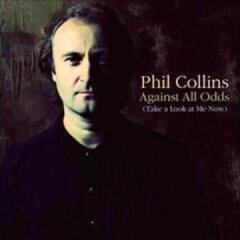
About the song
“Against All Odds (Take a Look at Me Now)” was written and recorded by Phil Collins as the title song for the 1984 movie Against All Odds. Produced by Arif Mardin and released in February 1984, the single went to #1 on the Billboard Hot 100 Singles chart, #1 on the Mainstream Rock Tracks chart, and #2 on the Adult Contemporary list. Originally an unreleased song of Collins’s titled “How Can You Just Sit There,” written about the breakup between Collins and his first wife, the song was rewritten to reflect what the film was portraying. In addition to the single, the song appears on the 1984 soundtrack album, Against All Odds, and also on Collins’s 1998 Hits album and Love Songs: A Compilation, released in 2004. Personnel on the recording were: Phil Collins (vocals, drums), Rob Mounsey (piano, keyboards), and an orchestra conducted by Arif Mardin. The song won a Grammy Award for Best Pop Vocal Performance by a Male in 1985.
Phil Collins is an English singer, songwriter, drummer, multi-instrumentalist, record producer and actor. He started in show business as a child actor, and his professional musical career began as the drummer, and later lead vocalist for the British rock band Genesis. He recorded nine studio and two live albums with Genesis. Since going solo in 1979, he has released eight studio albums, one live album, and three compilation LPs, along with 45 singles. He has sold more than 150 million records worldwide. Collins has won eight Grammy Awards, six Ivor Novello Awards, four Billboard Music Awards, three American Music Awards, two Golden Globes, one MTV Video Music Award, and one Academy Award. He is a member of the Songwriters Hall of Fame, was inducted into the Rock and Roll Hall of Fame as a member of Genesis, and has a star on the Hollywood Walk of Fame. In March 2022, at the last date of Genesis’s The Last Domino? Tour, at O2 Arena in London, Collins announced that “It’s the last show for Genesis.” A five-LP Box set was released in September entitled Both Sides (All the Sides).