
Western Canada is blessed with extraordinary hydrocarbon resources and in recent years has been ramping up production in the Alberta oil sands and in the Duvernay and Montney shale plays. The U.S. is pretty much Canada’s only crude oil and natural gas customer, though, and there are limits to how much Canada can export to its southern neighbor — especially in the Shale Era, with the U.S. producing more oil and gas than ever and meeting an increasing share of its own needs. So Canadian producers, midstream companies and others have been working to gain access to new, overseas markets. It has not gone well. Pipeline projects to transport oil and gas to the British Columbia coast have been set back time and again, as have plans for crude and LNG export terminals. At last, there may be some good news. The Canadian government has stepped in to help push through a critically important oil pipeline to the coast, and BC’s leading LNG project just signed on a major new investor/customer. Today, we consider recent moves that could finally allow large volumes of Western Canadian oil and gas to be shipped to Asia.
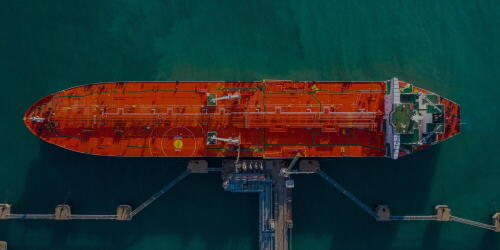
The Crude Voyager is a weekly analysis of U.S. Gulf Coast loading activity that explains the ebbs and flows of crude loadings, destinations, and geopolitical issues impacting U.S. exports. It outlines the major paths for laden tankers hauling U.S. crude all over the world and reflects the change in tanker departures to the main regions that consume U.S. crude.
The challenges faced by producers in Canada’s western provinces have been discussed many times in the RBN blogosphere. Most recently, in a six-part blog series, The Shape I’m In, we looked at (among other things) the big price discount for Western Canadian Select (WCS, the regional crude benchmark) vs. West Texas Intermediate (WTI), the continuing rise in oil sands and other Western Canadian Sedimentary Basin (WCSB) production (now at about 4 MMb/d), the need for more takeaway pipelines and the resurgence of crude-by-rail. And in the On the Border and Don’t Do Me Like That series, we examined the gas side of things, including growing production (now near 16 Bcf/d), takeaway constraints, and fierce competition from Marcellus/Utica and other U.S. shale plays that has been forcing Western Canadian producers out of U.S. and Eastern Canadian markets they traditionally served.
For a number of years now, the dream of Alberta and BC producers has been to access overseas markets — especially Asian consuming giants like China, India, Japan and South Korea — that are clamoring for more crude and more gas (the latter in the form of LNG). But the dream has been just that. Let’s begin with a look at the oil side. As we said more than five years ago in the aptly titled West Coast Pipe Dreams, there is only one crude oil pipeline from the WCSB to Canada’s West Coast: Kinder Morgan’s 300-Mb/d Trans Mountain Pipeline (green line in Figure 1). It runs from Edmonton, AB, to Kinder’s Burnaby Terminal and the Parkland Fuel refinery (tan triangle) in the Burnaby, BC, area; Kinder’s Westridge Marine Terminal (also near Burnaby), and the U.S. border at Sumas, WA, where it connects to Kinder’s Puget Sound Pipeline for delivery to four Washington state refineries (light green triangles). That same blog noted that after open seasons in 2011 and 2012, Kinder Morgan announced plans to increase Trans Mountain’s capacity. At first (in April 2012), the plan was to boost it by 450 Mb/d (to 750 Mb/d); later (in January 2013), the company said that additional shipper interest warranted a 590-Mb/d expansion (to 890 Mb/d). The Trans Mountain Expansion (TMX) project would involve the installation of new pipeline that would parallel the existing Trans Mountain Pipeline for the majority of its route. Also, 12 new pump stations would be added, as would a total of 19 new tanks at existing terminals in Burnaby (14 tanks), Sumas (one tank) and Edmonton (four tanks). In addition, three new berths (each capable of loading Aframax-class crude carriers) would be constructed at the Westridge Marine Terminal.

About the song
“At Last” was written by Mack Gordon and Harry Warren for the 1941 musical film, Sun Valley Serenade. Glenn Miller and his Orchestra recorded an instrumental version that appears in the film. Miller recorded the song several times and his 1942 version, featuring Ray Eberle on vocals, reached #2 on the Billboard Pop Music Singles chart. Etta James version appears as the second song on side two of her 1960 debut album of the same name. Released as a single in November 1960, it went to #2 on the Billboard Rhythm & Blues chart and #47 on the Billboard Hot 100 Singles charts. Her version was inducted into the Grammy Hall of Fame in 1999 and the Library of Congress National Recording Registry in 2009. Personnel on the record were: Etta James (vocals) and uncredited orchestra musicians conducted by Riley Hampton. Celine Dion, Joni Mitchell, Christina Aguilera, and Beyonce have covered the song.
The album At Last was recorded in Chicago between January and October 1960 and produced by Phil and Leonard Chess. The Chesses felt that James’s voice had pop crossover potential, so they accompanied her with an orchestra for most of the tracks on the album. It was released in November 1960 and went to #12 on the Billboard 200 Albums chart. Four singles were released from the LP.
Etta James (Jamesetta Hawkins) was an American rhythm and blues singer and songwriter. She released 30 studio albums, three live albums, six compilation albums and 58 singles. She received the Rhythm and Blues Foundation Award in 1989 and the NAACP Image-Hall of Fame Award in 1990. She was inducted into the Rock and Roll Hall of Fame in 1993 and received a Grammy Lifetime Achievement Award in 2003 and a Billboard R&B Founder Award in 2006. James died in January 2012 in Riverside, CA, at the age of 73. At the request of Etta James’s family, Christina Aguilera sang “At Last” at her funeral.