U.S. production of renewable diesel (RD) is rising fast and production of sustainable aviation fuel (SAF) will soon follow suit, driven largely by federal and state incentives. But U.S. demand for both RD and SAF is growing at a more measured pace, mostly because they are throttled by a number of other governmental policies, including the level of blending mandates set by the Environmental Protection Agency (EPA). As we see it, the net effect of this disconnect between domestic supply and demand will be the U.S. becoming a net exporter of RD this year and a net exporter of SAF in 2025 — but only after a spike in SAF imports in 2023-24. Yes, it’s complicated, but with public-sector policies impacting both sides of the supply/demand scale, did you really expect it wouldn’t be? In today’s RBN blog, we look at two more energy products the U.S. will be exporting.
This is the fourth blog in our series about crude oil and product exports, where we’re looking at what’s driving the increased flows of U.S.-sourced hydrocarbons to export terminals and overseas markets. The first three episodes — Calling the Shots, Sooner or Later, and Houston Bound — focused on crude oil exports, which have been ramping up since the long-standing ban on most crude exports was lifted more than seven years ago. Way back then, RD and SAF weren’t really on anyone’s radar — but they sure are now.
Before we dive into what’s ahead for RD and SAF imports and exports, let’s do a quick-as-we-can review of what RD and SAF are, how they’re produced, and what’s driving their fast-increasing production. (If you’re familiar with all that, skip ahead to the “RD and SAF Imports and Exports” subhead a few paragraphs below.)

The replay of our Fall 2026 School of Energy (September 9 & 10, Houston) is now available online!
Learn from RBN experts, participate in hands-on Excel modeling, connect with industry peers, and gain a stronger understanding of today's interconnected energy markets.
RD and SAF Basics
RD and SAF not only provide lower-carbon, renewable-based alternatives to petroleum-based diesel and jet fuel, respectively, they are also the chemical twins of those widely used fuels and therefore can serve as “drop-in” replacements for them. Further, RD and SAF (like traditional diesel and jet) have similar — but not identical — chemical makeups, with the specs for SAF (like jet fuel) reflecting the special needs of jet engines and jet aircraft (such as a very low freeze point). As you’d guess, the processes for producing RD and SAF also rhyme — a general design for both typically reacts a renewable feedstock (such as vegetable oil, waste cooking oil, animal fats, etc.) with hydrogen (H2) at high pressure over a reactor filled with catalyst. After the reactor, the liquid hydrocarbons are separated from unreacted hydrogen and water and then fed into a lower-pressure fractionation system and distilled into refinery intermediates (see our Come Clean series for more).
About the song
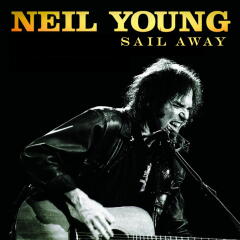
“Sail Away” was written by Neil Young and appears as the fifth song on side one of Young’s 10th solo album, Rust Never Sleeps. The song was recorded during the sessions of his previous album, Comes a Time. Personnel on the song were: Neil Young (lead vocal, guitars, percussion), Nicolette Larson (backing vocals), Joe Osborn (bass), and Karl T. Himmel (drums).
Rust Never Sleeps by Neil Young and Crazy Horse was recorded in 1976-78 at The Boarding House in San Francisco, Indigo Ranch in Malibu, Triad Studios in Ft. Lauderdale, Woodland Studios in Nashville, and McNichols Arena in Denver, the St. Paul Civic Center, and the Cow Palace in San Francisco. Produced by Neil Young, David Briggs, and Tim Mulligan, the album was released in June 1979 and went to #8 on the Billboard 200 Albums chart. It has been certified Platinum by the Recording Industry Association of America. Rust Never Sleeps was the concept for the extended tour with Crazy Horse that resulted in the live tracks for this album. The live sets on this tour featured an aggressive guitar approach from Young that was influenced by the punk rock movement of the late 1970s. In many ways the album is a blueprint for the grunge sound that came out of Seattle a decade later. The line from the song, “My My, Hey Hey (into the Blue)...” that goes “better to burn out than fade away” was quoted in the late Kurt Cobain’s suicide note.
Neil Young is a Canadian-American singer, songwriter and musician. He started his professional career in the mid-1960s in Winnipeg, where he would meet his future bandmate, Stephen Stills, while both were playing the same venue in the city. In 1966, Young joined the Mynah Birds, a band that included future star Rick James. When the group disbanded, Young and bassist Bruce Palmer loaded up their gear in Young’s ancient Pontiac hearse and relocated to Los Angeles, where they would form Buffalo Springfield with Stephen Stills, Richie Furay and Dewey Martin. Buffalo Springfield released three studio albums and nine singles before breaking up in 1968. Young signed a record deal with Reprise Records as a solo artist in 1969. He also became a member of Crosby, Stills, Nash & Young from 1969-70, and would release six albums with them. As a solo artist, Young has released 45 LPs and several singles. He has been inducted into the Rock and Roll Hall of Fame twice — as a solo artist and as a member of Buffalo Springfield. He has won three Grammy Awards and one MTV Video Music Award and is a member of the Canadian Music Hall of Fame. He continues to record and tour.