Merger-and-acquisition (M&A) activity in Canada’s oil and gas sector has accelerated this year compared to 2022. With crude oil prices generally strengthening over the course of 2023, it should come as no surprise that the focus of much of this activity has been crude oil- and NGL-producing companies and assets. As we discuss in today’s RBN blog, several large deals have been announced and many have already closed, including a complex arrangement involving Suncor and production ownership in the oil sands that only recently concluded after six months of uncertainty, with more deals expected before the year is over.
The ebb and flow of corporate wheeling and dealing is just as familiar in the Canadian oil and gas sector as it is the U.S. — see our recently published Drill Down Report for more on recent M&A south of the 49th parallel. When times are tough, the exploration and production companies (E&Ps) that squirreled away money and remain financially comfortable can swoop in and purchase assets or entire companies that are in trouble, adding to their production base to (presumably) generate greater value from those assets in the future.
When times are good — such as in 2023, when crude oil prices have been strong and mostly rising — cash is more plentiful for all companies and M&A fever can really take off. Acquiring E&Ps look to expand their production base with quality assets, while sellers may be shifting gears, looking to consolidate their production around a certain geographic focus, or simply selling to get a financial lifeline to pay down that pending bank loan. Whatever the driving force might be, M&A activity in Canada’s oil and gas sector has been on the upswing.

The last time we examined M&A activity in the Canadian oil and gas space was in Get Closer back in April 2021. In that blog, we reviewed what was, at the time, mounting pressure on Canadian producers focused on natural gas to rationalize their assets through mergers or asset sales in order to weather the storm of very weak Canadian gas prices (see Undun) and the COVID-related collapse in energy prices that had taken place the previous year. Numerous companies were in dire or worsening financial shape, with some really on the ropes.
About the song
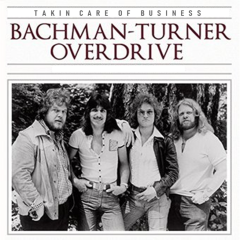
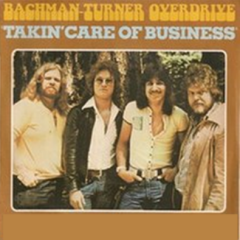
“Takin’ Care of Business” was written by Randy Bachman and is the eighth cut on Bachman-Turner Overdrive’s second album, Bachman-Turner Overdrive II. Released as a single in January 1974, the song went to #12 on the Billboard Hot 100 Singles chart and spent 20 weeks in the charts. Bachman had started writing the song when he was still a member of The Guess Who. Back then the working title and chorus of the song was “White Collar Worker.” After changing it to “Takin’ Care of Business,” the band jammed on it at a live concert with Randy Bachman singing it in order to give BTO’s lead vocalist and bassist, Fred Turner, a chance to rest his voice. After BTO finished the song, the audience was still clapping and shouting out “Takin’ Care of Business.” The band knew then that they had a potential hit song and finished writing the lyrics and getting it on their next album. The song has appeared in many television shows and movies, and the NBA’s Oklahoma City Thunder uses it as their theme song. As a side note, Elvis Presley had adopted “TCB (taking care of business)” as his personal motto, naming his touring band the TCB Band and making jewelry up with the TCB logo with a lightning bolt through it to give to members of his inner circle. The logo also appeared on his private jet, the “Lisa Marie.” After Presley’s death, Priscilla Presley confirmed that Elvis loved the BTO song. Personnel on the record were: Randy Bachman (lead vocal, lead guitar), Tim Bachman (second lead guitar, backing vocals), Fred Turner (bass, backing vocals), Robbie Bachman (drums, percussion) and Norman Durkee (piano).
Bachman-Turner Overdrive II was recorded at Kaye-Smith Studio in Seattle in 1973, with Randy Bachman producing. Released in December 1973, the album went to #4 on the Billboard Top 200 Albums chart. In addition to “Takin’ Care of Business,” “Let It Ride” was released as a single from the album, topping out at #23 on the Billboard Hot 100 Singles chart.
Bachman-Turner Overdrive, also known as BTO, was a rock group formed in Winnipeg, MB, in 1973. BTO has released 10 studio albums, six live albums, 11 compilation albums and 22 singles and has sold 30 million records worldwide. The band has been inducted into the Canadian Music Hall of Fame. Twelve members have passed through the ranks of BTO since its formation. Robbie Bachman died in January 2023 and Tim Bachman passed away in April 2023. Fred Turner retired in 2018 and Randy Bachman still records and tours — he’ll be playing Calgary on October 13.