The Shale Revolution created enormous opportunities for U.S. midstream companies. But opportunities are only that. It’s what individual midstreamers did with those opportunities through the 2010s — the decisions each made on where to invest and what to invest in — that will help determine how well they will do over the next decade and beyond. And the best way to assess the wisdom of these investments is to examine them one by one, and consider their locations, their exposure to risk and their potential for growth. Today, we discuss highlights from the newly released company-by-company portion of East Daley Capital’s “Dirty Little Secrets” report.
A few weeks ago, in Farther Up the Road, we said that the midstream sector had been on a development spree for much of the last decade, with new or expanded everything — pipelines, gas processing plants, fractionators, storage facilities, liquefaction trains, export terminals and more — being built to keep pace with production gains. But after peaking in 2019, the build-out frenzy is slowing in 2020, and the near- and mid-term fate of midstreamers is largely tied to whether they placed good bets on the infrastructure they already developed or are finishing up this year or next. We also looked at midstreamers’ expanded efforts to invest in existing projects (rather than building new ones); their stepped-up plans to divest non-core assets (in order to provide funding for acquisitions in their focus areas, and to reduce debt); and their heightened interest in employing the joint-venture (JV) approach to new project development.

Today, we turn our attention to a few of the midstream companies that, upon a detailed examination of their assets, stand out in one way or another from their peers. We begin with Enable Midstream Partners, a master limited partnership (MLP) with extensive gas-related midstream assets in Oklahoma, Louisiana and neighboring states. While Enable’s major exposure to the Anadarko and Ark-La-Tex production areas might raise concern — since production there has leveled off and has even been declining of late — an asset-by-asset examination of the midstreamer’s holdings indicates that drilling-and-completion activity by Continental Resources and other acreage committed to Enable’s gathering systems, processing plants and takeaway pipelines is expected to remain robust. Furthermore, the company has managed to largely offset rate and re-contracting risk on its Enable Gas Transmission (EGT; purple lines in Figure 1) and Mississippi River Transmission (MRT; light-blue lines) gas pipelines via new contracts, economic expansions and rate cases.
About the song
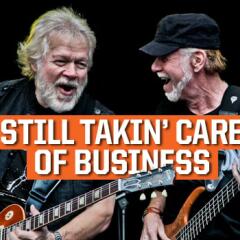
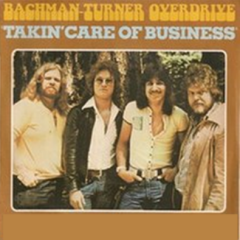
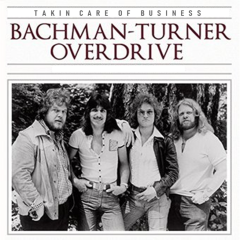
“Takin’ Care of Business” was written by Randy Bachman and is the eighth cut on Bachman-Turner Overdrive’s second album, Bachman-Turner Overdrive II. Released as a single in January 1974, the song went to #12 on the Billboard Hot 100 Singles chart and spent 20 weeks in the charts. Bachman had started writing the song when he was still a member of The Guess Who. Back then the working title and chorus of the song was “White Collar Worker.” After changing it to “Takin’ Care of Business,” the band jammed on it at a live concert with Randy Bachman singing it in order to give BTO’s lead vocalist and bassist, Fred Turner, a chance to rest his voice. After BTO finished the song, the audience was still clapping and shouting out “Takin’ Care of Business.” The band knew then that they had a potential hit song and finished writing the lyrics and getting it on their next album. The song has appeared in many television shows and movies, and the NBA’s Oklahoma City Thunder uses it as their theme song. As a side note, Elvis Presley had adopted “TCB (taking care of business)” as his personal motto, naming his touring band the TCB Band and making jewelry up with the TCB logo with a lightning bolt through it to give to members of his inner circle. The logo also appeared on his private jet, the “Lisa Marie.” After Presley’s death, Priscilla Presley confirmed that Elvis loved the BTO song. Personnel on the record were: Randy Bachman (lead vocal, lead guitar), Tim Bachman (second lead guitar, backing vocals), Fred Turner (bass, backing vocals), Robbie Bachman (drums, percussion) and Norman Durkee (piano).
Bachman-Turner Overdrive II was recorded at Kaye-Smith Studio in Seattle in 1973, with Randy Bachman producing. Released in December 1973, the album went to #4 on the Billboard Top 200 Albums chart. In addition to “Takin’ Care of Business,” “Let It Ride” was released as a single from the album, topping out at #23 on the Billboard Hot 100 Singles chart.
Bachman-Turner Overdrive, also known as BTO, was a rock group formed in Winnipeg, MB, in 1973. BTO has released 10 studio albums, six live albums, 11 compilation albums and 22 singles and has sold 30 million records worldwide. The band has been inducted into the Canadian Music Hall of Fame. Twelve members have passed through the ranks of BTO since its formation. Robbie Bachman died in January 2023 and Tim Bachman passed away in April 2023. Fred Turner retired in 2018 and Randy Bachman still records and tours — he’ll be playing Calgary on October 13.