Necessity is the mother of invention, and the desperate need to transport increasing volumes of crude oil out of the severely pipeline-constrained Permian is spurring midstream companies and logistic folks in the play to be as creative as humanly possible. With the price spread between the Permian wells and the Gulf Coast exceeding $15/bbl in recent days — and possibly headed for $20/bbl or more soon — there's a huge financial incentive to quickly provide more takeaway capacity, either on existing pipelines or by truck or rail. Are more trucks and drivers available? Is there an idle refined-products pipe that could be put back into service? Could drag-reducing agents be added to an existing crude pipeline to boost its throughput? How quickly could that mothballed crude-by-rail terminal be restarted? Today, we discuss frenzied efforts in the Permian to add incremental crude takeaway capacity of any sort — and pronto.
The NATGAS Appalachia weekly report provides the data and insights to monitor the northeast natural gas market’s twists and turns and identify the risks and opportunities along the way, including tracking supply-demand trends, outbound capacity and their impact on takeaway pipeline utilization, and regional prices.
In our recent blog series, All Dressed Up With Nowhere to Go, we examined how rising crude oil production in the Permian is surpassing pipeline takeaway capacity and (as a result) blowing out the differentials between Midland and destination markets at Cushing and the Gulf Coast. The series also considered the severe lack of trucking capacity in the Permian and what it means for those producers who have not planned ahead. And we looked at what it will take to move at least a few of the many new greenfield pipeline projects being planned from the drawing board to completion and operation by late 2019 or 2020. The bottom line of our review, however, is that — barring the addition of at least several hundred thousand barrels of incremental takeaway capacity over the next few months — the ballooning (and volatile) price spreads that have clobbered many Permian producers in recent weeks (dashed red oval in Figure 1) will be a fixture in the basin until those new greenfield pipes come online a year or two from now.
About the song
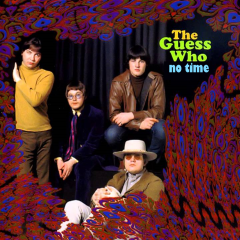
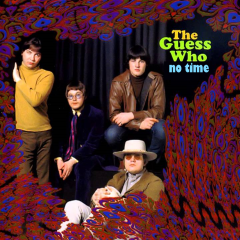
"No Time" is one of the best-known songs by The Guess Who, a Canadian rock band. Written by band members Randy Bachman and Burton Cummings, the tune has the distinction of being recorded twice, and appearing on two consecutive Guess Who albums. The first — a longer, more psychedelic version — appeared on the band's second album, 1969's Canned Wheat, and the second, shorter version was a track on the band's third LP, 1970's American Woman. It is the latter version of the song that most people would recognize today; it went to #5 on the U.S. charts and #1 in Canada. The personnel on both versions of "No Time" were Burton Cummings (lead vocals, guitar and piano), Randy Bachman (lead guitar and backing vocals), Jim Kale (bass and backing vocals) and Garry Peterson (drums).
The Guess Who was formed in Winnipeg — Manitoba’s capital and largest city — in 1965. Many members have passed through the band’s roster over the years. Mainstay guitarist and songwriter Randy Bachman left the band at the height of its popularity in 1970 and went on to form the highly successful Bachman-Turner Overdrive (BTO) a year later. Burton Cummings left The Guess Who in 1975, and went on to a successful career as a solo artist. Bassist Jim Kale owns the trademark to the name "The Guess Who" and sometimes tours the nostalgia circuit with various members under that name.
The Guess Who released 11 albums in the Burton Cummings era (1965-75). The band was inducted into the Canadian Music Hall of Fame in 1987.