So here we are. Last workday of 2017. Which means it’s almost time again to post our annual Top 10 RBN Prognostications for the upcoming year. According to our long-standing tradition, we’ll do that on the first workday of the New Year — Tuesday, January 2, 2018. But today, it’s time to look back, too see how those 10 Prognostications we posted way back at the start of 2017 — The Year of the Rooster in the Chinese calendar — held up. Yes, we actually check our work! In today’s blog, we grade ourselves on our year-ago views of how 2017 would turn out for energy markets.

Recall that 12 months ago, we were finishing up another tough year, though there were signs that things were starting to turn around. Crude oil prices had rebounded from their dismal lows of January and February 2016 — the same for natural gas. Crude production was up too, after bottoming out in September 2016, and the Permian in particular was coming on strong. Rig counts were recovering, and producers continued to find ways to wring more oil, gas and NGLs out of their wells while at the same time reining in their drilling and completion costs. It was against that backdrop that we threw caution to the wind and posted our Top 10 RBN Prognostications for 2017. As it turns out, we feel pretty good about most of last year’s market calls. Let’s review them one by one, beginning with Prognostication #10 and working our way up the list:
- We’ll see no crude price breakout in 2017, one way or the other. Got that one right. Crude oil prices traded within a +/- $9/bbl range, from a low of $42.50/bbl back in June to a high of just under $60/bbl here at the end of the year, for an average of $50.75/bbl. If you were looking for wild volatility, in 2017 crude oil was not your market. Yes, it is true that we have not seen $60/bbl for WTI in Cushing since June 2015, but don’t lose sight of the fact that it’s only about $6/bbl higher than the last week of 2016 — up about 11%. Higher sure, but we don’t count that as a breakout.
- U.S. crude production in 2017 will increase, but not at the 1 MMb/d-a-year growth rate seen from 2012-14. Well, U.S. production did increase, and exceeded our expectations. The shale-led ramp up in crude oil production peaked in April 2015 at 9.6 MMb/d, and in response to the oil price crash then fell 1.0 MMb/d to 8.6 MMb/d in September 2016. But at that point, production growth kicked back in, increasing to 8.8 MMb/d by December 2016. Growth continued this year, up to 9.5 MMb/d in EIA’s September monthly numbers, then to 9.8 MMb/d in EIA’s most recent weekly production stats. So for the year, that looks pretty much like 1 MMb/d. We get no points for this one.
- Rig productivity will continue to improve. We may have slightly underestimated the magnitude of production growth in #9, but at least we didn’t miss the reason why. Rig productivity keeps on rising, with longer laterals and more intensive completions driving higher volumes from each well. Want numbers? Check out EIA’s Drilling Productivity Report, which indicates Bakken crude production added per rig has increased from 440 b/d in 2014 to 1,260 b/d in 2017, Eagle Ford from 620 b/d to 1,170 b/d, and Niobrara 391 b/d to 1,090 b/d. Some basins like the Eagle Ford showed productivity numbers down in 2017 versus 2016, but most were still improving.

About the song
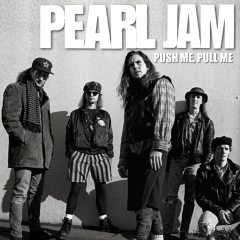
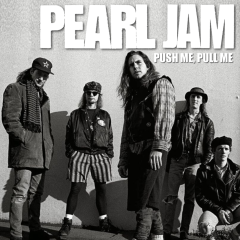
"Rearviewmirror" is a tune by Pearl Jam, with writing credits going to all members of the band. It was one of the first songs to feature lead vocalist Eddie Vedder on guitar. “Rearviewmirror” was included on Pearl Jam’s 1993 album, titled Vs, which was their second studio album and which ranked #1 on Billboard’s Top 200 chart for five weeks. In addition, the song was on the group’s 2004 greatest hits album, also titled Rearviewmirror.
Pearl Jam was formed in Seattle by Stone Gossard and Jeff Ament after Andrew Love, the singer for their previous band, Mother Love Bone, overdosed on heroin the day before their album was released, thus breaking up the band. Gossard and Ament recruited Seattle lead guitarist Mike McCready, and initially used a few different drummers –– including ex-Red Hot Chili Peppers’ Jack Irons –– to form a new group. They were searching for a singer, and Irons recommended a guy he knew in San Diego named Eddie Vedder. They sent him a tape of three instrumentals, and Vedder returned it with vocals and lyrics he had done. They were impressed with it and paid for an airline ticket to fly Eddie up for an audition, which resulted in him joining the band. The group then played a slew of gigs, using the moniker Mookie Blaylock after the NBA point guard of the same name. After signing a deal with Epic Records in 1991, the band renamed themselves Pearl Jam. Their first album was titled 10 in reference to their former name, as 10 was the number Mookie Blaylock wore on his jerseys. Drummer Dave Abbruzzese appears on "Rearviewmirror" and the Vs album. Ex-Soundgarden drummer Matt Cameron currently pounds the skins for Pearl Jam.
Pearl Jam was inducted into the Rock & Roll Hall Of Fame in 2017, and to date they have sold 32 million records in the U.S. and 60 million worldwide.