Well, here we are. The last day of 2020. We are tempted to say “unprecedented” to describe the year. But the word is so overused — there’s been an unprecedented use of the word “unprecedented” — let’s just say it will be good riddance to have this one behind us. After all, we’ve seen a collapse in transportation fuel demand, an oil price war between major producers, negative $37/bbl crude prices, massive LNG cargo cancellations — the list goes on — all in the context of a global pandemic and much of the world committed to weaning itself off fossil fuels over the next few decades. How do you make sense of all that? How do you anticipate when it’s going to be “all right” again? Well, one thing we can do is to heed the events and trends that captured the market’s attention during all this chaos. In other words, to put a spotlight on the things that the market considers top priority — crowd-sourced market intelligence, if you will. Well, at RBN we have one way to do that. We scrupulously monitor the website hit rate of the RBN blogs that are fired off to over 30,000 people each day and, at the end of each year, we look back to see which topics generated the most interest from you, our readers. That hit rate reveals a lot about major market trends. So, once again, we look into the rear-view mirror to check out the Top 10 blogs of the year based on the number of rbnenergy.com website hits.
As you might expect, this year’s Top 10 has absolutely nothing in common with 2019’s. Back in that long-gone era, it was all about supply — too much of it. The market needed more pipelines, more export docks, more petchem plants, more gas-processing plants, more of just about anything infrastructure-related. By April 2020, that world was a distant memory. This year the Top 10 is mostly related to demand — not enough of it. COVID whacked demand for all things hydrocarbon, which crushed prices, prompting well shut-ins and drilling cutbacks, which slashed production, leaving much of the infrastructure developed in the pre-COVID world well short of enough throughput to fill capacity. Given this new reality, let’s see what the top blogs of 2020 can tell us about how the market dealt with the meltdown, why some market segments have recovered faster than others, and what we might expect in the coming year. Just like any year-end Top 10 list, we’ll start with #10 and work our way up to #1.

Here are the Top 10 blogs of 2020 (in reverse order, by number of hits):
#10 – 5/3/2020 – Crude Oil: Shut Down - Justifications, Complications and Ramifications of Crude Well Shut-Ins
Before the 2020 meltdown, the thought that producers would be shutting-in thousands of producing wells due to lack of market was a laughable concept. Even when Permian gas prices dropped to negative $5.75/MMBtu in April 2019, crude oil and associated gas kept on flowing. After all, 2019 prices were low (we thought) and producers needed the cash flow. Then April 2020 happened, and for a while it looked like there were no buyers for some crude oil streams at any price. So producers had no other option — they had to shut in. But the process of shutting in was anything but random. The geology and economics of individual wells were assessed along with the gathering, processing, and transportation commitments associated with each well. It was critically important to shut in the right wells — that is, the ones that would minimize the impact to both cash flow and contractual obligations. This blog laid out the considerations and processes that many producers went through to make that happen and set the stage for our subsequent understanding of shut-in economics.
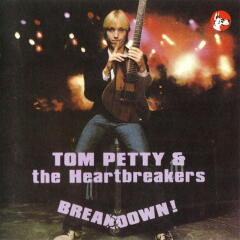
About the song
"Breakdown" was written by Tom Petty and appears as the second song on the self-titled debut album of Tom Petty and the Heartbreakers. Released as the first single from the album in November 1976, the song went to #40 on the Billboard Hot 100 Singles chart. It became a staple of the band's live shows and has been covered by artists such as Grace Jones, Suzi Quatro, and The Replacements. When Dwight Twilley heard the band working on the song at Shelter Studio, where The Dwight Twilley Band was also recording, he convinced them that the hook of the song was the guitar riff that Mike Campbell was playing. The band then incorporated that riff into the intro and other sections of the song. Personnel on “Breakdown” were: Tom Petty (lead vocal, rhythm guitar), Mike Campbell (lead guitar), Benmont Tench (keyboards), Ron Blair (bass), Stan Lynch (drums), Jeff Jourard (rhythm guitar), Phil Seymour (backing vocals), and Noah Shark (maracas, tambourine, shakers).
The Tom Petty and the Heartbreakers LP was recorded during the summer of 1976 at Shelter Studio in East Hollywood. Produced by Denny Cordell, it was released on Shelter Records in November 1976. It went to #55 on the Billboard Top 200 Albums chart, and it has been certified Gold by the Recording Industry Association of America. Two singles were released from the album.
Tom Petty and the Heartbreakers were an American rock band from Gainesville, FL, put together in Hollywood in 1976 by Tom Petty, Mike Campbell, Benmont Tench, Ron Blair, and Stan Lynch. Petty, Campbell, and Tench were formerly together in Mudcrutch, which was also signed to Shelter Records. The band's career stretched over four decades, resulting in sales of over 80 million records worldwide. They released 13 studio albums and 68 singles. Tom Petty released three solo albums and two albums with the supergroup, The Traveling Wilburys. Eight members passed through the ranks of the Heartbreakers. The band was inducted into the Rock and Roll Hall of Fame and has a star on the Hollywood Walk of Fame. Tom Petty died in 2017, sadly putting an end to the Heartbreakers. All of the band members have been involved in studio work since Petty's death. Mike Campbell just released the debut album of his group The Dirty Knobs, entitled Wreckless Abandon, in November 2020.