The global push to slash methane emissions from natural gas-related operations — from production wells to end-users — and certify gas as being “responsibly sourced” has been accelerating and broadening. It now seems possible that within the next two or three years the majority of gas produced in the U.S. will be certified as responsibly sourced gas, or RSG, and that large numbers of gas buyers — power generators, industrials, LNG exporters and local distribution companies (LDCs) among them — will be buying RSG, or at least moving toward doing so. Further, an RSG market is developing (a handful of trading platforms have already been launched), as are tracking systems to ensure that gas sold as RSG is fully accounted for and legit, with no double-counting or fuzziness. In today’s RBN blog, we begin an in-depth look at RSG and its emergence from a relative novelty to the cusp of wide acceptance.
The replay of our Fall 2026 School of Energy (September 9 & 10, Houston) is now available online!
Learn from RBN experts, participate in hands-on Excel modeling, connect with industry peers, and gain a stronger understanding of today's interconnected energy markets.
Even as many countries and companies around the world continue to ramp up their use of wind and solar power and explore the potential for a variety of renewable, low- or no-carbon fuels, there’s a growing acknowledgment that natural gas — imperfect though it may be from a climate perspective — is a readily available and relatively clean source of energy and that it will remain a significant part of the global energy mix for decades to come. A lot of this rethinking is tied to energy security. Russia’s February 2022 invasion of Ukraine provided a stark reminder to climate-minded Europe (and the rest of us, too) that while the shift to a lower-carbon economy is important it needs to be carefully paced — that it won’t do anyone any good to have an entirely “green” grid that produces only a fraction of the energy the world needs.
With all that in mind, there are a variety of efforts underway to make the natural gas piece of the global energy puzzle as clean as it can be. The primary focus of these efforts is on reducing as much as possible the amount of methane (CH4) — the main ingredient in natural gas — that is released into the atmosphere along its route from the production well to the end-user’s burner tip. There’s good reason for zeroing in on methane emissions. Methane is a particularly potent greenhouse gas (GHG), with 84 times the atmospheric heat-trapping effect of carbon dioxide (CO2) over the short term (five to 20 years). That means reducing methane emissions along the gas value chain has quick and very positive climate effects.
Which brings us to RSG, a topic we first discussed a couple of years ago in Better Way. As we said then, RSG is natural gas that an independent third party has certified as being produced, gathered, processed, transported and/or distributed in a way that meets higher environmental standards. (We compared RSG to an organic tomato or a shot of Grey Goose vodka — a seemingly better, premium-priced version of a commodity.)
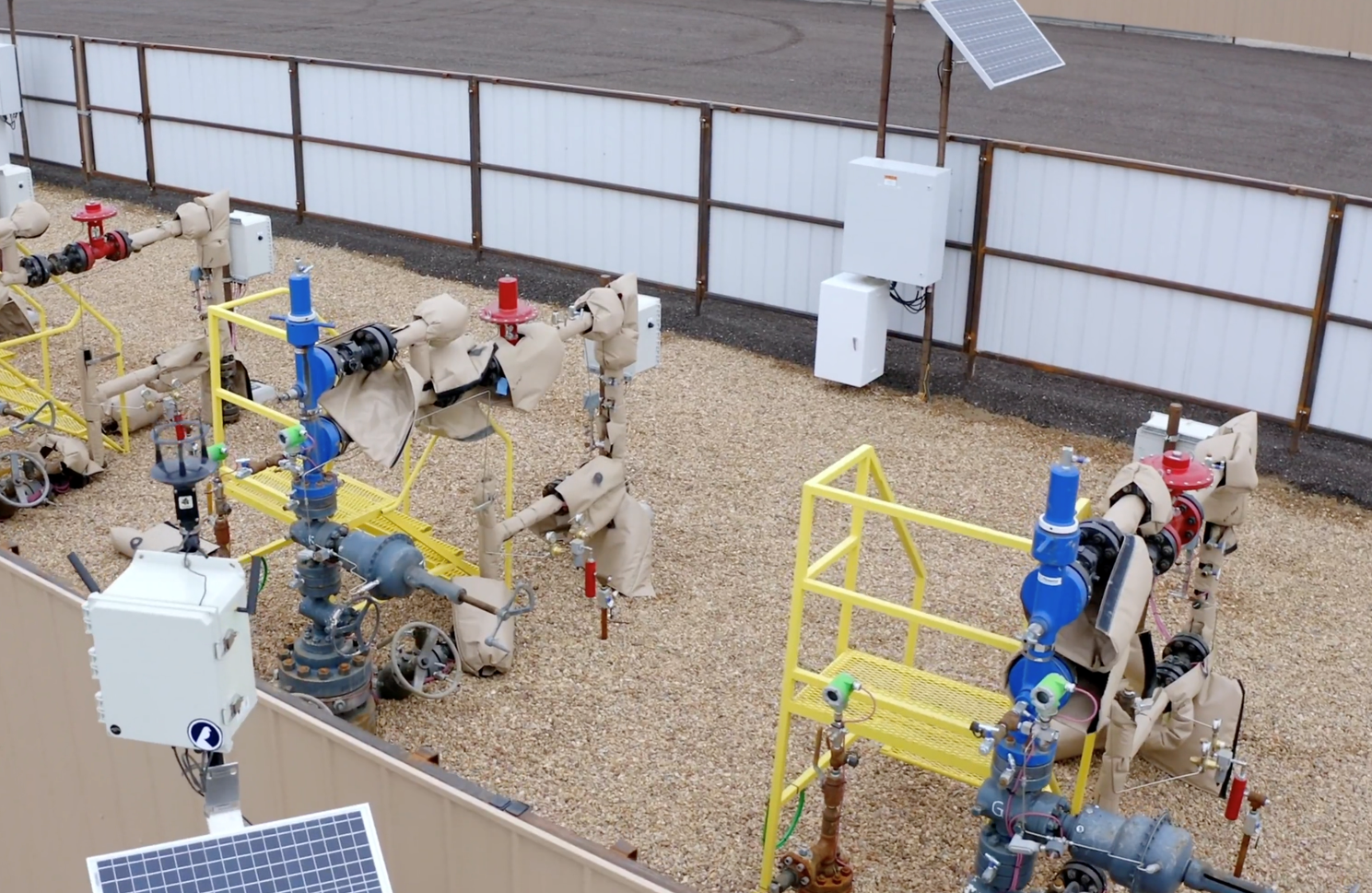
Methane Monitoring Equipment. Source: Project Canary
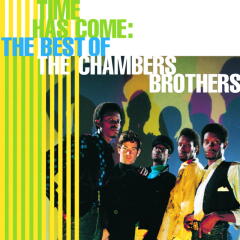
About the song
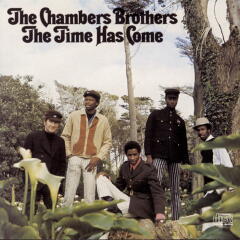
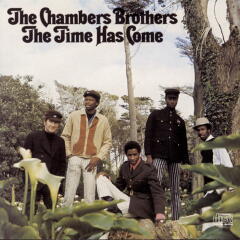
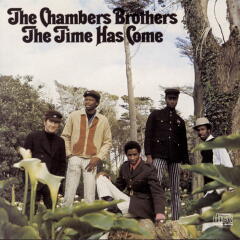
“Time Has Come Today” was written by Joe and Willie Chambers and appears as the fifth song on side two of the Chambers Brothers’ debut album, The Time Has Come. Joe Chambers wrote the lyrics for the song after attending a lecture at UCLA by counterculture philosopher Timothy Leary. The song is a call to action in the fight for social justice during the tumultuous times of the late 1960s. It was originally recorded by the band in 1966, clocking in at a short 2:27 in length. The band re-recorded it in August 1967, with the full-length album version lasting just over 11 minutes. This version features a high hat with tambourine attached and a cowbell as the main percussive instruments in the song. It presents a lysergic whirlwind of sounds that includes heavy use of tape delay and reverb. The midsection of the tune has fuzzed-out guitar that sounds like angry hornets, amidst howling and screams, all drenched in tape delay that would have put Sam Phillips on a different astral plane with his experiments with slap back tape echo at his studio at 706 Union Avenue in Memphis in 1955. Did someone say, “more cowbell?”, well alrighty then ... my soul has been psychedelicized!
Released as a single (at 4:45 running time) in December 1967, it went to #11 on the Billboard Hot 100 Singles chart. The full 11:06 LP version was a staple of progressive FM radio stations in the late 1960s, only rivaled by “In-a-Gadda-Da-Vida” for deejays in need of a bathroom break during airtime. The song has appeared in multiple motion pictures and television shows and has been covered by many artists over the years. Personnel on the record were: Lester Chambers (vocals, percussion), Joe and Willie Chambers (guitars), George Chambers (bass, vocals), and Brian Keenan (drums, percussion).
The Time Has Come LP was recorded in Los Angeles between August 1966 and August 1967, with David Rubinson producing. The album was released in November 1967 and went to #4 on the Billboard 200 Albums chart. Two singles were released from the LP.
The Chambers Brothers are an American psychedelic soul band originally from Carthage, MS — they relocated to Los Angeles in the mid-1950s. They started their career playing folk and gospel music but switched to electric guitars and an edgier rock and soul sound in the Vietnam era. The group in its prime consisted of brothers George, Joe, Lester, and Willie Chambers, along with Brian Keenan. They have released seven studio albums, seven live albums, 10 compilation albums and 10 singles. The band still plays occasional shows in the Los Angeles area. Drummer Brian Keenan died in 1985 at the age of 42. Bassist George Chambers died in 2019 at the age of 88.