The Biden administration’s recent announcement at the COP28 climate change conference in Dubai that it has issued a final rule on reducing methane emissions from the oil and gas industry raises an important question: If the feds will be requiring every producer to phase out flaring, install new equipment, and meet new, aggressive standards for emissions monitoring and leak detection and repair, will there still be a need for entities like MiQ and Project Canary to score or assess the lower-emissions natural gas produced by a significant subset of enviro-conscious E&Ps? In today’s RBN blog, we discuss the potential impacts of the new EPA rule on gas certification/differentiation and the development of a market for low-methane gas.
This blog series’ aim is to examine the certified/differentiated gas movement, which has been driven to a large degree by growing interest among gas producers, shippers and buyers alike in gas that is produced, processed and transported with minimal emissions of methane along the way. In Part 1, we discussed the outsized climate impact of methane emissions — a greenhouse gas (GHG) with more than 80 times the atmospheric heat-trapping effect of carbon dioxide (CO2) over the short term (five to 20 years) — and the push by an increasing number of E&Ps to reduce their methane emissions and get credit from the market for those achievements.
Part 2 focused on the push by gas producers to have their gas certified as a “low-emissions” hydrocarbon and differentiated (i.e., scored or assessed) based on the percentage of methane that escapes into the atmosphere during the production process, with higher marks being given to gas with a lower methane intensity (MI). We also discussed the two primary alternatives for gas producers seeking to certify or differentiate their gas (MiQ and Project Canary) and noted that as much as one-third of the natural gas being produced in the U.S. each day is certified/differentiated by one of them.
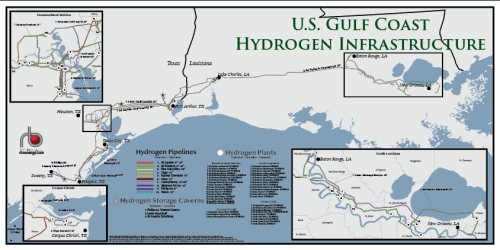
RBN’s U.S. Gulf Coast Hydrogen Infrastructure Map lays out the pipelines and merchant hydrogen plants that make up the gulf coast market, providing an unprecedented snapshot of the region’s hydrogen infrastructure network.
In Part 3, we detailed the efforts that 20 U.S. producers at the forefront of this movement have been undertaking to certify/differentiate their gas. Most of these efforts have been occurring in the gas-focused Marcellus/Utica and Haynesville production areas, though a handful of E&Ps are having MiQ or Project Canary score or assess at least some of their production in the Denver-Julesburg (DJ), the Permian and other basins. Last time, in Part 4, we examined the demand side of the certified/differentiated gas equation — that is, the downstream entities that procure gas for others (local distribution companies, or LDCs) or for themselves (industrials, LNG exporters, etc.), as well as the state regulators who oversee LDC gas procurement.
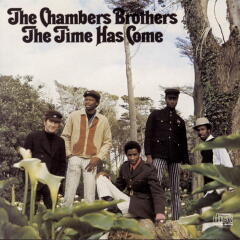
About the song
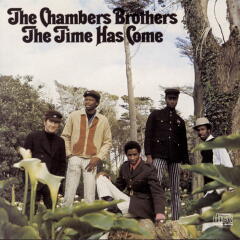
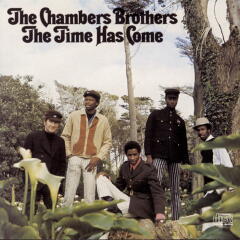
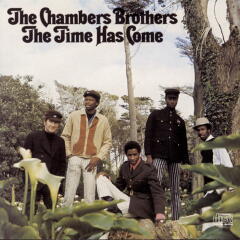
“Time Has Come Today” was written by Joe and Willie Chambers and appears as the fifth song on side two of the Chambers Brothers’ debut album, The Time Has Come. Joe Chambers wrote the lyrics for the song after attending a lecture at UCLA by counterculture philosopher Timothy Leary. The song is a call to action in the fight for social justice during the tumultuous times of the late 1960s. It was originally recorded by the band in 1966, clocking in at a short 2:27 in length. The band re-recorded it in August 1967, with the full-length album version lasting just over 11 minutes. This version features a high hat with tambourine attached and a cowbell as the main percussive instruments in the song. It presents a lysergic whirlwind of sounds that includes heavy use of tape delay and reverb. The midsection of the tune has fuzzed-out guitar that sounds like angry hornets, amidst howling and screams, all drenched in tape delay that would have put Sam Phillips on a different astral plane with his experiments with slap back tape echo at his studio at 706 Union Avenue in Memphis in 1955. Did someone say, “more cowbell?”, well alrighty then ... my soul has been psychedelicized!
Released as a single (at 4:45 running time) in December 1967, it went to #11 on the Billboard Hot 100 Singles chart. The full 11:06 LP version was a staple of progressive FM radio stations in the late 1960s, only rivaled by “In-a-Gadda-Da-Vida” for deejays in need of a bathroom break during airtime. The song has appeared in multiple motion pictures and television shows and has been covered by many artists over the years. Personnel on the record were: Lester Chambers (vocals, percussion), Joe and Willie Chambers (guitars), George Chambers (bass, vocals), and Brian Keenan (drums, percussion).
The Time Has Come LP was recorded in Los Angeles between August 1966 and August 1967, with David Rubinson producing. The album was released in November 1967 and went to #4 on the Billboard 200 Albums chart. Two singles were released from the LP.
The Chambers Brothers are an American psychedelic soul band originally from Carthage, MS — they relocated to Los Angeles in the mid-1950s. They started their career playing folk and gospel music but switched to electric guitars and an edgier rock and soul sound in the Vietnam era. The group in its prime consisted of brothers George, Joe, Lester, and Willie Chambers, along with Brian Keenan. They have released seven studio albums, seven live albums, 10 compilation albums and 10 singles. The band still plays occasional shows in the Los Angeles area. Drummer Brian Keenan died in 1985 at the age of 42. Bassist George Chambers died in 2019 at the age of 88.