In the spring of 2020, as the COVID-19 crisis started hitting the energy sector hard, many refiners made the tough decision to dramatically cut back capital spending plans and operating costs for the year in order to weather the storm. While these cuts were swift and sizeable, they were not absolute — they couldn’t be, given that refining is a capital-intensive industry with complex assets that require seemingly constant maintenance, equipment swap-outs, and upgrades. And then there’s the added pressure that refiners also need to invest in keeping their facilities in compliance with changing environmental rules, and to consider the overall impact of investments in new, “greener” fuels, such as renewable diesel, that may help them improve their profitability going forward. Today, we look at refiner capital spending in the context of recent history and highlights some of the growth projects being pursued in the sector.
From a capital spending perspective, refiners are very different animals than exploration and production companies (E&Ps). Sure, both sectors of the energy industry require a lot of capital, but while E&Ps’ capex can ramp way up or way down year-to-year, reflecting shifts in hydrocarbon supply, demand, and (mostly) pricing, refiners’ spending tends to be more consistent over time. Why? Refiners focus primarily on maintaining existing assets and on making the incremental enhancements needed to refine new grades of crude, to expand refining capacity, and to comply with new environmental regulations.
When discussing refinery capex, we tend to think of the spending in two major categories: Sustaining Capital and Growth/Discretionary spending.
Sustaining Capital
Sustaining capital is essentially “stay-in-business” capital. Refining involves large, expensive equipment with specialized technology to convert crude oil and intermediate feedstocks into finished products like gasoline, diesel, and jet fuel, as well as specialty products like chemical feedstocks and lubricants. The various units within a refinery must be continuously maintained to ensure they can operate 24/7 in the safest, most efficient, and most productive manner. There are two primary subcategories of sustaining capital:
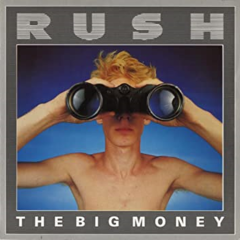
About the song
"The Big Money" was written by Neil Peart, Alex Lifeson, and Geddy Lee. It appears as the first song on Rush's 11th studio album, Power Windows. It was released as a single in September 1985, and went to #4 on the Billboard Mainstream Rock, and #45 on the Billboard Hot 100 Singles charts. Personnel on the record were: Geddy Lee (lead vocals, bass guitar, bass pedals, synthesizers), Alex Lifeson (electric, acoustic guitars), and Neil Peart (drums, percussion, electronic percussion).
Power Windows was recorded between April and August 1985 at The Manor Studios in Oxfordshire, England; SARM East, Abbey Road Studios, and Angel Recording Studios in London; and AIR Studios in Montserrat. Produced by Peter Collins and Rush, the album was released in October 1985. It went to #10 on the Billboard Top 200 Albums chart, and has been certified Platinum by the Recording Industry Association of America. Five singles were released from the LP.
Rush was a Canadian progressive rock band formed in Toronto in 1968 by guitarist Alex Lifeson. Bassist/vocalist Geddy Lee joined the band in late 1968, and drummer Neal Peart in July 1974. Eight members passed through the ranks of the band since its inception. They released 19 studio albums, 11 live albums, 11 compilation albums, two EPs, and 38 singles. Rush has sold more than 40 million records worldwide, and has been awarded 24 Gold, 14 Platinum, and three multi-Platinum albums in the U.S. The band was inducted into the Canadian Music Hall of Fame in 1994 and the Rock and Roll Hall of Fame in 2013. The band officially disbanded in January 2018. Neil Peart passed away in January 2020.