California energy markets look quite a bit different today than they did five years ago when the state enacted a renewable portfolio standard (RPS) law that requires every utility and other electricity retailer to serve 33% of their load with renewable energy by 2020. Since then, California has seen huge changes in its energy balances – it shut down the nuclear generating plants at San Onofre, regulators expedited the build-out of new transmission lines to get more wind and solar power into the market, the state implemented a carbon cap-and-trade program, the legislature increased the RPS target to 50%, and SoCal Gas’s Aliso Canyon natural gas storage facility sprung a leak. Today, we look at the changes in California’s energy markets since 2011, and what they mean for future developments in a state far out front in the adoption of renewables and environmental regulation.
An Energy Market in Flux
It was 2011 when California’s state legislature approved –– and Governor Jerry Brown signed into law –– Senate Bill 2, which launched the state into what amounts to a restructuring of its energy markets. A year later (2012), problems with newly replaced steam generators at the two-unit San Onofre Nuclear Generating Station (SONGS) resulted in their permanent shutdown, taking 2,250 MW of generation capacity out of the power-hungry Los Angeles basin (see Play Me a Songs Mr. Generator Man).
The combination of RPS implementation and the loss of San Onofre prompted state regulators to speed up the build-out of new transmission lines to allow more wind and solar power to move from supply regions to key demand areas. Both wind and solar saw capacity grow in 2012, with wind up 800 MW and solar rising 600 MW. That intermittent renewable power supply was far from enough to make up for the San Onofre shutdowns, but fortunately there was help from the Pacific Northwest, which was able to provide hydroelectric power into California thanks to a few strong “water years.”
About the song
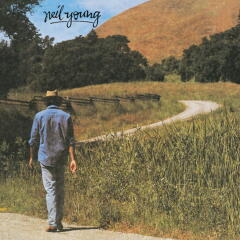
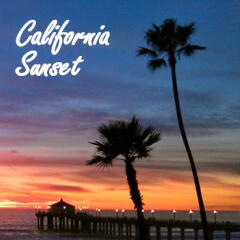
“California Sunset” was written by Neil Young and appears as the first song on side two of Young’s 14th studio album, Old Ways. The song is a homage to California — the Golden State — and its breathtakingly beautiful sunsets. California proved to be golden for Toronto-born Young, who, after growing up in Winnipeg, MB, left in the mid-1960s in a black 1953 Pontiac hearse named “Mortimer” in search of rock-and-roll gold in Hollywood. “California Sunset” was recorded live at a performance at The Opry in Austin for Austin City Limits in September 1984. It featured Neil Young (lead vocals, guitar), and his band, International Harvesters, with Anthony Crawford (guitar, mandolin), Ben Keith (pedal steel guitar), Spooner Oldham (piano), Tim Drummond (bass), Karl Himmel (drums), and Rufus Thibodeaux (fiddle).
Old Ways features country music tracks recorded between January 1983 and April 1985 at House of David in Nashville; The Castle in Franklin, TN; Pedernales Recording Studio in Spicewood, TX; and live at The Opry in Austin. It was produced by Neil Young, David Briggs, Ben Keith, and Elliot Mazer. It was Young’s full-on foray into country music and featured the cream of the crop of Nashville season players at the time. Willie Nelson and Waylon Jennings made appearances on the album. Released in August 1995, the LP went to #75 on the Billboard 200 Albums chart. Two singles were released from the album.
Neil Young is a Canadian-American singer, songwriter, musician, and record producer. After Winnipeg, he formed the folk-rock band Buffalo Springfield in Los Angeles in 1966 before embarking on a solo career in 1968, often backed by the band Crazy Horse. He joined Crosby, Stills, Nash & Young in 1969, drifting in and out of the band as his solo career demanded. As a solo artist, he has released 45 studio albums, 12 live albums, three compilation albums, four soundtrack albums, two EPs, and 62 singles. Young has won three Grammy Awards and one MTV Video Music Award. He is a member of the Canadian Music Hall of Fame and has been inducted into the Rock and Roll Hall of Fame twice, as a solo artist in 1995 and, in 1997, as a member of Buffalo Springfield. Young continues to record and tour and will begin a U.S. tour with Crazy Horse beginning in April.