The seven years since the heady days of $100/bbl oil in mid-2014 have been a tumultuous time for midstream companies tasked with funding a massive infrastructure build-out to support surging crude oil and natural gas production. Midstreamers have been buffeted by volatile commodity prices, waves of E&P bankruptcies, rapidly shifting investor sentiment, and, finally, a global pandemic. Perhaps no company has had a more challenging road than master limited partnership (MLP) Plains All American, which had to cut unitholder distributions three times over a turbulent five years as it built out a crude gathering and long-haul transportation portfolio focused on the Permian Basin. With its capital program winding down, commodity prices rising, and a new joint venture in the works, can Plains performance rebound and win back investor support? In today’s blog, we discuss highlights from our new Spotlight report on Plains, which lays out how the company arrived at this juncture and how well-positioned it is to benefit from the significant recovery in commodity prices and Permian E&P activity.
Spotlight is a joint venture of RBN Energy and East Daley Capital Advisors. With the support of Oil & Gas Financial Analytics, Spotlight reports provide “deep dives” into the fundamentals that shape the outlook for midstream energy companies and are included as part of our Drill Down report series, which is available to RBN Backstage Pass members. Spotlight should not be viewed as investment advice.
Plains All American (PAA), which was founded in 1989, built what is now the largest U.S. network of crude oil gathering systems, takeaway pipelines, and terminals, along with significant crude and NGL transportation, processing, and storage assets in Western Canada. After the onset of the Shale Revolution, Plains invested heavily to build out its infrastructure network with a focus on increasing the capacity of its Permian operations. The strategy paid off as oil prices exceeded $100/bbl, and Plains’ MLP unit price surged to an all-time high of $60/unit in July 2014 as it raised its distributions to unit-holders 41 times in 43 quarters through early 2015. However, persistently low crude prices in 2015 eroded the company’s performance and sent its unit price tumbling as distribution coverage plunged to a projected 0.86x for 2016. In response, as we detailed in a 2017 Spotlight report on the company, PAA responded by cutting its distribution twice over the next year as it dramatically changed its corporate structure and budget allocation process to fund organic growth, reduce debt, and rebuild shareholder returns.

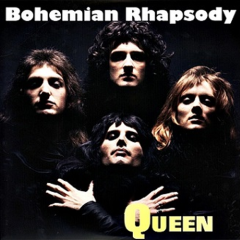
About the song
“Bohemian Rhapsody” is the lead single from Queen’s 1975 album, A Night at the Opera. The song was written by Queen’s frontman and lead vocalist, Freddie Mercury. No synthesizers were used on this recording. The song clocks in at just under six minutes, has no chorus, has multiple tempo changes, four key changes, has elements of the opera in it, and has lyrical content that refers to murder and nihilism ... all the elements for failure in the pop singles world! It was one of the earliest songs to have a promotional video with it — considered groundbreaking in 1975. The song shot to #1 on the UK charts after its release and peaked at #9 in the U.S.
After Freddie Mercury's death in November 1991, “Bohemian Rhapsody” re-entered the charts, and it did so again the following year after it was featured in the infamous AMC Pacer scene in the movie "Wayne's World." The song has sold over 6 million copies to date worldwide, was inducted into the Grammy Hall of Fame in 2004, and is listed in the Guinness Book of World Records as the UK's best single of the past 50 years.
When Queen was formed in London in 1970, its members were: Freddie Mercury (lead vocals and piano), Brian May (guitar and backing vocals), Roger Taylor (drums and backing vocals) and John Deacon (bass). The original foursome released 15 albums. After Freddie Mercury passed away in November 1991, May and Taylor toured under the Queen banner, using Paul Rodgers and then Adam Lambert as the group’s lead vocalist. Queen was inducted into the Rock and Roll Hall of Fame in 2001, and into the Songwriters Hall of Fame in 2003.