It’s possible for a single new infrastructure project to be a game-changer — the Transcontinental Railroad comes to mind, and so do the New York City subway system and the Hoover Dam. In the energy industry’s midstream sector, things work a little differently. There, projects are incremental. They’re privately, rather than publicly backed and so they must be commercially justified, which means they need to serve a specific purpose. That’s not to say they can’t shift the landscape of the areas they serve. For example, when the Shale Revolution transformed and disrupted U.S. hydrocarbon markets, supply and demand dynamics were turned on their head and waves of projects had to be built to handle surging production in suddenly supercharged shale plays like the Bakken, Appalachia, and Permian and to serve new markets, most notably exports. Sometimes, it’s a more complicated combination of projects and events that, as a group, cause not-so-subtle shifts in how things are done. Lately, handfuls of pipeline projects and refinery closures — plus increasing regional crude oil production in both the U.S. and Canada — have spurred changes in traditional pipeline-flow patterns and may breathe new life into oil-export activity at the Louisiana Offshore Oil Port and the Beaumont-Nederland area in Texas. In today’s RBN blog, we discuss these changes and their effects.

Canadian crude output is rising, requiring new export routes. As traditional pathways face constraints, the U.S. Rockies—especially the Guernsey, WY hub—are emerging as key corridors for moving Canadian heavy crude to downstream markets, including the Gulf Coast.
For some time, crude oil export terminals in Louisiana (including LOOP) and what folks in the southeastern corner of Texas call “the Golden Triangle” (the Beaumont-Nederland-Port Arthur area) have been overshadowed by their competitors in Corpus Christi and Houston. More recently, however, exports out of LOOP and terminals in Beaumont and Nederland have been on the rise and, as we see it, their prospects for further gains are good — largely because of a series of seemingly random infrastructure changes and events we hinted at in the introduction to today’s blog. Individually, each midstream decision serves a specific purpose; whether it’s to overcome a capacity constraint, allow supplies to reach market more efficiently, repurpose an underutilized asset, or shut down infrastructure that’s no longer justified. These may be separate but, taken as a whole, when you step back, you can see their combined effect.
The Figure 1 map below highlights the infrastructure projects and refinery closures that, in combination, are enabling more crude oil from Western Canada, the Bakken, and the offshore Gulf of Mexico (among other places) to flow to LOOP and the three export terminals in Beaumont and Nederland, which are owned by Energy Transfer, Phillips 66, and Enterprise. Before we get to the net impacts of these projects and events, here are several projects and events we see combining to significantly change crude oil flows and boost the prospects for crude exports out of Louisiana and Texas’s Golden Triangle:
About the song
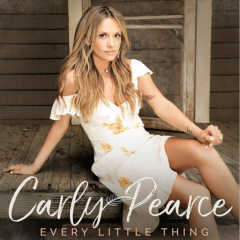
“Every Little Thing” was written by Carly Pearce, busbee, and Emily Shackleton and appears as the third song on Carly Pearce’s debut album of the same name. Released as a single in February 2017, the song went to #1 on the Billboard Country Airplay chart and #50 on the Billboard Hot 100 Singles chart. It has been certified Platinum by the Recording Industry Association of America. Personnel on the record were: Carly Pearce (lead vocals), busbee (bass, steel guitar, synthesizer, programming), Paul Barber (programming), Joeie Canady, Mark Hill (bass), Aaron Sterling (drums), Josh Matheny (dobro, steel guitar), Carl Miner (banjo, acoustic guitar, mandolin), Derek Wells (electric guitar), Ilya Toshinsky (banjo, bouzouki, acoustic guitar, mandolin, Mellotron, Wurlitzer electric piano), Ian Fitchuk (electric guitar, organ, piano, vibraphone), Eric Darken (percussion), and Bobby Hamrick, Wes Hightower, Emily Shackleton, Russell Terell, Allison Veitz, Laura Veitz (background vocals).
The album Every Little Thing was recorded in Nashville in 2016-17, with busbee (Michael James Ryan Busbee) producing. Released in October 2017, it went to #4 on the Billboard Top Country Albums chart and #32 on the Billboard 200 Albums charts. Two singles were released from the LP.
Carly Pearce (Carly Cristyne Slusser) is an American country music singer and songwriter. She started her professional career as a featured performer at Dollywood, the Pigeon Forge, TN, theme park owned and operated by Dolly Parton (who would later induct Pearce into the Grand Ole Opry). After an independently released version of “Every Little Thing” started getting heavy rotation on Sirius XM's “The Highway” channel, Pearce was offered a record deal with Big Machine Records, which officially released the song to country radio in February 2017. She has released three studio albums, one EP, and seven singles. Pearce has won a CMT Music Award, a CMA Award, and two ACM Awards — in 2021, she won “Female Vocalist of the Year” from the Country Music Association. She continues to record and tour. Busbee, who frequently collaborated with Pearce (and many other country music stars) as a songwriter and producer, died at 43 of a rare brain cancer in September 2019, just after finishing Pearce's second album.