It’s only August, but the folks involved in Permian markets must feel like they’ve already packed in a full year’s worth of action. The events are well known by now, but they’re still remarkable. A crash in refining utilization, followed by massive field shut-ins, all precipitated by a novel virus and exacerbated by some unusual moves by global oil producers. The year’s not over, and the coronavirus hasn’t gone away like a miracle, but a calm has emerged in oil prices that has helped producers get their sea legs. While $40/bbl West Texas Intermediate (WTI) is a far cry from where we started 2020, it’s been just enough to get most of the shut-in crude production back online in West Texas. Today, we provide an update on the status of curtailments in the Permian Basin.
When we wrote our 2020 Outlook For Permian Oil and Gas Markets the first week of January, Permian crude oil prices were hovering around $65/bbl and basin oil production was expected to grow by about 500 Mb/d this year. Compare that outlook with our most recent blog on Permian oil a few weeks ago, when we explained how almost 500 Mb/d of Permian crude oil had been voluntarily removed from the market in May. In the interim, various peculiar events combined to transform the early 2020 Permian state of affairs into today’s situation, including the most unexpected event of all: April’s crash of crude oil prices into negative territory. There have been many twists and turns along the way, and we’ve written enough oil blogs this year to fill a book. A lot of hardship has come with all these events as well, and we’d have much preferred things turned out this year more like our January outlook.
However, it’s not all bad news for crude oil prices lately. Despite the pricing challenges that stressed Permian oil producers and marketers earlier this year, a topic we just covered in What Difference Does It Make, prices for WTI began rising this summer. We’ll get to the recent price improvement next, but first a quick recap on where we’ve been so far in 2020. The green line in Figure 1 shows the price for WTI at Midland, the Permian’s primary crude oil trading hub, since the beginning of the year. For reference, the Midland hub has been trading at or near parity with Cushing over the last few weeks, oscillating between a slight premium and a slight discount to its Midcontinent peer. It seems like forever ago, but as we noted earlier, WTI started this year hovering between $60/bbl and $70/bbl before the global pandemic began eroding demand around the world. Just as the virus’s impacts were beginning to ramp up in February and March, a period highlighted by the dashed purple oval, oil markets were also broadsided by Saudi Arabia’s decision to engage in a short-lived price war, which we detailed in Wipe Out. The confluence of these events then helped send Midland WTI prices down to around $10/bbl by early April and laid the groundwork for the plunge to negative prices in late April (dashed red circle) — an event driven in large part by the expiration of the May futures contract, as we outlined in Futures Games.
About the song
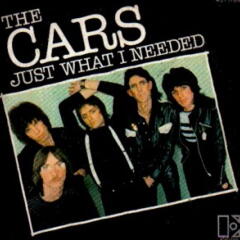
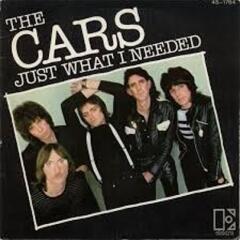
“Just What I Needed” was written by Ric Ocasek and appears as the third cut on side one of The Cars’ debut album, The Cars. Released as a single in May 1978, it went to #27 on the Billboard Hot 100 Singles chart. Personnel on the record were: Benjamin Orr (lead vocal, bass), Ric Ocasek (backing vocals, rhythm guitar), Elliot Easton (lead guitar, backing vocals), Greg Hawkes (keyboards, backing vocals), and David Robinson (drums, backing vocals).
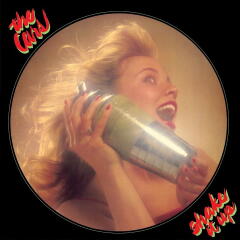
The Cars was recorded at AIR Studios in London, with Roy Thomas Baker producing. Released in June 1978, the album went to #18 on the Billboard Top 200 Albums chart. The striking album cover art featured Nataliya Medvedeva, a Russian-born model, singer, poet and writer. The Cars yielded three charting singles, proving that the band’s new wave/rock sound was radio-friendly. It has been certified 6X Platinum by the Recording Industry Association of America.
The Cars were an American rock band formed in Boston in 1976. Ric Ocasek, Benjamin Orr, Elliot Easton, Greg Hawkes and David Robinson successfully blended guitar-driven rock with synthesizer pop music. The band’s demos were garnering a lot of radio airplay in the Boston area before they signed a record deal with Elektra Records in 1977. The band released seven studio albums, eight compilation albums and 26 singles. They have sold over 23 million records in the U.S. alone. The Cars are members of the Rock and Roll Hall of Fame. They officially broke up for the first time in 1988, with four of the original members reuniting in 2010 to record the album Move Like This, which was followed with a brief tour. All the band members have done solo projects. Benjamin Orr died in 2000 and Ric Ocasek in 2019.