Increasing scale. Improving efficiency. Expanding into a fast-growing production area. These are only a few of the many reasons that midstream consolidation has remained an ongoing phenomenon in U.S. oil and gas basins — nowhere more so than in the Permian. The slew of acquisitions, mergers and joint ventures announced in the past couple of years is resulting not only in more concentrated ownership of midstream assets in West Texas and southeastern New Mexico, but in large, smooth-running systems for gathering, treating and processing hydrocarbons and transporting them to market. In other words, in magnificent molecule-moving machines. With today’s RBN blog, we begin a short series on the latest round of midstream M&A activity in the U.S.’s hottest production area.

The Natural Gas Master Class is a one-day online event focusing on understanding flow analysis, interpreting pipeline data and forecasting future flows. This course is designed to equip you with the knowledge and skills to effectively analyze the complexities of natural gas markets, flow analysis, and pipeline modeling. Join us online
October 21 | Online
We’ve blogged often about midstream consolidation in the Permian and other basins, most recently in our four-part “Just the Two of Us” series, where we looked at Crestwood Equity Partners’ acquisition of Oasis Midstream (Permian and Bakken); the merger of Altus Midstream and BCP Raptor Holdco LP (the corporate parent of EagleClaw Midstream) into a new entity called Kinetik Holdings (Permian); Enterprise Products Partners’ purchase of Navitas Midstream (Permian); and Targa Resources’ repurchase of ownership stakes in three “development company joint ventures” — DevCo JVs — that Targa and Stonepeak Infrastructure Partners had formed in February 2018 to help fund the development of a number of midstream assets in Texas. Before that, in We Belong Together, we discussed Plains All American and Oryx Midstream’s formation of a new, Plains-operated crude oil gathering, transportation and storage joint venture in the Permian.
Today, we return to the Permian — and Targa — to examine the midstream giant’s definitive agreement to acquire Lucid Energy Group from Riverstone Holdings and Goldman Sachs Asset Management for $3.55 billion in cash. (The deal is expected to close in the third quarter.) Publicly owned Targa is a Permian behemoth, with about 13,000 miles of gas-gathering pipelines (~7,000 miles in the Midland Basin and ~6,100 miles in the Delaware; orange lines in Figure 1) and 24 gas processing plants at 16 sites (black-outlined orange triangles) with a combined capacity of just over 4 Bcf/d: 16 plants with ~2.8 Bcf/d of capacity in the Midland and eight plants with ~1.3 Bcf/d of capacity in the Delaware. (Ten of the 16 plants in the Midland and ~4,900 miles of the gas-gathering pipelines there are owned by Targa’s WestTX joint venture with Pioneer Natural Resources, in which Targa holds a 72.8% interest.) Targa is also developing three new, 275-MMcf/d gas processing plants in the Permian (white-outlined orange triangles): the Legacy I and Legacy II facilities in the Midland (online in the fourth quarter of 2022 and second quarter of 2023, respectively) and the Midway plant in the Delaware (online in the third quarter of 2023).
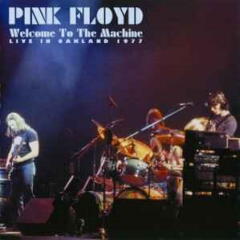
About the song
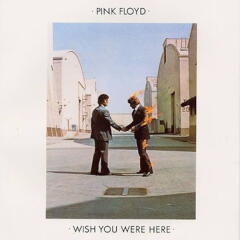
“Welcome to the Machine” was written by Roger Waters and appears as the second song on side one of Pink Floyd’s ninth studio album, Wish You Were Here. The song features synthesizers and acoustic guitars, processed with a wide array of tape effects. The recording was based around a throbbing sound produced by an EMS VCS 3 analog synthesizer. It was recorded between February and July 1975 at EMI Studios in London and was released as the B-side of the single “Have a Cigar” in November 1975. Personnel on the record were: David Gilmour (vocals, acoustic guitars), Richard Wright (EMS VCS 3, Hammond organ, ARP String Ensemble, Minimoog), Roger Waters (bass, EMS VCS 3), and Nick Mason (timpani, cymbals).
Wish You Were Here was recorded between January and July 1975 at EMI Studios in London, with production by Pink Floyd. Released in September 1975, the album went to #1 on the Billboard 200 Albums chart and has been certified 6x Platinum by the Recording Industry Association of America. Two singles were released from the LP. On a side note, the band was completing the mix on “Shine On You Crazy Diamond,” a song based on founding-member Syd Barrett, when an overweight man with a shaved head entered the studio. David Gilmour was the first to recognize the man as Syd Barrett. After briefly chatting with the band, he left, never communicating with the group again till his death in July 2006. His appearance at the studio may have influenced keyboardist Richard Wright to include the refrain from the Barrett-penned early Pink Floyd song, “See Emily Play” at the end of “Shine On You Crazy Diamond.”
Pink Floyd is a British rock band formed in London in 1965 by Syd Barrett, Roger Waters, Richard Wright and Nick Mason. David Gilmour joined the band in December 1967, and Syd Barrett departed the band in April 1968 due to mental health issues. The band has released 15 studio albums, four live albums, nine compilation albums, six EPs and 27 singles and has sold over 250 million records worldwide. Pink Floyd was inducted into the Rock and Roll Hall of Fame in 1996 and the UK Music Hall of Fame in 2005. Founding keyboardist Richard Wright died in September 2008. Although inactive as a band since 2015, Gilmour and Mason reunited as Pink Floyd and in March 2022 put out the single “Hey, Hey, Rise Up!” in support of Ukraine following the Russian invasion. Gilmour, Waters, and Mason all have successful solo careers.