Alberta’s petrochemical industry received bad news in late April when Dow, one of the world’s largest petrochemical companies, announced that it was delaying construction on an immense expansion of its ethane cracker in Fort Saskatchewan, AB, only a little more than a year after sanctioning the project. Although the length of the delay remains uncertain, the slowdown has created unwanted ripples across other projects that were tied to the expansion, especially for companies working to provide a substantial increase in ethane and natural gas supplies that will be required by the project. In today’s RBN blog, we take a closer look at the delay and what it might mean for Alberta’s energy industry.

The replay of our Fall 2026 School of Energy (September 9 & 10, Houston) is now available online!
Learn from RBN experts, participate in hands-on Excel modeling, connect with industry peers, and gain a stronger understanding of today's interconnected energy markets.
It was all smiles and sunshine for Alberta’s petrochemical and energy industry in late November 2023 when Dow announced that it was greenlighting a major expansion of its ethane cracker in Fort Saskatchewan. Dubbed the Path2Zero Project (Figure 1 rendition below) because of its focus on creating net-zero Scope 1 and Scope 2 emissions in the production of polyethylene, the C$8.9 billion (US$6.5 billion) expansion and retrofit of Dow’s existing Fort Saskatchewan complex was touted as a watershed moment for Alberta’s decades-old petrochemical industry. It was also seen as a major step forward in terms of creating a much larger demand outlet for ethane, the most abundant of the NGLs processed from natural gas in a region — Western Canada — where natural gas production and NGLs output has been steadily rising in recent years. After factoring in additional carbon capture and other emissions-abating technologies as part of the expansion, the all-in cost was estimated to be north of C$11 billion (US$8.1 billion) — not a trifle sum for Alberta’s petrochemical industry, already one of the world’s largest in terms of the production of polyethylene and its consumption of ethane.
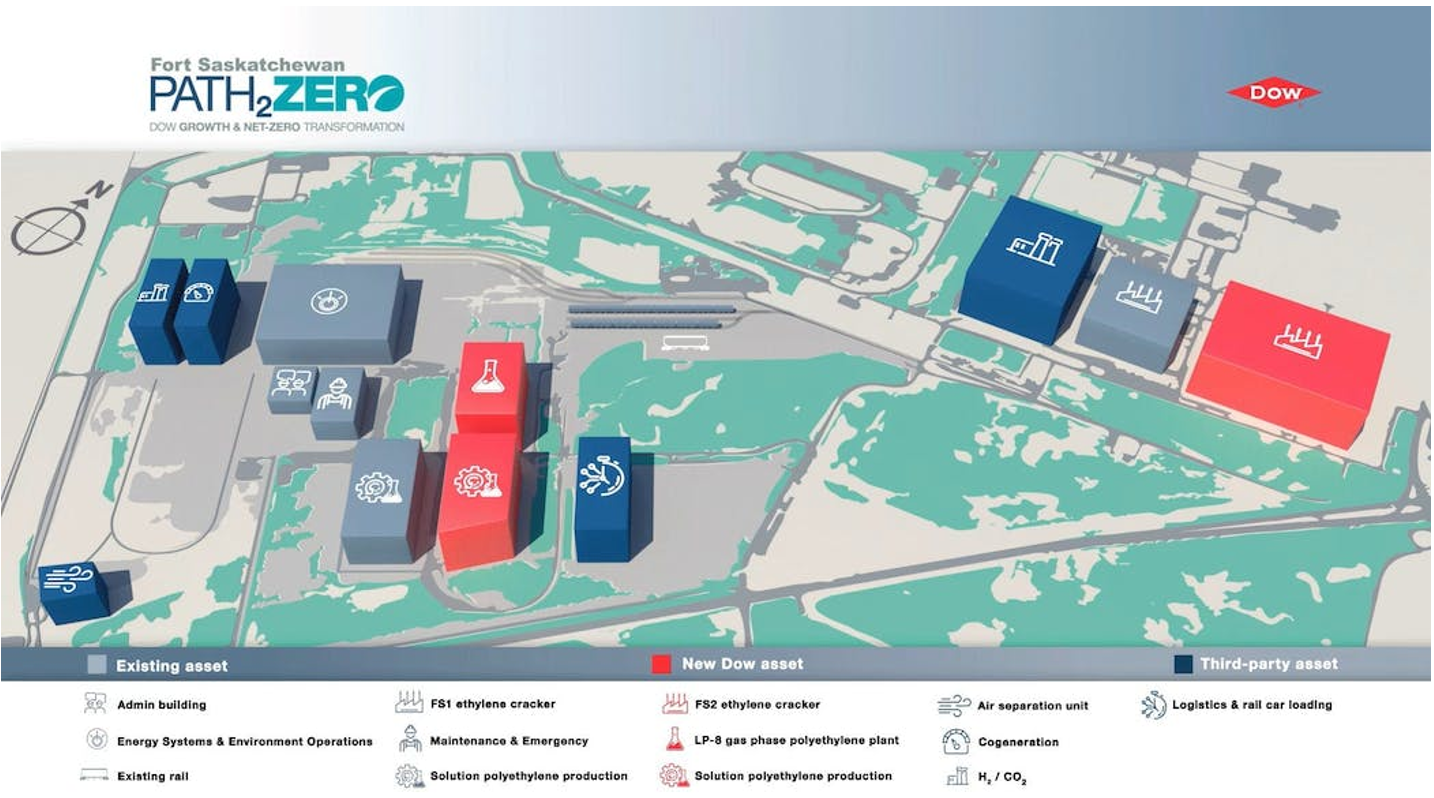
Figure 1. Dow Chemical Fort Saskatchewan Path2Zero Ethylene Complex. Source: Dow
About the song
“Wish You Were Here” was written by David Gilmour and Roger Waters and appears as the second song on the second side of Pink Floyd’s album of the same name. The song is sometimes considered to be a tribute to founding Pink Floyd member Syd Barrett, but according to its main lyricist, Roger Waters, it was about himself. It remains in heavy rotation on classic rock FM radio stations in the U.S. A live version from the Pink Floyd live album Pulse was released as a single in July 1995 and went to #13 on the Billboard Album Rock Tracks Singles chart. Personnel on the record were: David Gilmour (lead, backing vocals, guitars, pedal steel guitar, tape effects), Roger Waters (bass, tape effects), Richard Wright (Steinway grand piano, Minimoog) and Nick Mason (drums, tape effects).
The album, Wish You Were Here, was recorded between January and July 1975 at Abbey Road Studios in London with Pink Floyd producing. Syd Barrett showed up at a mixing session for the song “Shine On You Crazy Diamond,” a song about Barrett. Now overweight and sporting a shaved head and eyebrows, the former Pink Floyd frontman stayed for a brief moment, then quietly left without really communicating with anyone. The album was released in September 1975 and went to #1 on the Billboard 200 Albums chart. It has been certified 6X Platinum by the Recording Industry Association of America. One single was released from the LP.
Pink Floyd is an English rock band formed in London in 1965 by lead vocalist and guitarist Syd Barrett, bassist and vocalist Roger Waters, keyboardist and vocalist Richard Wright, and drummer Nick Mason. After deteriorating mental health, Barrett was replaced by David Gilmour in 1967. The band was wrapped in psychedelia in its early days, to be replaced by more progressive rock leanings in its latter days. They have released 15 studio albums, seven live albums, 12 compilation albums, three EPs and 27 singles and have sold more than 250 million records worldwide. They have won a Brit Award, three Grammy Awards, a Polar Music Prize, and are members of the Rock and Roll Hall of Fame and the UK Music Hall of Fame. Roger Waters left the band in 1984 but returned for a benefit concert in London’s Hyde Park in 2005. The last appearance of Pink Floyd was the Gilmour/Mason single “Hey, Hey, Rise Up!,” which protested the Russian invasion of Ukraine and was released in March 2022. Syd Barrett died in July 2006 at his home in Cambridge at 60. Richard Wright died in London in September 2008 at 65. Pink Floyd has never officially broken up. Gilmour, Waters and Mason continue to record and perform as solo artists.