With all the hype about hydrogen you hear these days, you’d think the gas was just discovered yesterday. But, of course, it’s been around for a while — like back to the Big Bang 13.8 billion years ago. It does a nice job powering the sun and, when combined with oxygen, provides another building block of life on our planet: water. And that’s not all. For decades, a lot of hydrogen has been used as industrial feedstock to produce low-sulfur refined products, ammonia, methanol, and other useful stuff. However, this hydrogen production isn’t “green,” the color code for the highly exalted hydrogen produced from zero-carbon sources. No, most of the hydrogen used today goes by the drab hue of “gray” and is generally ignored by the carbon-neutral buzz that permeates the decarbonization dialogue. It shouldn’t be disregarded, though. Over 13 Bcf/d of this gray hydrogen is produced on purpose or as a byproduct each day, more than the volumetric equivalent of all Permian natural gas production. And if the carbon dioxide produced along with that hydrogen is stored permanently underground, then gray hydrogen magically becomes “blue” — almost as good as green. Today, we begin an exploration of the gray hydrogen market, and how it has the potential to impact decarbonization goals far more than green hydrogen over the next decade.
Over the past six months, hydrogen has been a frequent topic in the RBN blogosphere. Our primary focus has been on translating key aspects of hydrogen-speak into terms that energy folks can more easily comprehend. That means we’ve converted quirky hydrogen kilogram production numbers into familiar units like thousands of cubic feet per day and megawatts (I Did It!), tabulated how much green hydrogen capacity is being developed (Any Way You Want It), tracked the hydrogen production pathways (You Can Make It If You Try), and slogged through some of hydrogen’s regulatory framework (Got To Get You Into My Life). So far, we have not spent much time on the existing hydrogen market in the U.S. But in this hydrogen blog series, that’s going to change. You might be surprised about the scope of that market — not only its magnitude, but also the extent of its infrastructure.
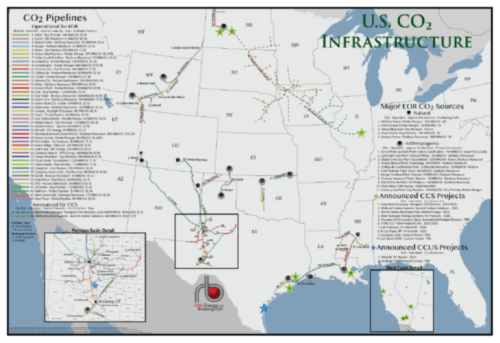
RBN Energy’s US CO₂ Infrastructure map brings together legacy Enhanced Oil Recovery (EOR) assets, as well as announced large-scale Carbon Capture and Sequestration (CCS) and Carbon Capture, Utilization and Sequestration (CCUS) projects, all in our signature concise, accurate, and intelligible style.
Rocket Science
Hydrogen really is rocket science. The first large market for hydrogen in the U.S. was for the manufacture of rocket fuel for NASA. While early space flights used other fuels, hydrogen was used to power NASA's Saturn V rockets, which took us to the moon in the late 1960s. Years later, the space shuttle program was a major market for liquid hydrogen, with each flight burning through about 500 thousand gallons, with another 240 thousand gallons lost to boil off and transfer operations.
About the song
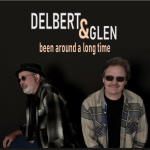
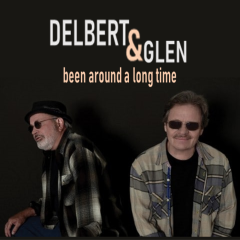
"Been Around a Long Time" was written by Glen Clark, Delbert McClinton, and Gary Nicholson. It appears as the first song on McClinton and Clark's first duo album together after 40 years, Blind, Crippled, and Crazy. The acclaimed Fort Worth duo marked their return with an album that deals with the topic of age as they refute the notion of being too old to rock and roll. The pair had previously released two albums, Delbert and Glen in 1972 and Subject to Change in 1973. Personnel on the record were: Delbert McClinton (vocals, acoustic guitar), Glen Clark (vocals, acoustic guitar), Anson Funderburgh and Bob Britt (electric guitar), James Pennebaker (pedal steel guitar and fiddle), Bruce Katz (Hammond B3, piano), Kevin McKendree (piano), Mike Joyce (bass), Jack Bruno (drums), and Kenny Malone (percussion).
Blind, Crippled, and Crazy was recorded at Fearless Recorders in Nashville in April 2013. Produced by Gary Nicholson and Delbert McClinton, the album was released in June 2013. It is a fine example of Texas barroom music at its best: honky tonkin', country rockin', blues poppin' boogie woogie infused with the impeccable vocals and harmonies of McClinton and Clark.
Delbert McClinton is a Texas blues rock singer, songwriter, guitarist, harmonica player, pianist, and record producer. In 1962, McClinton played the harmonica on Bruce Channel's hit record, "Hey Baby." While on a package tour with Channel in the UK that included a young band called The Beatles, McClinton taught John Lennon how to play the harmonica. McClinton has released 27 studio albums, two live albums, 12 compilation albums, and 17 singles. He has won four Grammy Awards, and continues to record and tour.
Glen Clark is a Texas singer, songwriter, keyboardist, guitarist, and record producer. He has written songs for such artists as Wynonna Judd, Bonnie Raitt, Etta James, John Mayall, Jim Belushi, and Lee Roy Parnell. He has also written music for television and movies. He continues to write and record, and occasionally appears live.