Enbridge is investing close to $9 billion between 2013 and 2016 in its Eastern and Light Oil Market Access initiatives. A major goal is to improve access for Enbridge shippers – particularly shippers of light shale crude from North Dakota, to refineries in the Midwest and eastern Canada. And by the end of 2014 refineries in Illinois, Michigan and Ohio as well as in Ontario will have better access to Enbridge crude. But even when the reversal of Line 9 in Ontario is completed and Enbridge crude can flow as far as Montreal, only about 300 Mb/d will be available for Quebec refineries to process. Today we continue our review of Enbridge eastern expansion plans.
In Episode One of this series, we reviewed the 9 refineries in eastern Canada with combined capacity of 1.3 MMb/d. These refineries mostly process light crude that until recently has come from offshore Atlantic seaboard production and imports, but they are processing growing volumes of US shale oil today. Extensive upgrades, reversals and expansions to the Enbridge network have begun to change the dynamics of these refineries to increase supplies from western Canada and the Bakken. In Episode Two we began a description of Enbridge expansion plans with the Eastern Access project. In Episode Three we finished up the Eastern Access project and started on Enbridge’s Light Oil Markets Access (LOMA) initiatives with the Sandpiper project that will deliver increased supplies of light crude from North Dakota. In Episode Four we covered the expansion of the Southern Access line to deliver Sandpiper crude to Flanagan and its extension to Patoka that provides a path to Marathon’s Midwest refineries. We also covered the Line 78 project that will increase capacity northeast from Flanagan to Griffith allowing more light crude to flow to Eastern Canada on Line 6B. In this episode we cover planned expansions to Line 6B and how new flows on Line 9 will feed refineries in Ontario as well as Warren, PA.
Because these various Enbridge projects can be pretty confusing to understand lets just recap the big picture for a moment before we dive back into the nitty gritty. Recall that the Enbridge Eastern Access and LOMA projects are designed to increase the feed of (primarily light) crude from Western Canada and North Dakota to refineries in eastern Canada and parts of the US Midwest. The Flanagan terminal in Pontiac, IL is the central pivot point in the Enbridge US system with crude flowing from there either north and east through the Midwest and back into Canada or southwest to Cushing en-route to the Gulf Coast. To increase eastbound light crude flows, Enbridge is expanding capacity out of North Dakota to Superior (the Sandpiper project) and then south to Flanagan (Southern Access pipeline – Line 61). From Flanagan those light crude supplies will flow northeast to Griffith on Line 62 and the new Line 78 (due online in 2015) and then east across Indiana and Michigan on Line 6B before crossing the border into Ontario at Sarnia and moving east across Canada to Montreal on Line 9.
Line 6B Griffith to Stockbridge
Our first stop in this episode is a plan to further expand Line 6B (itself more or less completely replaced during 2013 and 2014 as we explained in Episode Two) between its origin point in Griffith and Stockbridge, MI from 500 Mb/d to 570 Mb/d. This Line 6B expansion is needed for a couple of reasons. The first is to accommodate greater incoming crude volumes moving northeast on Line 78 to Griffith from Flanagan and the second is to feed refineries along the 6B route in Ohio and Michigan. Recall that the 570 Mb/d Line 78, due in service in Q3 2015, runs parallel to the original 235 Mb/d “Flanagan North” Line 62 from Flanagan to Griffith providing incremental crude capacity between Flanagan and Griffith. Some of that crude will be consumed by Chicago refineries but extra Line 6B capacity is needed to move most of it further east to Sarnia. The expansion of Line 6B also provides capacity for Enbridge to feed two lateral pipelines that originate at Stockbridge, MI and serve refineries in Toledo and Detroit (see Figure #1). The first of these two laterals is the Enbridge 100 Mb/d Toledo pipeline (Line 17) that serves the 160 Mb/d BP-Husky and 170 Mb/d PBF refineries in Toledo with light and heavy crude. The second lateral is the newer 80 Mb/d Line 79 (completed in March 2013) that delivers mostly heavy crude to Freedom Junction from where it can be shipped via leased pipelines on the Wolverine system to Marathon’s 120 Mb/d Van Buren refinery in Detroit. The target in-service date for the Line 6B expansion to Stockbridge is Q1 2016.
About the song
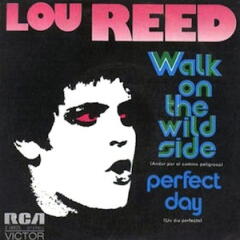
“Walk on the Wild Side” was written by Lou Reed and appears as the fifth song on side one of Lou Reed's second solo studio album, Transformer. Released as a double A-side single with “Perfect Day” in November 1972, “Walk on the Wild Side” went to #16 on the Billboard Hot 100 Singles chart. The song’s lyrics describe the misadventures of several of the “superstar” regulars at Andy Warhol’s New York City studio, The Factory. Lou Reed has said that Nelson Algren’s 1956 novel, “A Walk on the Wild Side,” was the launching point for the song. In 2013, The New York Times described the song as “an unlikely cultural anthem as a siren song bringing a generation of people to a New York so long forgotten as to seem imaginary.” Personnel on the record were: Lou Reed (lead vocals), Herbie Flowers (fretless Fender Jazz Bass), Ronnie Ross (baritone sax — Ross was David Bowie’s sax instructor during his childhood), David Bowie (acoustic guitar), Mick Ronson (string arrangements), and Dari Lalou, Karen Friedman, and Carey Synge (background vocals).
Transformer was recorded during August 1972 at Trident in London with David Bowie and Mick Ronson producing. Released in November 1972, it went to #29 on the Billboard 200 Albums chart. The album is considered an influential LP in the 1970s glam rock genre. The striking front cover picture is from a photograph of Reed by Mick Rock. Three singles were released from the LP.
Lou Reed was an American singer, musician, songwriter, and poet. He started playing music in doo-wop groups while in high school. After graduating from Syracuse University, he went to work for Pickwick Records in New York City, where he met fellow musician John Cale. Together with Sterling Morrison and Angus MacLise, they would form the original Velvet Underground band in 1965. They soon added Moe Tucker as their drummer and German singer/model Nico as their singer. In 1966 they started being managed by Andy Warhol and became the house band at The Factory. The Velvet Underground released their debut album in 1967. Ten different people passed through the group before its final breakup in 1996. Reed left the band in 1970 to pursue a solo career. As a solo artist, he released 21 studio albums, 15 live albums, 16 compilation albums, and 46 singles. Reed was inducted into the Rock and Roll Hall of Fame twice: as a member of the Velvet Underground in 1996 and posthumously as a solo artist in 2015. Reed died in New York City in October 2013 at the age of 71.