Just a month ago, the CME/NYMEX Henry Hub prompt natural gas futures contract was trading at a six-month high of $3.21/MMBtu (on November 10), and the U.S. gas storage inventory was at a three-year low, setting the stage for a bullish winter — assuming normal wintry weather. Since then, the prompt-month contract has tumbled about 50 cents to a settle of $2.715/MMBtu as of this Wednesday. In that time, temperatures fell across the country and seasonal demand for heating homes and businesses kicked in, and LNG exports ticked up slightly. But supply also grew by a lot, with natural gas production surging by 1.0 Bcf/d since then to a new record high of 76.9 Bcf/d just this past Monday. How did the fundamentals shake out in November, and what do current fundamentals mean for the balance of winter? Today, we reconcile these latest shifts in gas market fundamentals.
This is the latest in our periodic updates of the natural gas market’s supply and demand balance, which ultimately drives changes in the storage level and ultimately — price. When we last looked at the balance about a month ago in Signs, Signs, Everywhere a Sign, the storage injection season — which traditionally runs from April through October — had just wrapped up. The market had exited the 2017 injection season on a bullish note. In spite of a run up in gas production, which had climbed more than 3.0 Bcf/d between August and mid-November to new heights topping 75 Bcf/d, the U.S. gas supply and demand balance had tightened through that period. One contributing factor was LNG exports from Cheniere Energy’s Sabine Pass LNG terminal, which ramped up by more than 1.0 Bcf/d as the fourth liquefaction train began commissioning activity. The bigger factor, however, was gas demand, particularly from the power generation sector.

The Natural Gas Master Class is a one-day online event focusing on understanding flow analysis, interpreting pipeline data and forecasting future flows. This course is designed to equip you with the knowledge and skills to effectively analyze the complexities of natural gas markets, flow analysis, and pipeline modeling. Join us online
October 21 | Online
For much of injection season, mild weather and relatively higher gas prices had dragged down gas usage in the power sector compared to 2016. But weather normalized during September and October, allowing power demand to more or less catch up to last year in those months. With the incremental demand, the market balance went from averaging about 1.0 Bcf/d longer supply than last year in the April-August period to nearly 1.0 Bcf/d shorter gas versus 2016 in the September-October period. That allowed the U.S. gas inventory to peak at just below 3,800 Bcf by November 3, which was about 220 Bcf lower than last year, and, in fact, the lowest level we’ve seen since 2014.
About the song
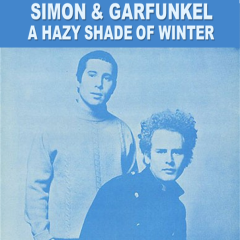
Written by Paul Simon, “A Hazy Shade of Winter” is an autobiographical song about Simon’s days living in England in 1965. It was recorded during the sessions for Simon & Garfunkel’s 1966 album Parsley, Sage, Rosemary, and Thyme. It was released as a single in October 1966 and reached #13 on Billboard’s Hot 100. But the song would not appear on a Simon & Garfunkel album until 1968’s Bookends. It was a bit of a departure for the popular duo in that it had a more folk-rock sound compared to some of their other more acoustic-oriented tunes.
The Bangles began performing “A Hazy Shade of Winter” live in 1983 and recorded it for the soundtrack of the movie Less Than Zero. The Bangles’ version of the song featured a lead vocal from each member of the band. The soundtrack was produced by Rick Rubin, but he gave The Bangles lots of freedom in the studio to capture the feel of the band’s live performances of the song, hence a co-producing credit between Rubin and the band. That version was released as a single in November 1987. Buoyed by a constant rotation of the video of the song on MTV, it quickly reached #2 on Billboard’s Hot 100.