The U.S. natural gas storage inventory lagged behind year-ago and five-year average levels throughout this past winter. The market started the withdrawal season in November 2017 with about 200 Bcf less in storage than the prior year. That year-on-year deficit subsequently ballooned to more than 600 Bcf. Compared to the five-year average, the inventory went from about 100 Bcf lower in November to a more than 300-Bcf deficit now, at the beginning of spring. An expanding deficit in storage is typically a bullish indicator for price. Yet, the CME/NYMEX Henry Hub natural gas futures contract struggled to hold onto the $3.00/MMBtu level it started the season with in mid-November, and, in fact, has retreated back to an average near $2.70 in the past couple of months — about 25 cents under where it traded a year ago. Today, we look at the supply-demand factors keeping a lid on the futures price.
When we looked at the gas supply-demand balance back in November 2017, in Signs, Signs, Everywhere Signs, the withdrawal season was just kicking off and the gas market appeared to be set up for a bullish winter. The injection season last spring, summer and early fall had wrapped up on a strong note. Gas production was advancing, but gas demand growth, led by LNG exports, was outpacing supply growth overall, and, as a result, the storage inventory level was falling further and further behind historical levels.

The Natural Gas Master Class is a one-day online event focusing on understanding flow analysis, interpreting pipeline data and forecasting future flows. This course is designed to equip you with the knowledge and skills to effectively analyze the complexities of natural gas markets, flow analysis, and pipeline modeling. Join us online
October 21 | Online
By mid-December 2017, however, the mood had shifted. The market was heading into what typically are the coldest, highest gas-demand months of the year. But, as we discussed in Hazy Shade of Winter, gas production by then had continued growing and blown well past previous record highs; prospects of a cold December to shore up residential and commercial heating demand (res/comm) were fading, as the weather turned warmer than normal; and Dominion Energy’s 0.75-Bcf/d Cove Point LNG liquefaction and export project, which was expected to begin commissioning cargoes in November (2017), was experiencing delays. As a result, the storage deficit to last year shrank again, and the prompt futures contract had slipped into the $2.70s, from more than $3.00 a month earlier.
Since December, production has continued growing, but demand has pulled well ahead of last year as well, particularly in the res/comm sector, and the storage deficit to the prior year has again expanded, this time to more than 600 Bcf. Normally, this would be price supportive. But that’s not been the case; as we noted above, prompt futures prices have stayed firmly in the $2.60-$2.80 range for the most part. What’s behind the expanding storage deficit and why aren’t prices tracking? To understand that, next we review supply and demand fundamentals for this winter to date.
About the song
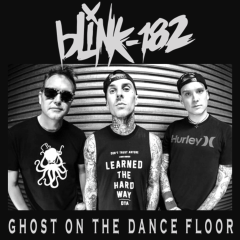
"Ghost on the Dance Floor" by Blink-182 appears on the group’s 2011 album, Neighborhoods, the sixth from the group. The album reached #2 on Billboard's Top 200, and "Ghost on the Dance Floor" made it to #28 on Billboard's Rock Digital Songs chart in 2011. It is speculated that the band-penned song is about drummer Travis Barker's best friend, DJ AM, who passed away in 2009. He and Barker were the only survivors of a plane crash that happened at takeoff on a runway in South Carolina in 2008. The personnel on this record is: Mark Hoppus on vocals and bass, Tom DeLonge on lead vocals and guitar, and Travis Barker on drums.
The band was formed in Poway, a suburb of San Diego, CA, in 1992. They put out their first album, Cheshire Cat, themselves in 1995, and signed a record deal with MCA in 1997. Original drummer Scott Raynor was replaced by Travis Barker midway through a tour in 1998. Their third album, 1999’s Enema of the State, was a huge commercial success, with three singles receiving massive radio airplay. The hilarious videos supporting the singles became MTV staples in constant rotation, and the album ended up selling more than 15 million records worldwide. Their next LP release, Take Off Your Pants and Jacket, entered the charts at #1 and went on to sell 14 million copies worldwide.
Blink-182 is considered one of the top progenitors of the pop-punk genre, which combines catchy pop melodies with fast-paced punk rock tempos. After quitting the band, and rejoining them a couple of times, Tom DeLonge quit again in 2015, and has been replaced by Matt Skiba from Alkaline Trio. This lineup of Blink-182, with Hoppus, Barker, and Skiba, continues to perform to this day.