As natural gas exports to Mexico continue to rise and as construction proceeds on liquefaction/LNG export terminals in Freeport and Corpus Christi, TX, the need to transport increasing volumes of gas down the Texas Gulf Coast becomes ever more urgent. And moving gas down the coast is no easy task; the Lone Star State’s convoluted mix of interstate and intrastate pipelines were designed primarily to flow gas up the coast from South Texas and Gulf Coast production areas to the greater Houston Ship Channel area—and from there on interstate pipes to Louisiana and beyond. Today we use RBN’s Fretboard Model to discuss whether existing and planned southbound pipeline capacity will be sufficient to meet export demand.
For several months now, RBN has been making the case that 1) the natural gas export market—more specifically, pipeline exports to Mexico and waterborne exports of LNG—will be the biggest demand drivers for U.S. natural gas production, 2) Texas producers will need a major assist from Marcellus/Utica and other producers in supplying all the gas that will be required to keep pace, and 3) Texas’s existing networks of interstate and intrastate pipes will need major re-plumbing and expansion. We’ve tackled this Texas-size topic not only in blogs, but also in Part 1, Part 2, and Part 3 of our Drill Down series, “I Saw Miles and Miles of Texas.” The fourth and final part of that series will be published next week.
As we said in Part 3 of the Drill Down series, one of the biggest challenges in moving increasing volumes of gas south along the Texas Gulf Coast is that the interstate pipelines there are “telescoped the wrong way” —that is, because the pipes were originally designed to add supplies as they moved gas north toward Louisiana (and from there to the Northeast and Midwest), their diameters and capacities increased along the way. Also, while some of the interstate pipelines along the coast begin at the Mexican border (or at least extend deep into South Texas), others start further up the coast and therefore aren’t as helpful in moving gas to the Agua Dulce hub in Nueces County (near Corpus Christi), which has emerged as a key pricing point for the South Texas gas market, including Eagle Ford production as well as gas flows bound for Mexico.

The NATGAS Appalachia weekly report provides the data and insights to monitor the northeast natural gas market’s twists and turns and identify the risks and opportunities along the way, including tracking supply-demand trends, outbound capacity and their impact on takeaway pipeline utilization, and regional prices.
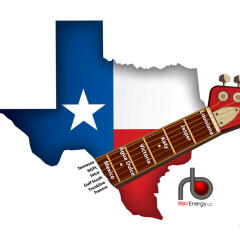
Given RBN’s musical bent, it was natural that as we considered these interstate pipelines and their various starting points along the coast, we saw a guitar fretboard (see Play Guitar), with the six strings representing the six pipelines and the frets marking the edges of zones, each of which has progressively less pipeline capacity as you move south toward the Mexican border. (Some of the decline in capacity comes from the reverse-telescoping nature of the pipes, and the rest comes from the fact that some pipelines only come part-way down the coast.)
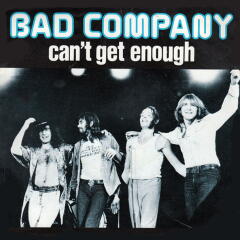
About the song
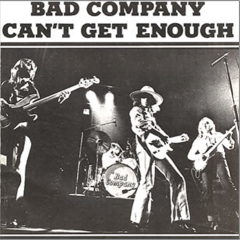
“Can't Get Enough” was written by Mick Ralphs and appears as the first song on side one of Bad Company’s debut album, Bad Company. Released as a single in August 1974, the song went to #5 on the Billboard Hot 100 Singles chart. The unique ringing guitar tone for the song was achieved by guitarist Mick Ralphs tuning his Les Paul Junior to an open-C tuning. Personnel on the recording were: Paul Rodgers (vocals, rhythm guitar), Mick Ralphs (lead guitar), Boz Burrell (bass), and Simon Kirke (drums).
Bad Company was the debut album by the English hard rock group of the same name. It was the first album released on Led Zeppelin’s then newly formed Swan Song Records label. Recorded on Ronnie Lane’s Mobile Studio at Headley Grange in East Hampshire, England, the LP was released in June 1974. Produced by Bad Company, the album went to #1 on the Billboard Top 200 Albums chart. It has been certified 5X Platinum by the Recording Industry Association of America. Three singles were released from the album.
Bad Company was formed in Albury, Surrey, England in 1973 by singer Paul Rodgers, guitarist Mick Ralphs, drummer Simon Kirke, and bassist Boz Burrell. Rodgers and Kirke had previously played together in the band Free; Mick Ralphs was in Mott the Hoople; and Boz Burrell had played in King Crimson. Led Zeppelin’s manager, Peter Grant, also managed Bad Company. The band has released 12 studio albums, five live albums and 29 singles, and has sold more than 40 million records worldwide. Twelve members have passed through the group since its inception. Original bassist Boz Burrell died in 2006. The band still occasionally tours, with founding members Paul Rodgers and Simon Kirke remaining in the lineup.