Discussions and debates around the carbon-capture industry have been everywhere in recent years, from the federal incentives designed to spur its growth and the role it might play in decarbonization efforts to the technical challenges and economic headwinds that add uncertainty to its long-term outlook. And while all of those are important topics worthy of future conversation, none of those potential projects are going to happen without somewhere to put all that carbon dioxide (CO2). The wells used for permanent CO2 sequestration are largely approved at the federal level by the Environmental Protection Agency (EPA) but a few states have gained control — aka “primacy” — over the permitting process. In today’s RBN blog, we explain what it means to have primacy, why it has become an increasingly important goal in recent years, and the potential benefits that come with it.
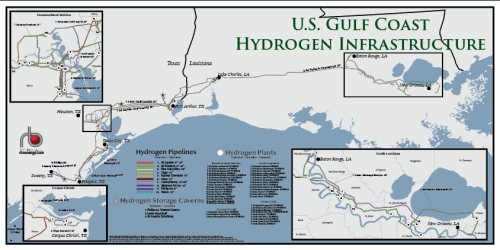
RBN’s U.S. Gulf Coast Hydrogen Infrastructure Map lays out the pipelines and merchant hydrogen plants that make up the gulf coast market, providing an unprecedented snapshot of the region’s hydrogen infrastructure network.
CO2 may not be the most potent of the greenhouse gases (GHGs), but it is by far the most prevalent, and efforts to reduce or eliminate those emissions are at the forefront of global climate goals. When CO2 is captured and stored in deep geologic formations, and that’s all, the process is called carbon capture and sequestration (CCS) and utilizes a Class VI injection well. If the CO2 is used for some other process before it’s stored via a Class II well, it is called carbon capture, use, and sequestration (CCUS) — the most common example being enhanced oil recovery (EOR). (For more on Class II and VI wells and their role in carbon-capture projects, see our series, Way Down in the Hole.)
The rules around injection wells were set out under the Safe Drinking Water Act (SDWA), which requires the EPA to protect underground sources of potable water. To do that, the agency developed requirements under the Underground Injection Control (UIC) program that are designed for each well class, as shown in Figure 1 below, and each has its own set of standards. (The SDWA was enacted in 1974; Class VI wells were added to the UIC program in 2010.) Primary enforcement of those rules, often called primacy, rests with the EPA but can also be handled at the state, territory or tribal level — if they can prove they are up to it — although it’s important to note that local rules must be at least as strict as federal rules. They’re not an end-run around federal requirements.
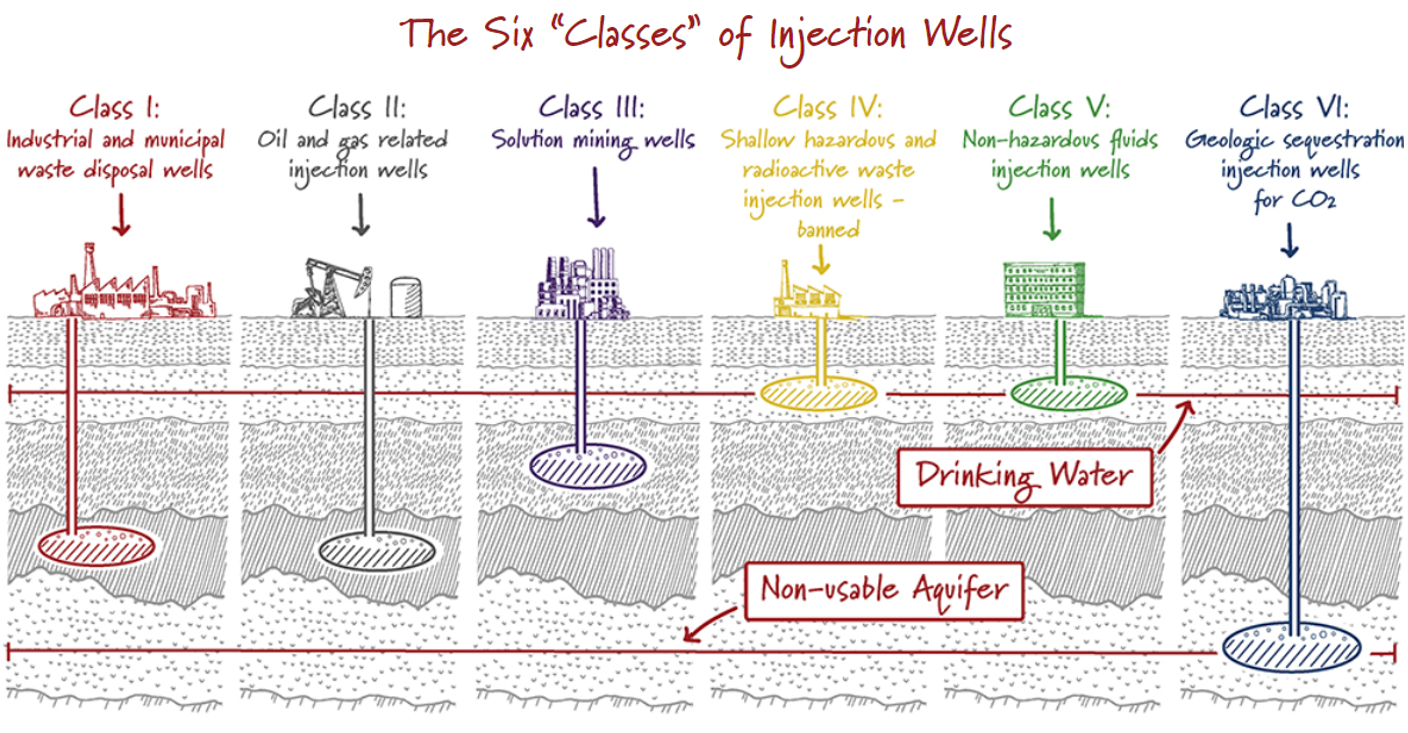
Figure 1. The Six Classes of Injection Wells. Source: ClearPath

About the song
“Take Control" was written by Markus Kaarllonen, Marko Saaresto and Olli Tukiainan and appears in the Remedy Entertainment video game Control. It is also the eighth song on Old Gods of Asgard’s album Rebirth: Greatest Hits. Old Gods of Asgard is the videogame pseudonym for the Finnish band Poets of the Fall. The LP is a collection of songs produced by the band for Remedy’s videogames: The Fall of Max Payne, Alan Wake's American Nightmare, Alan Wake 2, and Control. The album was released in the U.S. in December 2023.
Poets of the Fall is a Finnish alternative metal rock band from Helsinki. Formed in 2003 by lead vocalist Marko Saaresto, lead guitarist Olli Tukianan, keyboardist Markus Kaarllonen, bassist Jani Snellman and drummer Jari Salminen, the band is known for their work with videogame companies such as Remedy Entertainment, working under the name of their alter-ego band, Old Gods of Asgard. As Poets of the Fall, they have released nine studio albums, two live albums, four compilation albums, one EP, and 23 singles. They recently released a compilation LP of their work with Remedy Entertainment video games under their Old Gods of Asgard name. The band continues to record and tour.