


This much seems clear: natural gas demand along Texas’s Gulf Coast will be rising sharply, as will gas supply from the Permian and other inland plays to the coast. The catch is that, like clumsy dance partners, the increases in demand — mostly from new liquefaction/LNG export terminals and Mexico-bound gas pipelines — and the incremental supply to the coast via new, large-diameter pipes from the Permian are likely to be out of sync. That shifting imbalance, in turn, may well cause volatility in Houston Ship Channel gas prices as they relate to Henry Hub. In fact, we’re already seeing signs of what’s to come. Today, we continue our look at upcoming gas infrastructure expansions and their potential impact on the greater Texas Gulf Coast gas supply-demand balance.
As we said in Part 1, the Permian has been garnering most of the attention lately, with its rapid supply growth, limited pipeline takeaway capacity, and sometimes negative prices. But the Texas coast may soon be stealing some of the spotlight. A number of new liquefaction trains are slated to come online in Freeport and Corpus Christi — so is a new offshore gas pipeline from Brownsville, TX, to Mexico’s eastern coast. As for gas supply, Permian producers are anxiously awaiting the completion of new gas pipelines to the coast that will alleviate now-serious constraints and enable them to quickly ramp up production of crude oil and the huge volumes of associated gas that come with it.

The Natural Gas Master Class is a one-day online event focusing on understanding flow analysis, interpreting pipeline data and forecasting future flows. This course is designed to equip you with the knowledge and skills to effectively analyze the complexities of natural gas markets, flow analysis, and pipeline modeling. Join us online
October 21 | Online
Last time, we focused on the changes we’re already seeing in the Houston Ship Channel (HSC) market. HSC pricing has trended decidedly weaker over the past few months, especially when compared to this time last year. We admitted the shift wasn’t huge — HSC averaged $0.06/MMBtu above Henry Hub during the second quarter of last year, but that premium to the benchmark hub disappeared this year and so far this quarter (now almost over) HSC has averaged about $0.05/MMBtu below Henry. That swing of $0.11/MMBtu may not sound like much, given that prices often move more than that in a few minutes of trading at the Waha Hub, but it’s a reasonably large move for HSC and of a magnitude sufficient to impact the gas flows around that hub. We also looked at the major gas flow corridors impacting HSC (Figure 1 shows them again; “Katy/Ship” refers to the greater HSC/Katy Hub area), and how volumes along each corridor have been shifting in response to new demand, new pipeline capacity and other drivers (see Part 1 for details).

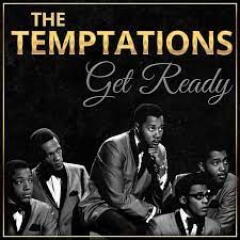
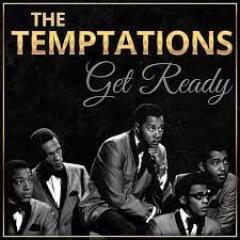
About the song
“Get Ready” was written by Smokey Robinson and appears as the fourth song on side one of The Temptations’ fourth studio album, Gettin’ Ready. The song was recorded in Detroit at Hitsville USA in Studio A during December 1965. The Smokey Robinson-produced song was released as a single in February 1966, a few months prior to the album being released. It went to #1 on the Billboard Rhythm & Blues chart and #29 on the Billboard Hot 100 chart. Personnel on the recording were: Eddie Kendricks (lead vocals), Melvin Franklin (lead vocals), David Ruffin, Melvin Franklin, Paul Williams and Otis Williams (background vocals). Instrumental accompaniment was provided by Motown’s house band, The Funk Brothers. The Supremes, Smokey Robinson and The Miracles, and Nancy Sinatra would later cover the song, but only fellow Motown artists Rare Earth would have a hit with the song again in 1970. Their version went to #4 on the Billboard Hot 100 and #20 on the Rhythm & Blues chart.
Gettin’ Ready was released in June 1966, where it went to #12 on the Billboard Top 200 Albums chart. Two charting singles were released from the album, the aforementioned “Get Ready” and “Ain’t Too Proud to Beg.” This album marks the transition from Smokey Robinson being The Temptations’ producer to having Norman Whitfield taking over the role.
The Temptations are an American rhythm and blues/soul music vocal group formed in Detroit in 1960. The “classic 5” version of the group included David Ruffin, Eddie Kendricks, Melvin Franklin, Paul Williams and Otis Williams, who were responsible for the majority of their hits in the 1960s. Ruffin was replaced by Dennis Edwards in 1968, and the group continued to have hits into the ’70s, such as psychedelic soul masterpieces “Cloud Nine,” “Psychedelic Shack” and “Ball of Confusion.” The group has released 43 studio albums, four live albums, 15 compilation albums, three soundtrack albums and 109 singles to date. They were inducted into the Rock and Roll Hall of Fame in 1989 and were inducted into the Vocal Group Hall of Fame in 1999. In 2013, the group received a Lifetime Achievement Grammy Award and was inducted into the R&B Music Hall of Fame. Twenty-four members have passed through the ranks of The Temptations over the years. Original member Otis Williams still tours with a version of The Temptations to this day.





Comments
1. I have been wondering about this. About if we start developing "along the coast" bottlenecks. And if we then need a financial instrument for some of the Texas locations: Beaumont, HSC/Freeport, Corpus/Brownsville and if so which site needs it most.
2. With +/- $.06, I don't quite see the need yet.
3. Would be intersted in a Haynesville to HH differential analysis. Is it blowing out?
In reply to Cool topic by g p
No blowouts in the Haynesville, although prices have weakened. See our blog on Enterprise's Lumberjack project for more on constraints developing there.