A potentially important factor affecting the supply of octane — the primary yardstick of gasoline quality and price — has been lurking in the background over the last few years. The Environmental Protection Agency’s (EPA) Tier 3 gasoline sulfur standard applies to all refiners and importers who deliver gasoline to the U.S. market, and while delayed compliance requirements and the onset of the pandemic have blunted its full impact to refiners and consumers so far, the implications of meeting the new standard are beginning to take shape. In today’s RBN blog, we explain how the Tier 3 specs are linked to octane supply, where octane destruction comes into play, and how refiners are adapting to the octane-sulfur squeeze.

The Future of Fuels bi-annual report by RBN's Refined Fuels Analytics provides an in-depth analysis of the U.S. and global refinery industries, focusing on crude oil and fuel market dynamics, supply and demand, alternative fuels, refinery capacities, and price forecasts to help stakeholders navigate the evolving energy landscape.
We began our look at the octane market in Part 1 of this series, which detailed how the price of octane has marched steadily higher over the past decade, led by a market now impacted more by demand than production costs. Just as octane demand has been increasing, however, a number of factors have been tamping down octane supply and recently spurred a run-up in the retail “price” of octane, measured by the difference between the pump prices of premium and regular gasoline. The focus of today’s blog is on another factor affecting octane supply: the Tier 3 standard.
Implemented in 2014 with initial phase-in beginning in 2017 and full implementation in 2020, Tier 3 requires that gasoline contain no more than 10 parts per million (ppm) sulfur on an annual average basis, and no more than 80 ppm sulfur on a per-gallon basis. There were special compliance rules for small refiners that applied during the three-year phase-in period that allowed some to delay compliance until 2020, and other phase-in rules allowed most large refiners to also delay compliance to 2020. Consequently, the effective Tier 3 compliance date was January 1, 2020. Soon after that date, COVID-related lockdowns left refineries operating at low utilization rates until mid-2021, a period during which it was easy to meet the 10 ppm sulfur specification. Only in 2022 with the rebound in consumer demand for gasoline have refiners been challenged, for the first time, to meet this new gasoline sulfur specification while running at full speed.

About the song
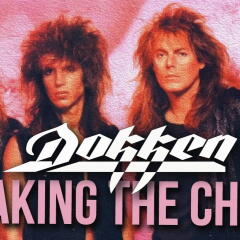
“Breaking the Chains” was written by Don Dokken and George Lynch and appears as the first song on side one of Dokken’s debut album of the same name. The song was originally released as a single in Europe in 1981 from the album on the French label Carrere Records. The song and album were entitled “Breakin’ the Chains” while on Carrere Records. After securing a deal with Elektra Records in the U.S. in 1983, the album and singles were released as “Breaking the Chains.” Released as a single on Elektra Records in November 1983, it went to #32 on the Billboard Mainstream Rock Singles chart. Personnel on the record were: Don Dokken (lead vocals, rhythm guitar), George Lynch (lead guitar, backing vocals), Juan Croucier (bass, backing vocals), and Mick Brown (drums).
The album, Breaking the Chains, was originally recorded in Cologne, Germany, at Dierks Studios, with Michael Wagener producing. The album was re-mixed, partially re-recorded, slightly re-named, and re- released by Elektra Records in November 1983. It went to #136 on the Billboard 200 Albums chart. Four singles were released from the LP.
Dokken is an American glam metal band formed in Los Angeles in 1978. They split up in 1989 and re-formed again in 1993. The classic lineup of the band consisted of Don Dokken (lead vocals, rhythm guitar), George Lynch (lead guitar), Jeff Pilson (bass), and Mick Brown (drums). Fourteen people have passed through the band since its inception. They have released 11 studio albums, six live albums, nine compilation albums, one EP, and 36 singles. Dokken has sold more than 10 million records worldwide. The band still tours, with Don Dokken being the only original member in the band.