The U.S. is seeing softer domestic demand for traditional fuels as efficiency improves and biofuels gain ground, but pockets of the country remain highly dependent on imported gasoline and jet fuel. If the Iran war drags on for an extended period, the key question becomes how much of each region’s gasoline, jet fuel and diesel demand can be covered by U.S. refineries and how much each still needs from international suppliers. Some parts of the country could face real product challenges if the disruption is prolonged. In today’s RBN blog, we’ll zero in on which PADDs are at the highest risk for shortages and price spikes.
As we’ve addressed in the RBN blogosphere, the war against Iran and closure of the Strait of Hormuz have seriously impacted the flows of refined products and LPG that underpin the Pacific Basin fuel market. With the strait effectively blocked to virtually all shipping for the last several weeks (see Eyes of the Ranger), large volumes of crude oil, LPG, naphtha and refined products bound for Asia were suddenly stranded, forcing refiners in South Korea and elsewhere to cut runs and curb gasoline and jet fuel exports (see Two Out of Three Ain’t Bad). As of May 4, the situation remains volatile and peace talks are uncertain.
In today’s blog, we use our Future of Fuels analysis to estimate how much gasoline, diesel and jet fuel demand is met by each PADD’s production compared to how much it relies on imports. From this, we identify which regions are most exposed if hostilities drag on for additional months or into this winter.
PADD 5 Jet Fuel and Gasoline
The biggest refined product risk from a prolonged conflict is gasoline and jet fuel in PADD 5 (gray section in Figure 1 below). The West Coast market is structurally tight and increasingly dependent on imports under normal circumstances, making it especially vulnerable to supply disruptions (see I Need More).
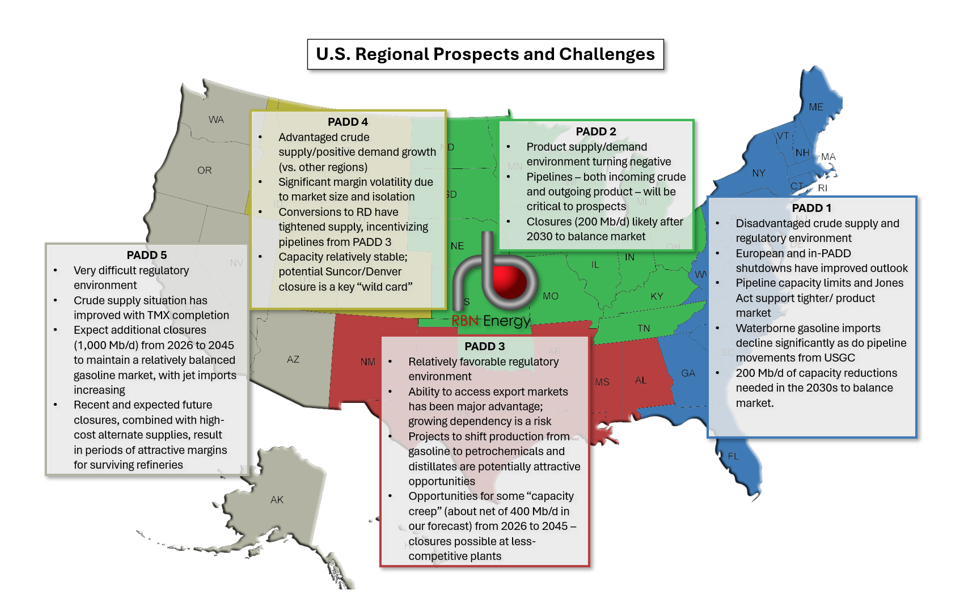
Figure 1: U.S. Regional Prospects and Challenges. Source: RBN Future of Fuels
Crude-to-Gas Ratio and Ethane Petchem Margin Soar in Lockstep
Since January, the crude-to-gas ratio — defined as the price of WTI crude oil divided by the price of Henry Hub natural gas — has increased by about 140%, rising from roughly 15x to 37x.

About the song
"How's It Going to Be," was written by Stephan Jenkins and Kevin Cadogan, and appears as the sixth song on Third Eye Blind's eponymous debut album. The song’s lyrics address the painful dissolution of a relationship and the uncertainty of the future. Released as the third single from the LP in October 1997, it went to #9 on the Billboard Hot 100 Singles chart and has been certified 2X Platinum by the Recording Industry Association of America. Personnel on the record were: Stephan Jenkins (vocals, guitar), Kevin Cadogan (guitar, backing vocals), Arion Salazar (bass, backing vocals), and Brad Hargreaves (drums).
Third Eye Blind is the debut studio album from the band of the same name. It was recorded in 1997 at Toast, Skywalker Ranch, and H.O.S. in San Francisco and produced by Stephan Jenkins, Eric Valentine, and Ren Klyce. The album was released in April 1997 and went to #25 on the Billboard 200 Albums chart. It has been certified 6X Platinum by the RIAA. Five singles were released from the LP.
Third Eye Blind is an American rock band formed in San Francisco in 1993. The songwriting duo of the band, Stephan Jenkins and Kevin Cadogan, signed a deal with Elektra Records in 1996, with their debut album being released in 1997. They have released seven studio albums, a live album, two compilation albums, three EPs, and 28 singles. They have sold over 12 million records worldwide. They have won a Billboard Music Award and eight California Music Awards. Thirteen members have passed through the band since its formation. Co-founder and songwriter Kevin Cadogan left the band in 2000. They still record and will start a U.S. tour in June.
"About the Song" -- written by Mickey McMahan , RBN Director of Musicology