One of the seminal energy-related political controversies of the past decade was the construction of Mountain Valley Pipeline (MVP). Before entering service in June 2024, the 2-Bcf/d pipeline project faced a number of regulatory hurdles and went through countless rounds of litigation, ultimately culminating in a high-profile Senate showdown. Since becoming fully operational, MVP has filled up seasonally in the winter, but much of its capacity has remained unused in the shoulder season because of constraints downstream on Transco, frustrating an Appalachian market that yearns for growth. Now, three new projects aim to debottleneck Transco and get more gas flowing to the Southeast: Transco’s Southeast Supply Enhancement as well as MVP Southgate and MVP Boost, both of which are being developed by the co-owners of MVP. But beyond nameplate capacity numbers, how much will these projects really enable gas to go outside the Northeast and find new markets? In today’s RBN blog, we will discuss the impact of these projects and estimate their impact on future flows into North Carolina and beyond.

The Natural Gas Master Class is a one-day online event focusing on understanding flow analysis, interpreting pipeline data and forecasting future flows. This course is designed to equip you with the knowledge and skills to effectively analyze the complexities of natural gas markets, flow analysis, and pipeline modeling. Join us online
October 21 | Online
We have been tracking these projects for some time now, both in our weekly NATGAS Appalachia report and in recent blogs like Don’t Stop Believin’. To recap, the Southeast Supply Enhancement (SSE) comprises 55 miles of pipeline looping and other improvements that will add 1.6 Bcf/d of capacity to Williams Cos.’ Transcontinental Pipeline (Transco) along three paths, each extending south from Station 165: to Station 160 in Rockingham County, NC (Path 1; dashed pink line in Figure 1 below); to Station 145 in Cleveland County, NC (Path 2; dashed purple line); and the Station 85 Zone 4 Pool in Choctaw County, AL (Path 3; dashed red line). SSE had its certificate approved by the Federal Energy Regulatory Commission (FERC) this past January and is expected to be fully in service in the second half of 2027, although Williams management has stated its desire to get some gas to North Carolina ahead of schedule and before the full compression is installed.
About the song
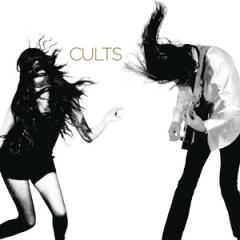
“Go Outside” was written by Madeline Follin and Brian Oblivion and appears as the second song of Cults’ eponymous debut studio album. The pop song is about breaking out of your comfort zone and living life to the fullest. Released as a single in April 2010, it failed to chart in the U.S. but went to #12 on the U.K. Singles chart. Personnel on the record were: Madeline Follin (lead vocals, percussion) and Brian Oblivian (guitar, keyboards, percussion, programming, backing vocals).
The album, Cults, is the debut album from the New York-based indie-pop band of the same name. It was recorded during 2010-11 at Treefoot Studios in New York City and produced by Cults and Shane Stoneback. Released in June 2011, it went to #12 on the Billboard Top Alternative and #52 on the Billboard 200 Albums charts. Five singles were released from the LP.
Cults is an American indie-pop band formed in New York City by Madeline Follin and Brian Oblivion (Ryan Michael Mattos). Follin had previously recorded with LA punk band Youth Gone Mad on their Touching the Cloth LP. The name Cults was taken from the Heaven’s Gate cult, which met a horrible ending in March 1997 and was based near San Diego, where Follin and Oblivion were raised. They have released six studio albums, two EPs and 23 singles. They still record and tour with current touring members: John Eatherly, Cory Stier, and Marc Derisa (drums), and Max Kamins (bass). Their last release was the deluxe edition of their sixth studio album, To the Ghosts, released in September 2025.
"About the Song" -- written by Mickey McMahan , RBN Director of Musicology