The Marcellus/Utica region is by far the most prolific natural gas production area in the U.S., accounting for about one-third of the nation’s daily output. The shale play experienced phenomenal growth in the 2010s, its gas production rising from less than 2 Bcf/d to more than 33 Bcf/d over that decade. But the pace of growth has slowed dramatically in recent years, mostly due to takeaway constraints. In today’s RBN blog, we discuss how a combination of new pipeline projects, in-basin data center development and incremental Gulf Coast LNG demand might breathe new life into the Marcellus/Utica.

The NATGAS Appalachia weekly report provides the data and insights to monitor the northeast natural gas market’s twists and turns and identify the risks and opportunities along the way, including tracking supply-demand trends, outbound capacity and their impact on takeaway pipeline utilization, and regional prices.
It’s been a while since we took a big-picture look at the Marcellus/Utica, so we’ll begin with an overview to bring everyone up to speed. In their production-growth heyday a few years back, the “dry Marcellus” in northeastern Pennsylvania and the NGL-packed “wet Marcellus/Utica” in southwestern Pennsylvania, northern West Virginia and eastern Ohio garnered more than their share of attention. But then came the Permian, which like Beyoncé or Taylor Swift stole the show when crude-oil-focused development activity in West Texas and southeastern New Mexico took off like a SpaceX rocket. It didn’t help that much of the energy news out of Appalachia the past few years has been about pipeline projects that were set back or canceled — or that took what seemed like eons to finally advance to construction and operation.
Even out of the spotlight, the Marcellus/Utica has remained a production powerhouse. As shown in Figure 1 below, the broader region (Marcellus/Utica plus other parts of Appalachia) has been hovering between 34 Bcf/d and 36 Bcf/d through the first half of the 2020s, with only a few MMcf/d coming from the “other” category. Of the current ~35 Bcf/d of Marcellus/Utica production, about 11 Bcf/d comes out of the dry Marcellus in northeastern Pennsylvania and the other 24 Bcf/d comes out of the wet Marcellus/Utica: ~10 Bcf/d from northern West Virginia, ~9 Bcf/d from southwestern Pennsylvania, and ~5 Bcf/d from eastern Ohio. (Note: Only about half the gas emerging from wells in the parts of the Marcellus/Utica that we generally refer to as “wet” includes significant volumes of NGLs; the other half is dry. RBN estimates that more than 1 MMb/d of NGLs is currently being “recovered” — that is, not “rejected” into natural gas for its Btu value — in the wet Marcellus/Utica, more than 400 Mb/d in both southwestern Pennsylvania and northern West Virginia and more than 200 Mb/d in eastern Ohio.)
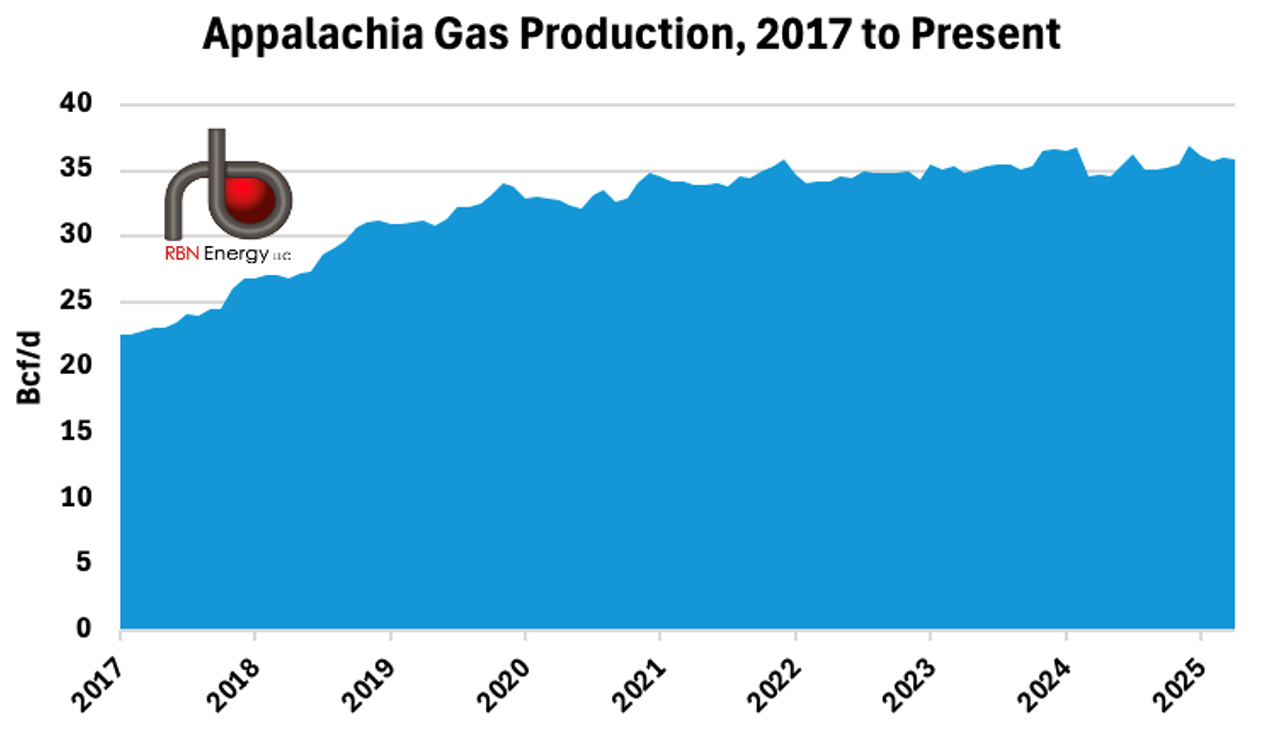
Figure 1. Appalachia Gas Production, 2017 to Present. Source: EIA
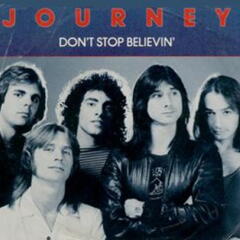
About the song
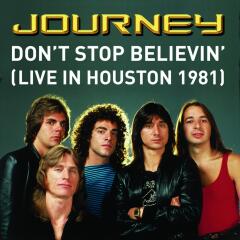
“Don't Stop Believin’” was written by Journey members Steve Perry, Jonathan Cain and Neal Schon. The song appears as the first song on side one of Journey’s seventh studio album, Escape. It was recorded at Fantasy Studios in Berkeley, CA, and produced by Kevin Elson and Mike Stone. Released as a single in October 1981, the song went to #9 on the Billboard Hot 100 Singles chart. It has sold more than 7 million digital downloads in the U.S., placing it in the Top 10 of digital song downloads. It has been certified Platinum by the Recording Industry Association of America (RIAA). Personnel on the record were: Steve Perry (lead vocals), Ross Valory (bass, backing vocals), Jonathan Cain (keyboards, backing vocals), Neal Schon (guitars, backing vocals), and Steve Smith (drums, percussion).
Escape was recorded between April and June 1981 and released in July 1981. It went to #1 on the Billboard 200 Albums chart and has yielded four Top 20 hit singles. It has been certified Diamond (10 million copies sold) by the RIAA. It was the first album with keyboardist Jonathan Cain, who replaced founding member Gregg Rolie.
Journey is an American rock band formed in San Francisco in 1973. Eighteen members have passed through its ranks since its formation. They have released 15 studio albums, five live albums, 11 compilation albums, a soundtrack album, two EPs and 52 singles, and have sold more than 100 million records worldwide. Journey was inducted into the Rock and Roll Hall of Fame in 2017. The current iteration of the band, featuring longtime members guitarist Neal Schon and keyboardist Jonathan Cain, is joined by vocalist Arnel Pineda, bassist and backing vocalist Todd Jensen, keyboardist and backing vocalist Jason Derlatka, and drummer and backing vocalist Deen Castronovo. They continue to record and tour.