As a group, the nine natural gas-focused exploration and production companies that were analyzed in our Piranha! market study are forecasting a 62% increase in capital spending in 2017 compared with 2016, a significantly higher percentage gain than their oil-focused and diversified counterparts. The driver of accelerated investment is the expected completion of natural gas infrastructure that will boost takeaway capacity from the Marcellus and Utica shales, the operational focus of eight of the nine gas-weighted E&Ps. Expanded access to Canadian, Midwestern, Gulf Coast and export markets should significantly boost realizations and margin. Production growth by the nine E&Ps, which slowed to 4% in 2016 after a 19% rise in 2015, is expected to accelerate to 10% in 2017 and to rise rapidly in 2018 and beyond. Today we continue our analysis of U.S. E&P capital spending and production trends by taking a deep dive into the investment strategies of the natural gas-weighted peer group.
U.S. oil and natural gas E&P companies, anticipating continuing low crude oil and natural gas prices, have been reshaping their portfolios to focus on a half-dozen top-notch resource plays whose production economics can hold up even if prices were to soften further. The biggest of these asset purchases and sales grab the headlines, but countless other, smaller-bite deals are having profound effects too. Taken together, this piranha-like devouring of E&P assets in the Permian, the SCOOP/STACK and other key production areas is transforming who owns what in the plays that matter most, and positioning a select group of E&Ps for success.
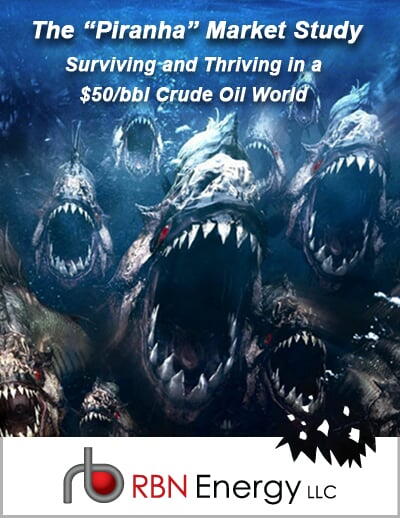
We examine this ongoing transformation in Piranha!, our market study of 43 representative U.S. E&Ps. Of that universe of companies, 21 focus on oil (60%+ liquids reserves), nine are gas-weighted producers (60%+ natural gas reserves) and 13 are diversified producers. All the major U.S. shale/unconventional plays are represented in the combined portfolios of these firms. In Very Particular Places to Go, we discussed the purpose and organization of our analysis. The first part of the four-part market study examines the strategies that companies are adopting to thrive in a $50/bbl world, breaking down merger and acquisition (M&A) activity by basin to show where these firms are selling and where they are buying. The second part considers the E&P sector’s 2017 capital spending plans and production expectations as a whole, while the third delves into what these companies have been doing to maintain and improve their financial health. The fourth and final section of Piranha!, which accounts for more than 120 of the report’s 150-plus pages, examines each company in our universe of 43 firms at a granular level, looking at their financial condition, capex plans, geographic focus, M&A strategies and a general assessment of the company’s position in today’s U.S. E&P industry.
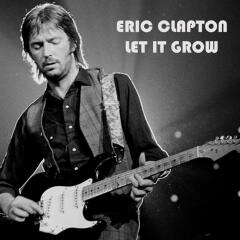
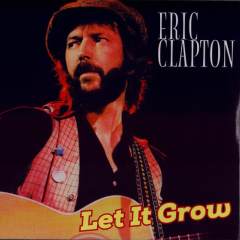
About the song
“Let It Grow” is written by Eric Clapton and appears as the third song on side two of Clapton’s second solo album, 461 Ocean Boulevard. The song’s lyrics are a reflective treatise on love and redemption. After a three-year hiatus from the music industry, and overcoming heroin addiction, there is a good chance that Clapton wrote this song while living in Tulsa around 1973, enjoying the local music scene under the auspices of good friend Leon Russell, who had a home and studio in Tulsa at the time. Three-fifths of the band Clapton put together for 461 Ocean Boulevard came from Tulsa: longtime Russell and Clapton bassist Carl Radle, and organist Dick Sims and drummer Jamie Oldaker, both of whom came from the popular Tulsa band, Tulsa County. Personnel on the record were: Eric Clapton (lead vocals, guitar, slide guitar), George Terry (guitar, backing vocals), Dick Sims (organ), Albhy Galuten (piano), Carl Radle (bass), Jamie Oldaker (drums), and Yvonne Elliman (backing vocals).
461 Ocean Boulevard was recorded in the spring of 1974 at Criteria in Miami, with Tom Dowd producing. The album’s title refers to the address Clapton and his band were living at in Golden Beach, FL, while they were recording the album. Clapton used his black Stratocaster —a Gibson ES 335 nicknamed “Blackie” — for slide work, and various Martin acoustic guitars in making the LP. Released in July 1974, the album went to #1 on the Billboard 200 Albums chart and has been certified platinum by the Recording Industry Association of America. Two singles were released from the LP.
Eric Clapton is a British rock and blues guitarist, singer, and songwriter. He was a member of The Yardbirds, John Mayall’s Bluesbreakers, Cream, Blind Faith, Delaney & Bonnie’s band, Derek and the Dominoes, and has an extensive solo career that began in 1974. As a solo artist, Clapton has released 21 studio albums, 15 live albums, 21 compilation albums, seven soundtrack albums, and 81 singles. He has an OBE and CBE from Great Britain and a Grammy Lifetime Achievement Award, and is a Commander of the Ordre des Arts et des Lettres of France. He was inducted into the Rock and Roll Hall of Fame three times: as a member of The Yardbirds and of Cream, and as a solo artist. He continues to record, tour, and put on the annual Crossroads Guitar Festival. His next tour dates are scheduled for May 2024 with performances in the UK and Ireland.