


Oil-Weighted exploration and production companies (E&Ps) are slashing capital spending in 2015, as they need to regain control of their costs in today’s lower oil price environment. With robust oil prices over the past three years, these companies only posted middling profitability as capital and operating costs ate up much of their incremental revenue. The Large Oil Weighted E&Ps are cutting back less than the Small/Mid-Sized Oil Weighted E&Ps as they are more financially secure and have more ability to spend through the price cycle. The Small/Mid-Sized Oil Weighted E&Ps are focused on getting their spending in line with cash flows and to get to a point where they are self-funding their capital investment. Today we explore how each of the companies in the two oil-weighted peer groups is trying to resolve these issues.
Recap
In Episode 1, we provided an overview of our analysis on exploration and development spending and production trends for a group on 31 E&P companies. We segregated the companies into four peer groups: Small/Mid-Size E&Ps, Large Oil Weighted E&Ps, Diversified US Gas Weighted E&Ps and Appalachian Gas Weighted Producers. The end result of the analysis was the Appalachian Gas Weighted Producers were cutting back the least on capex and expecting the largest production gain fueled by the best profitability in the study. The Diversified US Gas Weighted E&Ps were expected to cut back a little more sharply than the Appalachian Gas Weighted Producers on capital spending with no expectation of production growth in 2015. The two oil weighted peer groups, the Small/Mid-Size E&Ps and Large Oil Weighted E&Ps are cutting back on capital spending the most (42% and 38%, respectively). The two groups however are expecting to post production increases this year of 13% and 6% respectively. In this Episode, we are taking a deeper dive view into the two oil weighted peer groups. (We would like to again thank our friends at U.S Capital Advisors for getting us started with this analysis in Rig Cuts Deep, Output High!).
The Large Oil Weighted E&Ps
Two features differentiate the 5 Large Oil Weighted E&P companies in our survey group from Small/Mid-Sized Oil Weighted E&Ps. First the Large E&Ps are more focused on returns on capital rather than production growth and second, they are financially stronger. Many of these companies are former Integrated Oils, which helped incubate their emphasis on profitability and financial stability. In 2015, the Large Oil Weighted E&Ps are expecting to cut back on exploration and development spending by 36%, but are still forecasting a 6% gain in oil and gas production (see Table 1). Each company is highlighting savings from lower service costs indicating that drilling activity is not falling as fast as the budget declines indicate. In addition, these companies have a high degree of overlap in their domestic operations including the Bakken Shale, the Eagle Ford Shale and the Permian Basin. For more information on the economics of each of these and other plays in a low price environment, please see “It Don’t Come Easy”.
Marathon Oil, the company with the highest weighting to oil and liquids, 80%, is planning to cut back its capital spending by 43% in 2015, the sharpest in the group. About 40% of its capex is targeting the Eagle Ford Shale with an additional 20% being invested in the Bakken. US resource plays now account for 57% of the company’s production from continuing operations compared to 43% a year ago. Marathon expects a 20% gain in US resource play production in 2015 to 229 thousand barrels of oil equivalent per day (Mboe/d), but will continue to reduce its rig count from just fewer than 35 in 4Q/2014 to an average of 15 for 2015.
About the song
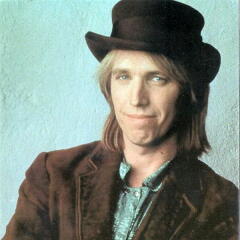
"Free Fallin'" was written by Tom Petty and Jeff Lynne, and is the opening cut on side one of Tom Petty's first solo album, Full Moon Fever. The song was released as a single in October 1989, and went to #7 on the Billboard Hot 100 Singles chart. Petty and Lynne wrote and recorded the song in two days. It was the first song completed for Full Moon Fever, with the lyrics based loosely on Petty's frequent trips along Ventura Boulevard in the San Fernando Valley area of Los Angeles. Personnel on the record were: Tom Petty (lead vocals, 12-string acoustic guitar), Mike Campbell (electric guitar, 6- and 12-string acoustic guitar), Jeff Lynne (backing vocals, bass) and Phil Jones (drums).
Full Moon Fever was recorded at M.C. Studios, Rumbo Studios, Sunset Sound, Devonshire Studios and Sound City in Los Angeles in 1987-89. Produced by Tom Petty, Jeff Lynne and Mike Campbell, the album was released in April 1989. It went to #3 on the Billboard Top 200 Albums chart, and has been certified 5x Platinum by the Recording Industry Association of America.
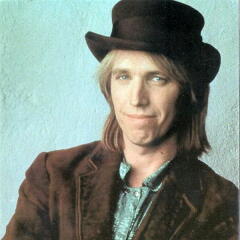
Tom Petty was an American singer-songwriter, multi-instrumentalist, record producer and actor. He released 13 studio albums with the Heartbreakers, three solo albums, two Traveling Wilburys albums, two Mudcrutch albums and a total of 68 singles. He has sold more than 80 million records worldwide. As a solo artist, Petty has won one Billboard Music Award, three Grammy Awards and one MTV Video Music Award, as well as a UCLA Gershwin Award, a Billboard Music Century Award and a MusiCares Person of the Year Award. Tom Petty and the Heartbreakers have won two MTV Video Music Awards and have been inducted into the Rock and Roll Music Hall of Fame. Tom Petty died in October 2017 at the age of 66.




Comments
Very nice article, thank you.
There may, however, be a typo.
"Marathon was the most profitable posting a better than 300% recycle ratio on the strength of a strong netback (over $70/boe) and group-leading finding and development costs. ConocoPhillips, EOG Resources and Hess pulled up the rear but at respectable levels. Hess had the strongest netback, but its weak point was a group-lagging finding and development cost of nearly $25/boe."
Should the reference to Marathon having a $70 netback have been to realized prices? If not, it would seem to have the highest netback and not Hess. But, I can't imagine a $70 netback with natty prices being what they were over this period, even with only 20% natty production.
Time On Target:
You are correct, there was a typo. The realized price was over $70/boe and the netback was over $55/boe.
Nice catch. We'll get that fixed. I'm glad you liked the write-up.
Thanks.