


RBN analysis of 31 exploration and production (E&P) companies shows sharp differences between two groups of gas-weighted firms. The US diversified group is struggling to increase production, and slashing capital spending in light of weak profitability. Meanwhile, the Appalachian group is flying high as the most profitable classification in our analysis – largely as a result of slashing costs in response to weak natural gas prices. Today we wrap up our three-part analysis of U.S. E&P company’s 2015 outlook.
Recap
Episode 1 we provided an overview of capital spending, production and profitability trends for a group of 31 companies. The data is sourced from company SEC reports and press releases. The benchmark used to measure profitability is the recycle ratio – meaning production revenue less lifting costs divided by finding and development costs. We segregated the companies into four peer groups: Small/Mid-Size E&Ps, Large Oil Weighted E&Ps, Diversified US Gas Weighted E&Ps and Appalachian Gas Weighted producers. In Episode 2, we took a deeper dive into the two oil weighted peer groups. We saw that while crude prices were in the $90/bbl + range over the past few years these oil weighted companies were only modestly profitable. Consequently, in 2015, they needed to make the most strident cuts in capital spending to adjust to the new oil price environment. In this episode, we now focus in on the Gas Weighted E&Ps. We split the group into the Diversified US Gas Weighted E&Ps and the Appalachian Gas Weighted E&Ps.
Diversified US Gas Weighted E&Ps
The nine companies in our diversified US gas weighted producer group (see Table 1) have a natural gas focus outside of Appalachia. Most of these companies have a significant oil/liquids exposure but to fall into the gas category they have oil weighting of less than 50%. As a group they are expected to cut their organic capital spending by one-third, while keeping their production flat in 2015. Those companies with a heavy oil/liquids exposure are faced with a double head wind, battling a weak price environment for oil and natural gas liquids (NGL) prices as well as for natural gas. This group had the worst profitability of the four in our analysis, as measured by the recycle ratio, due to the combination of a weak revenue stream and an uncompetitive cost structure.
About the song
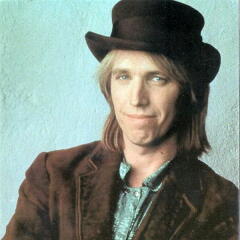
"Free Fallin'" was written by Tom Petty and Jeff Lynne, and is the opening cut on side one of Tom Petty's first solo album, Full Moon Fever. The song was released as a single in October 1989, and went to #7 on the Billboard Hot 100 Singles chart. Petty and Lynne wrote and recorded the song in two days. It was the first song completed for Full Moon Fever, with the lyrics based loosely on Petty's frequent trips along Ventura Boulevard in the San Fernando Valley area of Los Angeles. Personnel on the record were: Tom Petty (lead vocals, 12-string acoustic guitar), Mike Campbell (electric guitar, 6- and 12-string acoustic guitar), Jeff Lynne (backing vocals, bass) and Phil Jones (drums).
Full Moon Fever was recorded at M.C. Studios, Rumbo Studios, Sunset Sound, Devonshire Studios and Sound City in Los Angeles in 1987-89. Produced by Tom Petty, Jeff Lynne and Mike Campbell, the album was released in April 1989. It went to #3 on the Billboard Top 200 Albums chart, and has been certified 5x Platinum by the Recording Industry Association of America.
Tom Petty was an American singer-songwriter, multi-instrumentalist, record producer and actor. He released 13 studio albums with the Heartbreakers, three solo albums, two Traveling Wilburys albums, two Mudcrutch albums and a total of 68 singles. He has sold more than 80 million records worldwide. As a solo artist, Petty has won one Billboard Music Award, three Grammy Awards and one MTV Video Music Award, as well as a UCLA Gershwin Award, a Billboard Music Century Award and a MusiCares Person of the Year Award. Tom Petty and the Heartbreakers have won two MTV Video Music Awards and have been inducted into the Rock and Roll Music Hall of Fame. Tom Petty died in October 2017 at the age of 66.




Comments
There is actually a comprehensive value creation model published in the mid 1990's in the "Oil and Gas Investor" for actually measuring, evaluating and comparing value changes and a proxy IRR for E&P companies rather than just suggesting changes based on changes in certain components.
Hi Moneyonomics:
The object of our analysis was to look at capital spending and production changes for 2015. Once we started the analysis I was looking a something to explain the changes and profitability seemed to make sense to include.
We weren't trying to do a comprehensive analysis on valuation creation. If we were we would have done something much more complex that just looking at the recycle ratio.
Thanks for you comments.