In connection with third-quarter earnings announcements, North American exploration and production companies (E&Ps) continued to announce large reductions in 2015 and 2016 capital budgets. But the most dramatic news is that RBN’s analysis of a study group of 31 E&Ps fourth quarter forecasts indicates that oil and gas production is now expected to level off in the fourth quarter of 2015 and into 2016. Today we update our analysis of E&P capital spending and oil and gas production guidance.
This summer as U.S. benchmark West Texas Intermediate (WTI) crude oil prices languished at $40-$50/Bbl, RBN’s August 2015 analysis of third quarter guidance (see More Ch-ch-ch-ch-changes) indicated that our study group of 31 E&Ps made significant reductions of about $2 billion, or 3.3% in their 2015 capital spending plans since announcing initial guidance earlier this year. But while capital spending estimates were reduced in the third quarter, oil and gas production guidance continued to rise. In that third-quarter 2015 study, the group collectively raised oil and gas production estimates by 15 million boe, bringing the total increase in 2015 production guidance to 43 million boe since their initial estimates. However, the situation has now changed in the outlook for fourth-quarter 2015, where company guidance appears to show that oil and gas production for two of our four peer groups examined in the analysis will stop growing.
The four companies that announced preliminary 2016 estimates indicated a reduction in capital spending by one-third from 2015. These companies also confirmed that production is expected to level off in 2016.
Recap
In Episode 1, of this series back in May 2015 we provided an overview of the 2015 capital spending and oil and gas production trends for 31 E&P companies based on guidance given during the first quarter of 2015. Our goal was to understand how companies are responding to the challenge of lower oil prices in their capital spending (i.e. drilling) and expectations for production (productivity). We divided the universe into four peer groups: Small/Mid-Size Oil-Weighted E&Ps, Large Oil-Weighted E&Ps, Diversified Natural Gas-Weighted E&Ps, and the Appalachian Gas-Weighted E&Ps. In Episode 2, we did a deeper dive analysis into the two oil weighted peer groups in the study. We found that the Large Oil-Weighted E&Ps were cutting back by a lower percentage than the Small/Mid-Sized Oil-Weighted E&Ps because they are generally more financially secure and are better able to fund investment through the price cycle. The Small/Mid-Sized Oil Weighted E&Ps were focused on aligning spending with cash flows, with the goal of self-funding capital investment. In Episode 3, we analyzed the natural gas-weighted peers. Our analysis revealed that the US diversified natural gas companies were slashing capital spending in light of weak profitability, which in turn dampened production growth. In contrast, the Appalachian gas producers were the most profitable group in our analysis as a result of slashing costs while still generating increased output. Then in August (Episode 4), we updated our analysis on second-quarter 2015 guidance and noted that the Small/Mid-Sized Oil-Weighted E&Ps were the only peer group growing capital spending given the weak oil and gas price environment.
This time we update our analysis of all four peer groups based on third-quarter earnings releases and fourth quarter guidance issued by our 31 target companies and review the first announcements of 2016 spending plans.
About the song
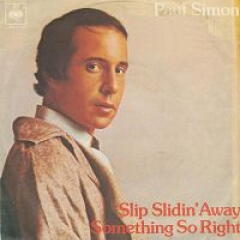
“Slip Sliding Away” was written by Paul Simon and has appeared on the compilation albums Greatest Hits, Etc. and Negotiations and Love Songs. The song was originally recorded and slated for release on Simon’s 1975 album, Still Crazy After All These Years, but at the last minute Simon decided not to include it on the album. Released as a single in October 1977, it went to #5 on the Billboard Hot 100 and #4 on the Easy Listening Singles charts. It has been certified Gold by the Recording Industry Association of America. Personnel on the record were: Paul Simon (lead vocals, acoustic guitar), Anthony Jackson (Bass), Richard Tee (Fender Rhodes electric piano), Steve Gadd (drums), Ralph McDonald (percussion), and The Oak Ridge Boys (backing vocals).
Simon was half of the popular duo Simon & Garfunkel, which was officially formed in 1964 and sold millions of records until their breakup in 1970. A little-known fact is that Paul Simon and Art Garfunkel had been a team since they were teenagers. Under the name Tom & Jerry, the duo got a record deal in 1957 with the independent New York record label, Big Records. They had a minor hit with the Simon-penned “Hey Schoolgirl,” which went to #49 on the Billboard Hot 100 Singles chart and led to an appearance on American Bandstand with Jerry Lee Lewis, who was promoting “Great Balls of Fire” at the time. Between 1957 and 1964, Simon wrote, recorded, and released more than 30 records.
As a solo artist. Paul Simon has released 15 studio albums, three live albums, 11 compilation albums and 15 singles. He has won 16 Grammy Awards and a Grammy Lifetime Achievement Award, and has been inducted into the Rock and Roll Hall of Fame twice: as a member of Simon & Garfunkel in 1990 and as a solo artist in 2001. He continues to write and record, and to make occasional public appearances. He released his 15th solo studio album, Seven Psalms, in May 2023. It went to #25 on the Billboard Top Rock Albums chart and #153 on the Billboard 200 Albums chart.