The uncertainty and angst spurred by the ongoing trade war doesn’t seem to have dampened foreign companies’ interest in acquiring upstream and midstream energy assets in the U.S. The recent rumor — still unconfirmed — that Mitsubishi Corp. is in talks to acquire Aethon Energy Management’s massive holdings in the Haynesville for a reported $8 billion is only the latest indication that overseas interest may be stronger than ever. In today’s RBN blog, we’ll discuss the latest round of foreign investments in U.S. energy and what’s driving those deals. We’ll also look at the Aethon assets on the block.

The replay of our Fall 2026 School of Energy (September 9 & 10, Houston) is now available online!
Learn from RBN experts, participate in hands-on Excel modeling, connect with industry peers, and gain a stronger understanding of today's interconnected energy markets.
European, Asian and Middle Eastern companies investing in the U.S. energy space isn’t a new phenomenon — Canadian investment is common too, of course. But the pace of foreign interest in U.S. assets has been accelerating the past few years, much of it tied to the global LNG trade. Controlling gas production and promising acreage near existing and planned LNG export terminals can give LNG traders and overseas gas consumers greater control over their feedgas supply, help them manage their supply costs, and enable them to hedge against price volatility. Similarly, investors in LNG liquefaction and export assets gain a greater say on how those facilities are managed, as well as a deeper understanding of how that part of the market works.
A few months ago, in American Pie, we discussed the flurry of foreign investment in U.S. energy production and infrastructure in 2023-24. Today, we’ll follow that up with a look at more recent deals, beginning with the potential sale of Aethon Energy Management, one of U.S.’s largest privately held gas producers. Recent reports suggested that Mitsubishi is in “advanced negotiations,” to acquire Aethon, though the Japanese trading giant said in late June that it “has not made any decision that is consistent with the contents of those reports.” (Back in April, it was reported that Abu Dhabi National Oil Co., or ADNOC, was interested in Aethon.)

Figure 1. Aethon Energy Management’s Production Areas and Gas Gathering Lines in the Haynesville. Source: RBN
About the song
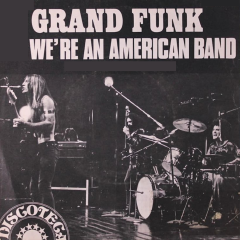
“We’re an American Band” was written by Don Brewer and appears as the first song on side one of Grand Funk’s seventh studio album of the same name. The song talks about some of the band’s experiences on the road. It name-drops two famous people who are no longer with us: legendary blues guitarist Freddie King and notorious Little Rock groupie “Sweet Sweet” Connie Hamzy. “Come on, dudes, let's get it on!” Released as a single in July 1973, it went to #1 on the Billboard Hot 100 Singles chart and has been certified Platinum by the Recording Industry Association of America (RIAA). It was the band’s first #1 single. Personnel on the record were: Don Brewer (lead vocal, drums, cowbell), Mark Farner (lead guitar, conga, backing vocals), Mel Schacher (bass), and Craig Frost (organ, clavinet, piano, Moog synthesizer).
The album, We're an American Band, was recorded in three days in June 1973 at Criteria Studios in Miami with Todd Rundgren producing. Original copies of the album featured a gold foil cover and a gold-color vinyl disc. Released in July 1973, it went to #2 on the Billboard 200 Albums chart and has been certified Platinum by the RIAA. Two singles were released from the LP.
Grand Funk was previously called Grand Funk Railroad but shortened its name in 1973 after a lawsuit with their former manager, Terry Knight. The band was formed in Flint, MI, in 1969 by drummer Don Brewer and guitarist Mark Farner from Terry Knight & the Pack and bassist Mel Schacher from Question Mark & the Mysterions. They first received recognition by playing the opening slot at the 1969 Atlanta Pop Festival for no money. Their high-energy power trio sound and tight harmonies went over well with the crowd and resulted in a deal with Capitol Records. The band has released 13 studio albums, four live albums, eight compilation albums and 26 singles and has sold more than 25 million records worldwide. The band first broke up in 1976, with Mark Farner pursuing a solo career. Brewer and Schacher enlisted new members and reformed the band in 1981 — and broke up again in 1983. The original trio reunited in 1996 and Farner departed once more in 1998. Brewer and Schacher, with various musicians, continue to tour as Grand Funk; Farner still tours as a solo act. Fourteen musicians have passed through the band since its formation. Grand Funk is currently on tour in the U.S. through November. Mark Farner’s American Band has five dates lined up for the remainder of 2025.