Brace yourself for it. Over the next few weeks, there’s a good chance that a tsunami of crude oil will be released from the U.S. Strategic Petroleum Reserve (SPR), and it’s likely that much (if not most) of that oil will be piped to Gulf Coast export docks and loaded onto supertankers. If that happens, the export capacity of crude-handling terminals from Corpus Christi to coastal Louisiana will be stress-tested on their ability to send out much larger volumes than they’re used to dealing with. And that’s only the beginning. Over the next year or two, while U.S. E&Ps ratchet up production in response to higher prices as Europeans and others scramble to replace Russian crude oil, Gulf Coast export terminals may well be called upon to load and ship out even more oil (in addition to refined products) on a regular basis. In today’s RBN blog, we discuss the impending SPR releases and the ability of Gulf Coast ports and individual terminals to handle increasing volumes.
For a while now, we’ve been thinking that a confluence of factors — efforts by European and other refineries to slash their use of Russian crude oil, massive releases of crude from the SPR, rising U.S. oil production, and declining domestic refining capacity, among others — may result in a rapid increase in crude exports from Gulf Coast marine terminals. And the latest weekly data from the Energy Information Administration (EIA) indicates that the surge has begun: an average of 3.85 MMb/d was exported during the last three weeks of April, in contrast to earlier this year (the six weeks prior to the mid-February invasion of Ukraine), when exports averaged just 2.5 MMb/d. We’ve also been wondering if the existing oil-related infrastructure along the coast would be capable of handling a real flood of crude.

The RBN Crude Oil Analytic Suite gives you access to four weekly reports covering crude oil markets, including: Crude Billboard, Crude Permian, Crude TradeView, and Crude Voyager.
In Part 1 of this series on U.S. crude oil export capacity, we took a 30,000-foot view of the situation and determined that the 16 largest oil-handling terminals along the Gulf have a combined maximum capacity of well over 6 MMb/d, or about twice the 3 MMb/d-plus volumes these same facilities have been routinely sending out the past couple of months. That’s the good news. The not-so-good news is this: (1) there are questions about how sustainable the maximum export capacity will be over time, and (2) there is a reasonable possibility that U.S. export terminals are about to be inundated with previously unheard-of volumes of oil — in other words, their hypothetical export capacity may be tested in a very real way.

About the song
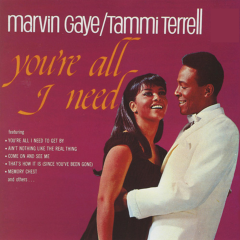
“You’re All I Need to Get By” was written by Nick Ashford and Valerie Simpson. It appears as the third song on side one of Marvin Gaye and Tammi Terrell’s second studio duet album of the same name. Recorded in March 1968 and released as a single in July the same year, the song went to #1 on the Billboard Hot R&B chart and #7 on the Billboard Hot 100 Singles chart. The song was covered in 1995 coupled with “I’ll Be There for You” by Method Man and Mary J. Blige. Their version won a Grammy Award for Best Rap Vocal Performance by a Duo or Group in 1995. Personnel on the Marvin Gaye/Tammi Terrell record were: Marvin Gaye, Tammi Terrell (lead vocals), Nick Ashford, Valerie Simpson (backing vocals), and The Funk Brothers (instrumentation).
The album, You're All I Need to Get By, was recorded at Hitsville USA in Detroit in 1966-67. Produced by Harvey Fuqua, Ashford & Simpson, Johnny Bristoll and Robert Gordy, the album was released in August 1968, and went to #60 on the Billboard 200 Albums chart. After recording the album, Tammi Terrell collapsed on stage during a show with Marvin Gaye in Virginia in late 1967. She was later diagnosed with a brain tumor and was never again able to perform live. Three charting singles were released from the LP.
Marvin Gaye was an American singer and songwriter. He released 25 studio albums, four live albums, one soundtrack album, 24 compilation albums and 83 singles. He has a Grammy Lifetime Achievement Award and is a member of the Rock and Roll Hall of Fame, the Songwriters Hall of Fame, and the Rhythm and Blues Music Hall of Fame. He died in Los Angeles in April 1984 at the age of 44 after being fatally shot by his father.
Tammi Terrell was an American singer and songwriter. She released one solo studio album, four duet studio albums and 20 singles. She was diagnosed with a brain tumor in late 1967. After undergoing several surgeries, Terrell lost her battle with cancer in March 1970 at the age of 24.