Massive shifts are occurring in the U.S. crude oil export market, but you wouldn’t know it from the steady-as-she-goes pace of activity. The volumes being loaded along the Gulf Coast have stayed within a relatively tight range — 2.5 MMb/d to 3.2 MMb/d — for 12 consecutive quarters now, and the export pace for each of the past three quarters has remained within a few thousand barrels of 3 MMb/d. So, what’s changed? For one thing, Corpus Christi is now by far the dominant point of export, with Houston, Louisiana, and Beaumont/Nederland trailing. Another is that Europe, heavily impacted by the sharp decline in imports from Russia, is now the leading destination for U.S. barrels. There are other changes, too, including increased use of Very Large Crude Carriers (VLCCs) and terminal expansion projects. In today’s RBN blog, we discuss highlights from our recently published Crude Voyager Quarterly Report.

To truly understand Cushing — what it does and how it works — you need to know the hub’s assets and how they fit together. RBN’s Cushing Crude Oil Playbook provides the first one-stop, comprehensive guide to the hub’s assets.
When fully loaded with 2 MMbbl of crude oil, a VLCC in some ways resembles an alligator moving stealthily along a Florida lake, its body largely submerged with only a sliver of the beast visible above the waterline. The same could also be said of U.S. crude exports — a lot of what’s happening is occurring beneath the surface. As we said in our introduction, export volumes have remained remarkably stable over the last three-plus years. It’s difficult to tell just from looking at the totals that since mid-2019 the world has endured a once-a-century pandemic that crushed demand for oil and refined products and sent crude prices tumbling. There is also little to indicate that earlier this year Russia — one of the world’s three leading oil producers along with the U.S. and Saudi Arabia — invaded Ukraine, spurring not only Europe’s first major land war since World War II but an “energy war” the likes of which none of us has ever seen. And don’t forget the ongoing “energy transition,” a key element of which would presumably aim to ratchet down the role of oil and other hydrocarbons.
About the song
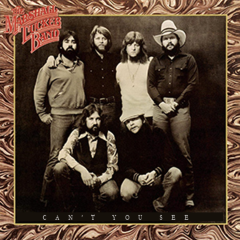
“Can’t You See” was written by Toy Caldwell and appears as the second song on side one of The Marshall Tucker Band’s debut album, The Marshall Tucker Band. Released as the first single from the album in September 1973, it went to #8 on the Billboard Hot 100 Singles chart. Many artists have covered the song over the years. In July 1976, Waylon Jennings’ version went to #4 on the Billboard Hot Country Songs Singles chart, and in May 2010 the Zac Brown Band with Kid Rock went to #11 on the Billboard Hot 100 Singles chart with their cover of the song. Personnel on the record were: Toy Caldwell (lead vocals, lead guitar), Tommy Caldwell (bass, backing vocals), Doug Gray (backing vocals, percussion), Jerry Eubanks (flute, backing vocals), George McCorkle (rhythm guitar), and Paul Riddle (drums).
The Marshall Tucker Band is the self-titled debut album by the band of the same name. Recorded during early 1973 at Capricorn Studios in Macon, Georgia with Paul Hornsby producing, it was released in April 1973. It went to #29 on the Billboard 200 Albums chart and has been certified Gold by the Recording Industry Association of America. Two singles were released from the LP.
The Marshall Tucker Band is an American Southern rock band formed in 1972 in Spartanburg, SC, by Toy Caldwell, Tommy Caldwell, Doug Gray, Jerry Eubanks, George McCorkle, and Paul Riddle. The band was named after a key they found in their rehearsal warehouse with the name “Marshall Tucker” inscribed on it. They later found out that it had belonged to a blind piano tuner that had worked in that building tuning pianos before the band occupied it. They have released 22 studio albums, seven live albums, 12 compilation albums, and 29 singles. They have received five Gold albums, and one Platinum album. Tommy Caldwell died in April 1980, Toy Caldwell in February 1993, and George McCorkle in June 2007. The band still plays concert dates, and is currently on a 50th anniversary tour, with vocalist Doug Gray being the only original member of the band.