It’s been another tumultuous few months for natural gas prices, particularly amid what European Commission President Ursula von der Leyen has called Russia’s war on Europe’s energy and economy. Europe is staring down aggressive curtailments of Russian gas supplies and rising consumer utility bills, necessitating austerity measures and beyond to bail out consumers and utilities and prevent a dangerous shortfall this winter. Prices in continental Europe have now topped $20/MMBtu for a year, higher than the previous single-day record. On top of the elevated prices, outrageous spikes higher and lower have become a semi-regular occurrence as the gas market struggles to find balance. And high prices and volatility are not going anywhere anytime soon as Europe braces for a winter with little or even no Russian gas. In today’s RBN blog we look at European gas prices, the latest energy policy proposal from the EC and how U.S. LNG exports fit into the ongoing crisis.

The global gas market has been tight and fundamentally bullish since fall 2020, well before Russia’s war in Ukraine and the resulting sanctions. Since the market recovered from its COVID-induced low point in summer 2020, overall gas (and especially LNG) supplies have struggled to keep pace with global demand despite export capacity additions during that time. The market has seen a perfect storm of weather events, high global demand, low renewable energy output in key regions and, of course, a war that has pitted the largest gas supplier to Europe against the Western world. Prices in Europe, marked by the Dutch Title Transfer Facility (TTF, orange line, Figure 1), representing continental Europe, and U.K.’s National Balancing Point (NBP, yellow line, Figure 1) first climbed above $20/MMBtu in mid-September 2021. While tensions with Russia were mounting at that time, the main drivers of the high gas prices were extremely low gas storage inventories and extremely high carbon prices (see I Won’t Back Down), putting upward pressure on the gas market. By winter, this had catapulted European prices above Asia, marked by the Japan-Korea Marker (JKM, green line, Figure 1); previously a rare occurrence, it’s now the norm.
About the song
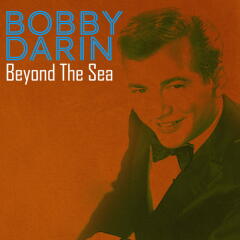
“Beyond the Sea” was written by Charles Trenet as “La Mer.” While Trenet’s original French version was an ode to the sea, Jack Lawrence, who composed the English lyrics, turned it into a love song. “Beyond the Sea” has been recorded by many artists, but Bobby Darin’s 1959 version of the tune is the best known. It appears as the second song on side one of his second studio album, That’s All. Released as a single in October 1959, it went to #6 on the Billboard Hot 100 Singles chart. The song has appeared in television shows and motion pictures over the years, most notably in the films Goodfellas and Finding Nemo. Personnel on the record were: Bobby Darin (vocals), Hank Jones (piano), Berry Galbraith (guitar), Milt Hinton (bass), Osie Johnson (drums), Doc Severinsen, Joe Cabot, Al DeRisi (trumpet), Frank Rehak, Chauncey Welsch (trombone), Jerry Sanfino (tuba), Romeo Penque, Joe Soldo (flute), and Richard Wess (orchestrations).
That’s All was recorded between 1958-59 and produced by Ahmet Ertegun, Nesuhi Ertegun, and Jerry Wexler. Released in March 1959, it went to #7 on the Billboard 200 Albums chart. The album also included the hit single “Mack the Knife,” which Darin recorded in one take. It was the first of several successful collaborations between Darin and arranger/conductor Richard Wess. This album helped insure Darin’s status as a pop star. At the second Grammy Awards presentation (the first to be televised), Darin won Record of the Year and Best New Singer.
Bobby Darin (Walden Robert Casotto) was an American singer, songwriter, musician, and actor. He started his professional career as a songwriter for Connie Francis. He had his first hit in 1958 with “Splish Splash,” followed by “Dream Lover,” “Mack the Knife,” and “Beyond the Sea.” In 1962 he won a Golden Globe Award for his first film, Come September, which co-starred his first wife, Sandra Dee. Darin released seven studio albums, four live albums, nine compilation albums, and 70 singles. He appeared in thirteen motion pictures. He is a member of the Rock and Roll Hall of Fame, Songwriters Hall of Fame, and has a Grammy Lifetime Achievement Award and a star on the Hollywood Walk of Fame. Darin died in Los Angeles in December 1973 following heart surgery at the age of 37.