
As summer has progressed into fall, the trade press has become increasingly skeptical about whether Europe can adequately replenish its underground natural gas reserves in the wake of a colder-than-expected winter, which was followed by the loss of LNG supply due to the Persian Gulf conflict. The European gas year started on October 1 and European Union (EU) underground gas storage facilities are just over 70% full and growing slowly, to the extent that Europe cannot meet its storage targets. In today’s RBN blog, we explain why Europe, and Germany specifically, finds itself in a precarious situation and look at what might be done.

The Natural Gas Master Class is a one-day online event focusing on understanding flow analysis, interpreting pipeline data and forecasting future flows. This course is designed to equip you with the knowledge and skills to effectively analyze the complexities of natural gas markets, flow analysis, and pipeline modeling. Join us online
October 21 | Online
First, the statistics on overall EU gas storage are striking but do not tell the full story. The shortage resides primarily with Germany, which boasts 22% of the EU’s total gas storage capacity but where gas stocks are only 59% full. Removing Germany’s storage capacity from the EU total shows that storage levels across the remaining 26 nations are 80% full, which is not immediately concerning. (As we noted in Out of Gas, the EU aims to have inventories 90% full by November 1 each year. The target was established in 2022 in response to the Russian gas crisis and the extremely low inventories of 2021. Because of high costs and market constraints, the EU decided in April to relax its November 1 target to 80%.) However, Germany’s storage position remains delicate, with storage levels since April (red line in Figure 1 below) well below the previous year (blue line) and the normal range from October 2018 to September 2021 (gray-shaded area), the last full gas years before Russia’s invasion of Ukraine in early 2022.
About the song
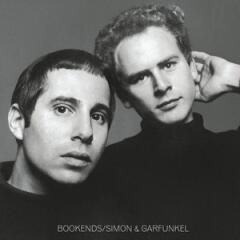
Written by Paul Simon, “A Hazy Shade of Winter” is an autobiographical song about Simon’s days living in England in 1965. It was recorded during the sessions for Simon & Garfunkel’s 1966 album Parsley, Sage, Rosemary, and Thyme. It was released as a single in October 1966 and reached #13 on Billboard’s Hot 100. But the song would not appear on a Simon & Garfunkel album until 1968’s Bookends. It was a bit of a departure for the popular duo in that it had a more folk-rock sound compared to some of their other more acoustic-oriented tunes.
Simon was half of the popular duo Simon & Garfunkel, which was officially formed in 1964 and sold millions of records until their breakup in 1970. As a solo artist. Paul Simon has released 15 studio albums, four live albums, 11 compilation albums, and 61 singles. With Simon and Garfunkel, he released five studio albums, four live albums, a soundtrack album, 13 compilation albums, an EP, and 26 singles. He has won 16 Grammy Awards and a Grammy Lifetime Achievement Award, and has been inducted into the Rock and Roll Hall of Fame twice: as a member of Simon & Garfunkel in 1990 and as a solo artist in 2001. He released his latest solo studio album, Seven Psalms, in May 2023. He wrapped up his A Quiet Celebration Tour in July. He has no upcoming tour dates scheduled.
The Bangles began performing “A Hazy Shade of Winter” live in 1983 and recorded it for the soundtrack of the movie Less Than Zero. The Bangles’ version of the song featured a lead vocal from each member of the band. The soundtrack was produced by Rick Rubin, but he gave The Bangles lots of freedom in the studio to capture the feel of the band’s live performances of the song, hence a co-producing credit between Rubin and the band. That version was released as a single in November 1987. Buoyed by a constant rotation of the video of the song on MTV, it quickly reached #2 on Billboard’s Hot 100.
The Bangles are a female pop-rock band formed in Los Angeles in 1981. The Peterson sisters, Susanna Hoffs and Annette Zilinskas started playing together originally as The Colours in 1981. The group renamed themselves The Bangs and became part of the Los Angeles Paisley Underground scene in the early 1980s. They signed with Faulty Records and released an EP under their new name, The Bangles, in 1983. Zilinskas left the band to work on her own project, Blood on the Saddle, and was replaced by bassist Michael Steele from Toni & The Movers. The Bangles released their debut album, All Over the Place, on Columbia Records in 1984. They have released five studio albums, 10 compilation albums, one EP, and 25 singles. They have won a Brit Award and an ASCAP Pop Music Award. The group broke up in 1989 and reformed in 1998. Nine members have passed through the band since its formation. The band has occasionally performed with the lineup of Hoffs, the Peterson sisters, and a rotating cast of bass players. Hoffs released a solo album, The List, in September.
"About the Song" -- written by Mickey McMahan , RBN Director of Musicology