Three phenomena — the European Union’s laser focus on reducing greenhouse gas (GHG) emissions, the EU’s now-significant reliance on LNG from the U.S., and the impending startup of new LNG export terminals along the Gulf Coast — are converging, with potentially significant implications for gas producers and LNG exporters alike. Starting next year, U.S. and other suppliers that ship LNG to EU member countries will need to begin complying with the EU’s methane emissions reporting requirements — full compliance is mandatory by 2027, and in 2030 and beyond the gas exported to the EU will be expected to meet a to-be-determined methane intensity (MI) target. As we discuss in today’s RBN blog, the EU methane regulations are still a work in progress, but they provide another reason why U.S. gas producers have been increasing their monitoring of methane emissions and their efforts to reduce them.
We’ve been tracking the certified/differentiated gas movement for some time now, most thoroughly in a five-part series a few months ago. In Part 1, we discussed the outsized climate impact of methane emissions — a GHG with more than 80 times the atmospheric heat-trapping effect of carbon dioxide (CO2) over the short term (five to 20 years) — and the push by an increasing number of E&Ps to reduce their methane emissions and get credit from the market for those achievements. Part 2 focused on the push by gas producers to have their gas certified (i.e., scored or assessed) as a “low-emissions” hydrocarbon allowing for a differentiated product based on the percentage of methane that escapes into the atmosphere during the production process, with higher marks being given to gas with a lower MI. We also discussed two alternatives for gas producers seeking to certify or differentiate their gas (MiQ and Project Canary) and noted that as much as one-third of the natural gas being produced in the U.S. each day was already being certified/differentiated by one of them.

The Natural Gas Master Class is a one-day online event focusing on understanding flow analysis, interpreting pipeline data and forecasting future flows. This course is designed to equip you with the knowledge and skills to effectively analyze the complexities of natural gas markets, flow analysis, and pipeline modeling. Join us online
October 21 | Online
In Part 3, we detailed the efforts that 20 U.S. producers at the forefront of this movement have been undertaking to certify/differentiate their gas. Most of these efforts have been occurring in the gas-focused Marcellus/Utica and Haynesville production areas, though a handful of E&Ps are having MiQ or Project Canary score or assess at least some of their production in the Denver-Julesburg (DJ), the Permian and other basins. Then, in Part 4, we examined the demand side of the certified/differentiated gas equation — that is, the downstream entities that procure gas for others (local distribution companies, or LDCs) or for themselves (industrials, LNG exporters, etc.), as well as the state regulators who oversee LDC gas procurement. Lastly, in Part 5, we discussed the Environmental Protection Agency’s (EPA) final rule for methane emissions in the oil and gas industry, which took effect in March 2024 and is already facing legal challenges. Among other things, the rule calls for the phase-out of most routine flaring from “new” wells (those that have become operational since December 2022) starting in March 2026; establishes new requirements for methane leak detection and repair (LDAR) including the possible use of advanced methane detection and quantification technologies; phases out the use of most natural gas-powered pumps; and establishes a Super Emitter Program. (See that blog for details.)
All of which brings us to the EU’s recent actions regarding MI and LNG imports to EU countries. (The new EU rules also address the MI of crude oil and coal — we’ll discuss that angle in an upcoming blog.) As we said in the introduction to today’s blog, three stars have been aligning:
About the song
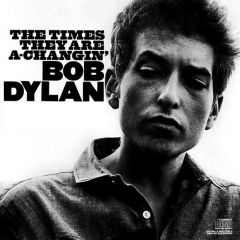
“The Times They Are a-Changin’” was written by Bob Dylan and appears as the first song on side one on Bob Dylan’s third studio album of the same name. Dylan wrote the song to be an anthem for change. It became a rallying cry for the civil rights and anti-war movement in the U.S. in the 1960s and remains a timeless classic song of strength for troubled times. It was released as a single in the U.K. in 1965, where it went to #9 in the U.K. Singles chart. Surprisingly, it was not released as a single in the U.S. The song has been covered by many artists, including Peter, Paul and Mary; Joan Baez, The Byrds, Bruce Springsteen, and Brandi Carlile. In December 2010, Dylan’s hand-written lyrics of the song sold at auction at Sotheby's in New York City for $422,500. Personnel on the record were: Bob Dylan (lead vocal, acoustic guitar, harmonica).
The album, The Times They Are a-Changin', was recorded between August and October 1963 at the Columbia 7th Ave. studio in New York City and produced by Tom Wilson. Released in February 1964 (days after The Beatles appeared on Ed Sullivan), it went to #20 on the Billboard 200 Albums chart and has been certified Gold by the Recording Industry Association of America. No singles were released from the LP in the U.S.
Bob Dylan is an American singer and songwriter. He has been an iconic international figure in popular culture for over six decades and has released 40 studio albums, 16 live albums, 31 compilation albums, seven soundtrack albums, 24 EPs, and 102 singles. He is a member of the Rock and Roll Hall of Fame and the Songwriters Hall of Fame and is a recipient of Kennedy Center Honors, a Presidential Medal of Freedom, a Polar Music Prize, France’s Legion d’Honneur, and a Nobel Prize in Literature. Dylan is also known for his paintings, drawings and books. His most recent book, “The Philosophy of Modern Song,” contains essays on 66 songs by artists who have influenced him. Dylan still records and tours and is appearing with Willie Nelson, Robert Plant and Alison Krauss at the Outlaw Music Festival Tour in the U.S., which began in late June 2024 and continues through September 2024. Dylan’s archives are housed at the Bob Dylan Center in Tulsa, which opened in May 2022.