The European Union (EU) has taken a number of steps in recent years to end its reliance on Russian natural gas, which accounted for nearly half of the bloc’s supplies before the 2022 invasion of Ukraine. But while the changes happening in Europe might provide a boost for global LNG exporters, including projects in operation or under development in the U.S., the EU’s policy shifts have also introduced greater uncertainty around demand. In today’s RBN blog, we look at the increasing difficulty in predicting EU gas demand and what it means for U.S. exporters and the rest of the global LNG market.

Visualize the infrastructure behind U.S. NGL movement.
The U.S. NGLs Map provides a comprehensive view of the transport, processing, and export networks moving NGLs across the U.S.
In our first piece examining the future of the European gas market and its demand for LNG we looked at the EU’s objective to end all imports of Russian gas and LNG by the end of 2027, according to the 17th set of sanctions issued by the EU Commission on May 6. Today our focus shifts to the future of natural gas (and hence LNG) demand in the EU. Starting with recent history, EU gas demand stood at 322 Bcm (31.2 Bcf/d) in 2024, close to 2023 levels. Although industrial gas demand (top line in Figure 1 below) improved in 2024 from the price-induced downturn in demand of 2022-23, gas for power generation (bottom line) continued to fall due to the increased dispatch of renewable power sources and overall gas demand remained 20% below the 2017-21 average.

Figure 1. EU Gas Consumption By Sector, 2017-24. Source: ACER Note: Percentage changes are from 2017-21 averages
From an LNG perspective, European demand declined by 22 Bcm (2.13 Bcf/d) in 2024, partly due to the mild winter of 2023-24, which reduced the amount of LNG required to refill storage to the EU-mandated 90% fill level by November 2024. The lesson here, and expanded on below, is that predicting gas and LNG demand in a European context is subject to many variables and considerable uncertainty.
Historically, modelling of gas demand was a simple function primarily of ambient air temperature and economic growth. However, that is changing as the EU Commission has adopted plans and policies to reduce gas demand from its current level via a range of new objectives, which are likely to make projecting gas demand even more challenging to quantify.
About the song
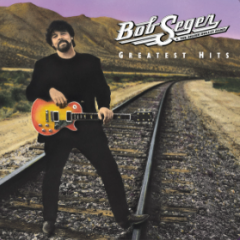
“Turn the Page” was written by Bob Seger and first appeared as the fifth cut on side one of his sixth studio album, Back in ’72. However, the song would receive more radio airplay when it was included on Seger’s 1976 live album, Live Bullet. Drummer David Teegarden says Seger wrote this song after an incident at a truck stop when Seger was touring with the Tulsa band Teegarden, Van Winkle & Bruce backing him. En route to their next show, some truck drivers at the truck stop’s diner hassled them and made derogatory comments about their long hair and appearance. By the next day, Seger had written “Turn the Page” about the event.
Back in ’72 was recorded at Leon Russell’s Paradise Studios in Tia Juana, OK; Pampa Studios in Warren, MI; and Muscle Shoals Studios in Muscle Shoals, AL. Produced by Punch Andrews and Bob Seger, the album was released in January 1973 and went to #188 on the Billboard Top 200 Albums chart. Personnel on the record were: Bob Seger (lead vocals, guitar), Dick Sims (Hammond organ, bass pedals, piano and Clavinet), Jamie Oldaker (drums), Sergio Pastora (percussion), Alto Reed (saxophones and flute) and Marcy Levy (background vocals). Oldaker and Levy would record with Leon Russell, and then join Sims in becoming part of Eric Clapton’s band later in the 1970s.
Live Bullet was recorded at Cobo Hall in Detroit in September 1975 and released in April 1976. The record was produced by Punch Andrews and Bob Seger. Now billed as Bob Seger and the Silver Bullet Band, this live showcase of Seger's talents went to #34 on the Top 200 Albums chart. The considerable amount of radio airplay it received helped prime the way for Seger to become a national star with his next LP release, Night Moves. “Turn the Page” was one of the highlights from the live album. The personnel on Live Bullet were: Bob Seger (lead vocals, guitar, piano), Drew Abbott (lead guitar, backing vocals), Alto Reed (saxophones, backing vocals), Robyn Robins (keyboards), Chris Campbell (bass, backing vocals) and Charlie Martin (drums, backing vocals).
Metallica covered the song and released it as a single in November 1998 from their Garage Inc. album. It went to #1 on the Billboard Mainstream Rock Singles chart.
Bob Seger is an American singer, songwriter and musician from Detroit. He has released 18 studio albums, two live albums, seven compilation albums and 68 singles. Seger has sold more than 75 million records worldwide and is a member of the Songwriters Hall of Fame, the Michigan Rock and Roll Legends Hall of Fame and the Rock and Roll Hall of Fame. He has won one Grammy Award and concluded his Roll Me Away final tour in November 2019.
"About the Song" -- written by Mickey McMahan , RBN Director of Musicology