


Cheap feedstocks resulting from dramatic increases in US shale production of natural gas and natural gas liquids (NGLs) have led petrochemical companies to plan at least 7 new processing plants - known as olefin crackers - all but one on the Gulf Coast. These plants are expensive (think $billions) and take years to permit and build. They also produce significant quantities of emissions that are restricted by the Clean Air Act (CAA) – some of which trade in a market that has been skyrocketing for the past few months – threatening to delay or constrain the Gulf Coast cracker building spree before it gets started. Today we describe the regulations.
We have talked previously about the surge of NGL’s headed to Mont Belvieu on the Gulf Coast and the new fractionation capacity being built to extract the 5 purity NGL products (ethane, propane, butane, isobutane and natural gasoline - see Ready Set Go…New Fractionation). The market for all of the ethane and some of the propane being produced by those fractionators is feedstock for olefin crackers on the Gulf Coast that produce petrochemicals such as ethylene and propylene. Right now those crackers are running full out and making huge margins for their operators. That is because ethane and propane prices are low in the US (see Hacking a Model of Ethane Rejection) and the natural gas fuel that the crackers use is also inexpensive. International competitors mostly use heavier and more expensive feedstocks such as naphtha for their crackers so they can’t compete. Operators expect the US cost advantage to continue and have therefore made plans to build at least 7 new olefin crackers – 6 of them on the Gulf Coast.
These new crackers cost $ Billions and take at least three years to permit and build. The current project timetables suggest that the 6 new plants on the Gulf Coast will come online between 2016 and 2017. A seventh new plant in Pennsylvania planned by Shell will not be completed until 2019 at the earliest. As you can imagine building new olefin plants is a serious undertaking and there are many hurdles to be negotiated on the way. One hurdle that comes up early in a project timeline is acquiring necessary permits for plant emissions. The Clean Air Act (CAA) - a federal law that requires the Environmental Protection Agency (EPA) to protect the public from exposure to air pollutants - regulates plant emissions.
The CAA regulates a variety of “criteria pollutant” emissions that are summarized in the table below. The basic purpose of the regulations is to reduce the overall level of emissions. The EPA regulates all emissions by monitoring their levels in the atmosphere in different regions of the country to determine which counties should be considered non-attainment areas. The emissions rules for non-attainment areas get progressively tougher depending on the extent of non-attainment. In the case of industrial plants that means requiring that the latest emissions control technology is used. As we learned in our discussion of coal fired power generation, some older plants also have to be retrofitted with expensive emission controls or retired (see Smokestack Lightning). There are specific rules covering new construction.
Source: Element Markets
The trouble with new plant construction is that emissions from operating a new plant did not previously exist and so unless they are offset in some way – they add to overall levels. A special component of the CAA called the New Source Review (NSR) was set up in 1977 specifically to regulate such new sources of emissions. NSR is triggered any time a company seeks to permit a new facility or facility modification that would create a “significant increase” in criteria pollutant emissions and exceed threshold emissions levels defined for the region. Affected facilities must report their expected emissions to the local air quality regulatory authority and take certain measures to reduce their pollution. Emissions reduction requirements vary across the country and depend on the local air quality. To reduce pollution in a more economically efficient manner, some regions have adopted a tradable emission reduction credit (ERC) program; NSR regulations provide guidelines for these programs based on the air quality status of the region. The basic approach of all these programs is to offset new sources of emissions with reduced emissions somewhere else in the same attainment area.
|
Statistics and prices in this posting have been provided by Element Markets LLC, a leading environmental credit marketing company. For more information see www.elementmarkets.com |
NSR regulations determine whether a new plant is considered a major source of one or more of the criteria pollutants. If the plant is a major source then its emissions are regulated. The definition of “major source” depends on the non-attainment level of the area in which the plant is located. If the plant is in a marginal or moderate non-attainment area it is only considered a major source when more than 100 tons per year (tpy) are emitted. If the plant is located in a severe non-attainment area then 25 tpy is considered a major source of emissions.
About the song
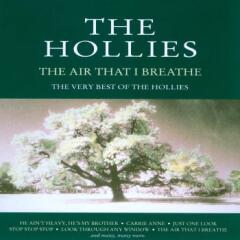
"The Air That I Breathe" was written by Albert Hammond and Mike Hazlewood. It originally appeared as the 10th cut on Albert Hammond's 1972 debut album, It Never Rains in Southern California. The album went to #77 on the Billboard Top 200 Albums chart. Three singles were released from the LP.
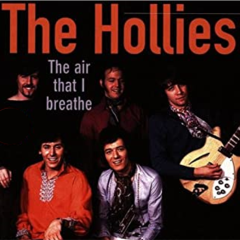
The Hollies recorded the song in 1973, and it appears as the fifth song on side one of The Hollies' 14th studio album, Hollies. Recorded at EMI Studio in London in 1973, it was released as a single in the U.S. in March 1974 and went to #6 on the Billboard Hot 100 Singles chart. Personnel on the record were: Allan Clarke (lead vocals), Tony Hicks (lead guitar, backing vocals), Terry Sylvester (rhythm guitar, backing vocals), Bobby Elliott (drums), Bernie Calvert (bass, keyboards), and Chris Gunning (orchestral arrangements). In 1992, Radiohead had a hit with "Creep," a song with a similar chord progression and melodic content as "The Air That I Breathe." The publisher of the older song sued Radiohead and a settlement was reached under which songwriters Hammond and Hazlewood were given co-writing credits and a portion of the royalties. Many artists have covered "The Air That I Breathe" over the years, including Simply Red, K.D. Lang, Olivia Newton-John, and The Mavericks.
The LP Hollies was produced by The Hollies and Ron Richards. Released in March 1974, it went to #28 on the Billboard Top 200 Albums chart.
The Hollies are a British rock band formed in 1962 in Manchester, England, by Allan Clarke and Graham Nash. They, along with The Rolling Stones, are among the few UK rock groups from the early '60s that have never disbanded. The Hollies have released 21 studio albums, 22 compilation albums, seven EPs, and 67 singles. The band was inducted into the Rock and Roll Hall of Fame in 2010. Nineteen members have passed through the band's ranks since its formation. Original member Tony Hicks and longtime member Bobby Elliott lead a touring version of The Hollies today.



Comments
Ah, I thought it was going to be "All I Need" by Air, from the 1998 album Moon Safari
So how many emissions would a new world-scale ethylene plant produce?