A few months ago, Enbridge unveiled its plans to expand its massive Mainline and smaller Express/Platte crude oil pipeline systems into the U.S. Midwest/Great Plains. We blogged about those plans, and followed up with a look at how the incremental volumes of Western Canadian crude on the Mainline and Express/Platte might move south from PADD 2 to where they’re wanted most: the Gulf Coast. In today’s RBN blog, we discuss efforts to piece together a more direct pipeline route from Alberta to Cushing and on to the Texas/Louisiana coast.

Two of the surest bets in the North American energy space these days are that (1) Western Canadian production of heavy crude oil will continue rising and (2) new pipeline takeaway capacity will be needed — sooner or later — to handle those increasing volumes. In Here, There and Everywhere, we discussed Enbridge’s plan to spend up to C$2 billion (US$1.5 billion) by 2028 to improve the efficiency and reliability of its 3.28-MMb/d Mainline pipeline system from Alberta to the Midwest. We noted that Enbridge is investing another C$1.5 billion (US$1.1 billion) by 2027 on a multiphase optimization project that will boost the system’s capacity by 150 Mb/d — and maybe more, if demand warrants. In addition, the company is looking to add up to 30 Mb/d of capacity to its 310-Mb/d Express-Platte pipeline system, which runs from Hardisty, AB, to Wood River, IL, just west of the Patoka, IL, crude oil hub.
More recently, in Take the Long Way Home, we looked at where those incremental barrels being piped south to PADD 2 (Midwest/Great Plains) would end up and, just as important, how they would get there. As we explained, most of those barrels will be heavy crude from the Alberta oil sands and, given that PADD 2 refineries can’t shoehorn much more low-API oil into their crude slates, almost all of the incremental imports will need to flow through the Midwest to the Cushing, OK, hub and on to refineries and export terminals along the Gulf Coast.
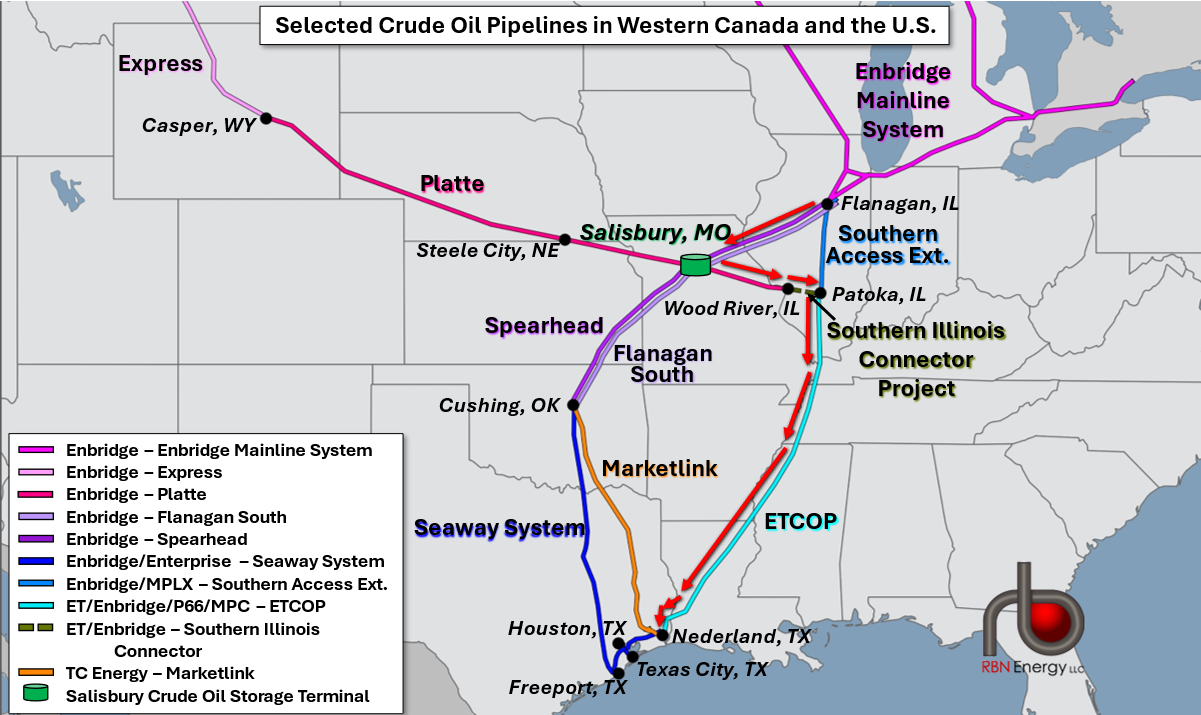
Figure 1. Selected Crude Oil Pipelines in Western Canada and the U.S. Source: RBN
We noted a few possibilities for enhancing the pipeline infrastructure south of the Mainline and Express/Platte systems, including a 100-Mb/d expansion of Enbridge’s 700-Mb/d Flanagan South Pipeline (light-purple line in Figure 1) from the Mainline’s Flanagan, IL, hub to Cushing.
About the song
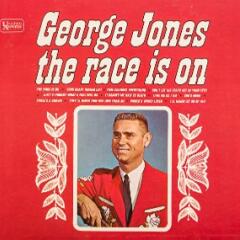
“The Race is On” was written by Don Rollins and appears as the first song on George Jones’s 22nd studio album of the same name. Released as a single in September 1964, the song went to #3 on the Billboard Hot Country Songs and #96 on the Billboard Hot 100 Singles charts. Don Rollins wrote the song after a visit to the Turf Paradise Race Course in Phoenix. George Jones first heard the song when promoter Dewey Groom played a demo of it for him in his office at the Longhorn Ballroom in Dallas. The Longhorn has an interesting history in the fact that it was owned by Bob Wills, then Jack Ruby (who killed Lee Harvey Oswald after he assassinated JFK), before Groom bought the ballroom. It was also the site of one of the 12 concerts that the Sex Pistols played in the U.S. in 1978 before breaking up. “The Race is On” has been covered by many artists, including Jack Jones, Dave Edmunds, Sawyer Brown, and The Georgia Satellites. Known personnel on the record were: George Jones (lead vocals), Jimmie Gray (high harmonies, bass) and Kelso Herston (six string bass solo).
The Race is On album was originally titled I Get Lonely in a Hurry but was changed after “The Race is On” single became a hit. The album was recorded at Columbia Recording Studios in Nashville in August 1964, with Pappy Daily producing. Released in November 1964, the album went to #10 on the Billboard Country Albums chart. After being retitled The Race is On, it was re-released in April 1965 and went to #3 on the Billboard Country Albums chart.
George Jones was an American country music singer, songwriter and musician. Known as “The Possum,” Jones released 87 studio albums, three live albums, 43 compilation albums and 134 singles. With Tammy Wynette, he released nine studio albums, five compilation albums and 14 singles. He is a member of the Country Music Hall of Fame and won many awards from Billboard, Cash Box, ACM and CMA. He won three Grammy Awards and is the recipient of a Pioneer Award from the ACM, a U.S. National Medal of Arts and a Kennedy Center Honor. When Johnny Cash was once asked who his favorite country music singer was, he replied: “You mean besides George Jones?” Jones died in Nashville in April 2013 at the age of 81.