


For the past several months, U.S. refineries have been producing more distillate than demand warrants, resulting in a glut of distillate fuels, especially ultra-low-sulfur diesel and jet fuel. The disconnect between supply and demand has been particularly stark in the Gulf Coast region, where just a couple of weeks ago distillate stocks sat 39% above their 10-year average after coming perilously close to tank tops in August. The culprit, of course, is COVID-19, or more specifically the effects of the pandemic on air travel and the broader economy. Demand for motor gasoline rebounded more quickly than demand for ULSD and jet fuel, and refineries churned out more gasoline to keep up, but that results in more distillate too. Now, finally, there are signs that distillate stocks may be easing back down. Today, we discuss the build-up in ULSD and jet fuel stockpiles, the ways they might revert to the norm, and the potential for storing distillate now and selling it at a higher price later.
This blog is based on research from Morningstar Commodities. A copy of the original report is available here.
The collapse in crude oil prices earlier this year and COVID-19’s negative effects on demand for refined products put an unprecedented squeeze on U.S. refiners — a topic we first discussed back in March in Strange Brew. The net result was a miserable second quarter for the refining sector. As we said in Where Are You Going, not only did refiners produce less diesel, motor gasoline, and jet fuel in the April-through-June period than any quarter in recent memory, their refining margins were sharply lower than the historical range — a one-two punch that hit their bottom lines hard.

Refiners’ troubles didn’t end there. Persistently high distillate inventories this year are compounding refiners' woes by weighing on product prices and constraining processing levels. Total U.S. distillate stocks have been at or near record territory since April, according to weekly data from the Energy Information Administration (EIA), and only dropped below their seasonal 10-year high at the end of September. Total inventory of 172 MMbbl on October 2 was 44 MMbbl higher than this time last year, but down about 1 MMbbl per week from a peak of 180 MMbbl in early August. The 172 MMbbl in storage represented 48 days of supply based on implied demand of 3.6 MMb/d. Total U.S. working storage capacity for distillates is 218 MMbbl, according to an EIA survey from March 31, 2020, meaning that storage was 79% full as of October 2.
About the song
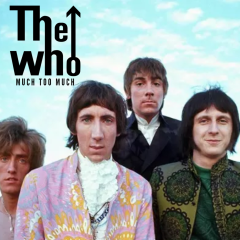
"Much Too Much" was written by Pete Townshend, and appears as the fifth song on side one of The Who's debut album, My Generation. Personnel on the record were: Roger Daltrey (lead vocals), Pete Townshend (guitar, backing vocals), John Entwistle (bass, backing vocals), Keith Moon (drums), and Nicky Hopkins (piano).
My Generation was recorded between April and October of 1965 at IBC Studios in London, with Shel Talmy producing. The 12-song LP was released in the U.S. in December 1965, but failed to make the Billboard Top 200 Album chart. Two singles were released from the LP, including "My Generation," which rose to #74 on the Billboard Hot 100 Singles chart. It is ironic that the album was a commercial failure at the time of its release — many critics have retrospectively rated it as one of the best rock albums of all time, citing it as a precursor to punk rock and heavy metal.
The Who are a British rock band formed in London in 1964 by Pete Townshend, Roger Daltrey, John Entwistle, and Keith Moon (who replaced Doug Sandom on drums). They have released 12 studio albums, 14 live albums, four soundtrack albums, 26 compilation albums, four EPs, and 58 singles, and have sold more than 100 million records worldwide. The Who are members of the Rock and Roll Hall of Fame and UK Music Hall of Fame, and were the first rock band to receive Kennedy Center Honors. Keith Moon died in 1978 and John Entwistle in 2002. Pete Townshend and Roger Daltrey have carried on with The Who with various members and touring musicians. The band released its latest studio album, Who, in 2019. The Who were last on tour in February 2020, with many dates having to be cancelled due to COVID-19. They plan to resume touring in March 2021.






Comments
Great blog today. There is one small part of it that I don't believe to be correct. In the discussion on power demand, the author compares the heat rate for a diesel generator with that of a combined cycle natural gas-fired generator. In New England, most of the distillate that is burned for power generation is burned as a back-up fuel in facilities that normally consume natural gas. Distillate is burned when natural gas supply becomes constrained due to pipeline capacity being entirely utilized for residential and commercial and industrial customers. The heat rate on a combined cycle plant (or a single cycle) doesn't change much because of fuel substitution, so the heat rate comparison should not be included in the blog, in my view.
That said, the conclusion that this provides a limited market for distillate is correct for three reasons. First, these facilities are designed to run on natural gas and are only permitted to use limited amounts of distillate each year. Second, while natural gas prices can reach high levels during cold weather in New England due to constrained pipelines, those high prices usually don't last very long. And, with the addition of some modest additional natural pipeline capacity over the last few years, natural gas prices have eased over the last couple of winters. The economic incentive to use distillate only occurs when gas prices move up above $8/MMBtu or so and that is not common except in a really cold winter. Third, these plants have relatively limited storage capacity and are not served by distillate pipelines; it is difficult for transportation systems to respond to short-term demand from power plants during cold weather when demand for distillate increases for other high priority uses like home heating, etc.
Again, thanks for a great blog.